History
The Medieval Manor
Toomdeely, also recorded under historical forms such as Dromdeely and Drumdel, lies about 3 km north of Askeaton, close to the mouth of the River Deel where it meets the Shannon Estuary. The settlement was an independent parish from the early thirteenth century, and the history of the castle is closely connected with the medieval ecclesiastical administration of the area. A local account preserved in the Schools' Collection records that Toomdeely was a parish in 1201 and that the large surviving building was the Bishop's manor in 1252 [1].
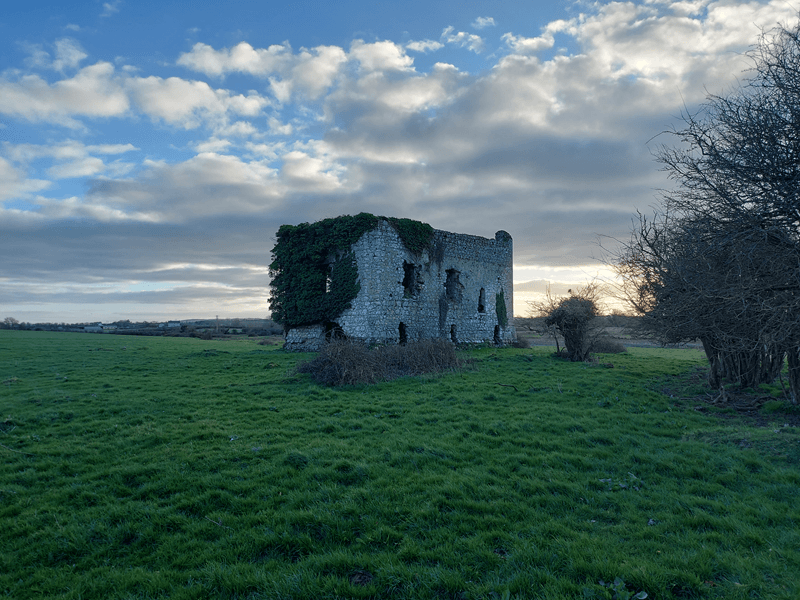
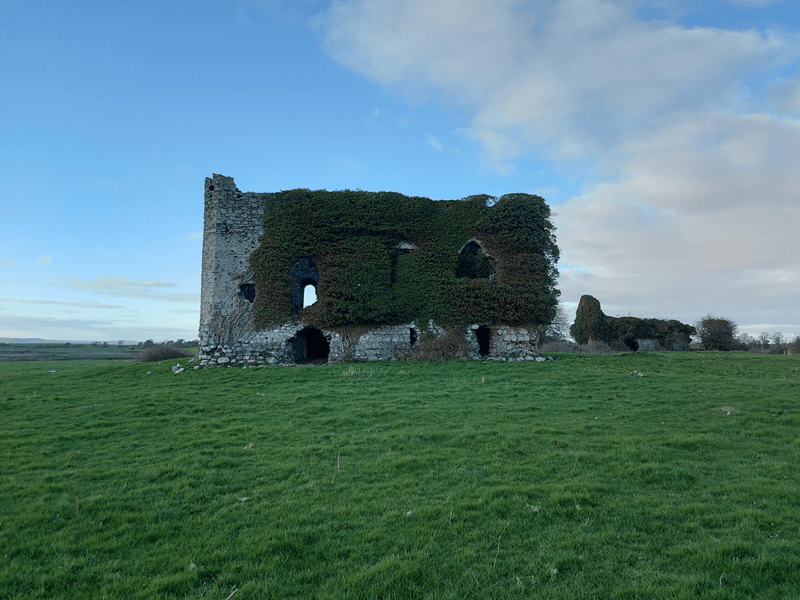
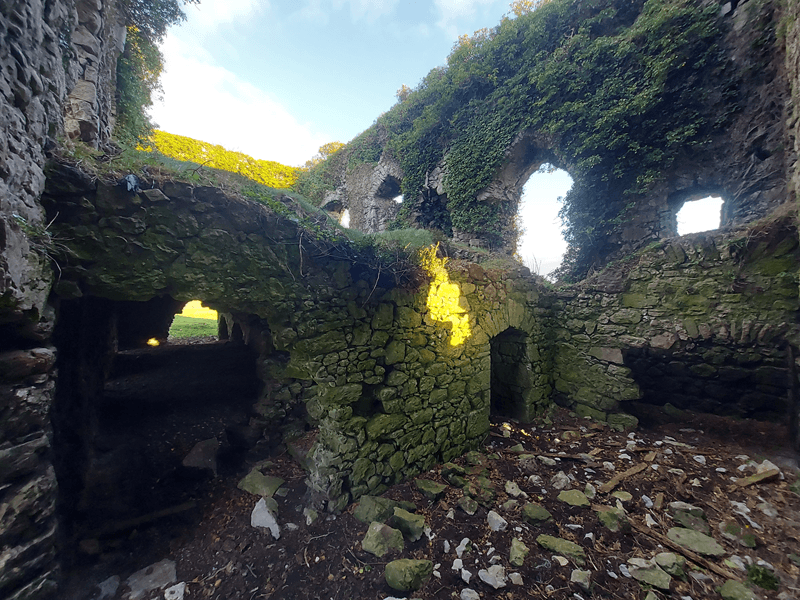
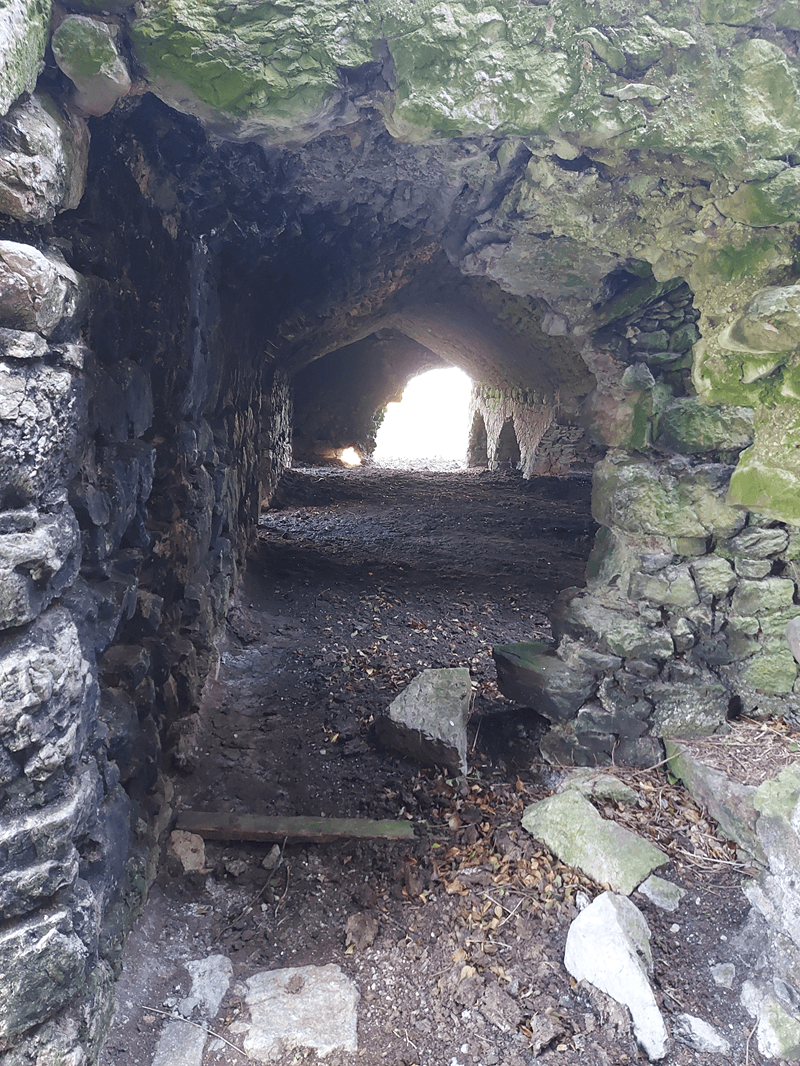
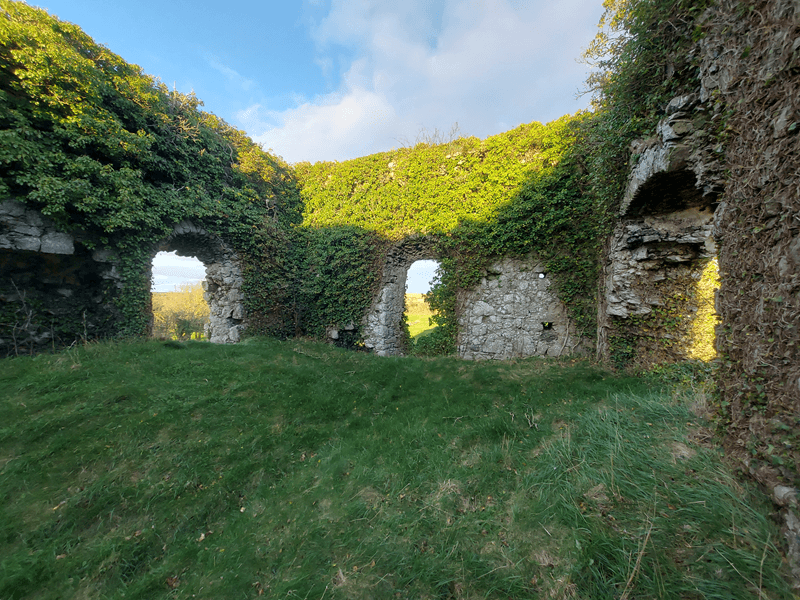
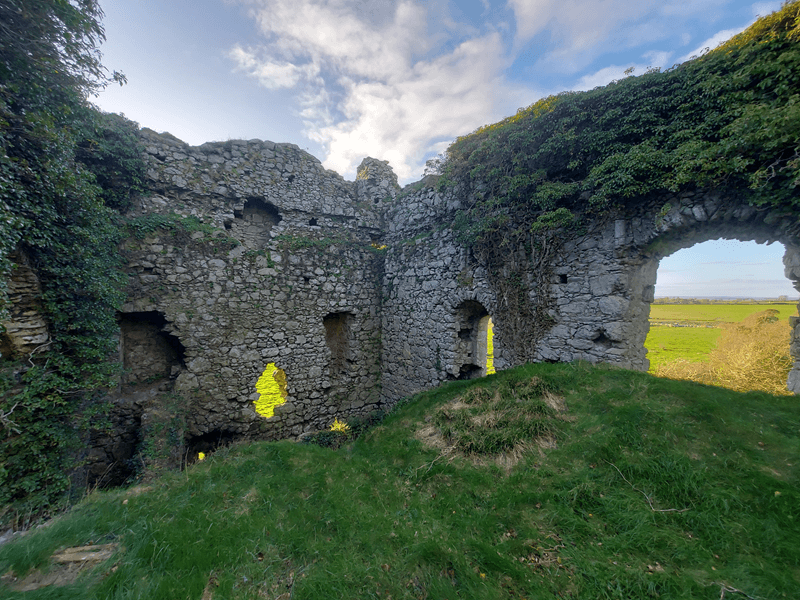
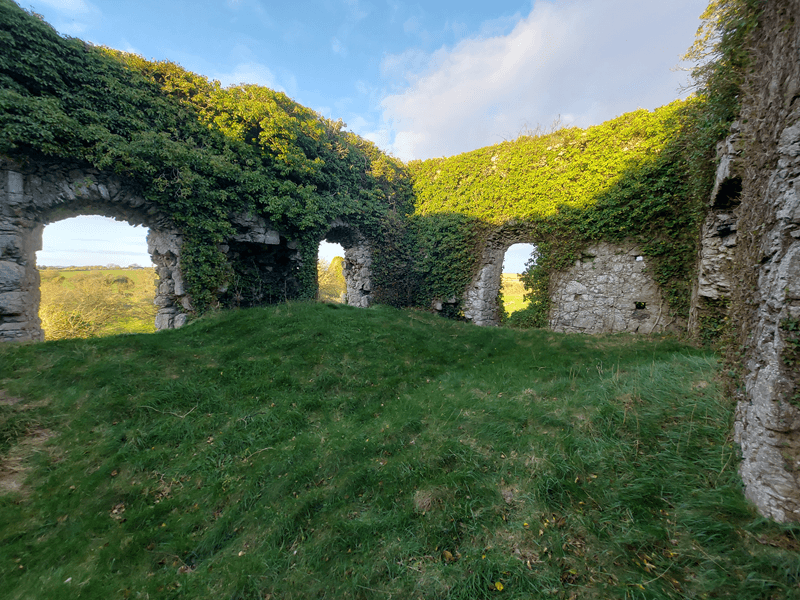
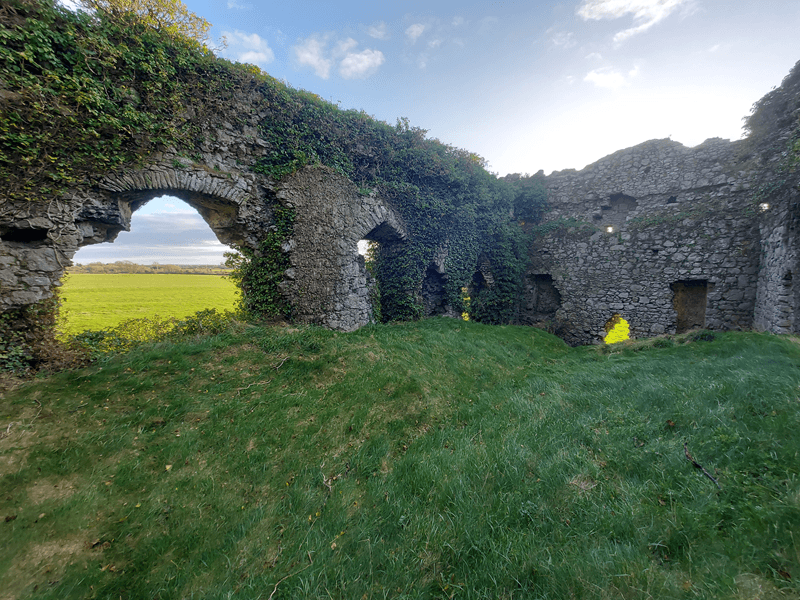
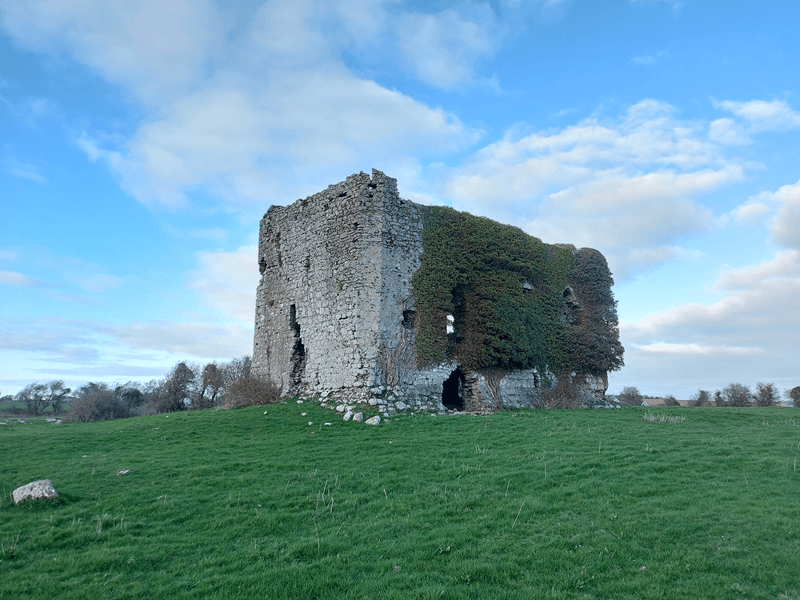
The surviving building is identified archaeologically as a hall-house, rather than a conventional tower house. Its basic structure is probably thirteenth-century, while the surviving vaulting was inserted during the fifteenth or sixteenth century [2]. The rectangular structure measures approximately 17.6 metres east to west and 8.15 metres north to south internally. It was built of limestone, with substantial walls, particularly on the western side, where mural stairs were incorporated into the thickness of the wall. A pronounced battered base survives around the exterior, adding to the imposing appearance of the remains [3].
The Medieval Hall-House
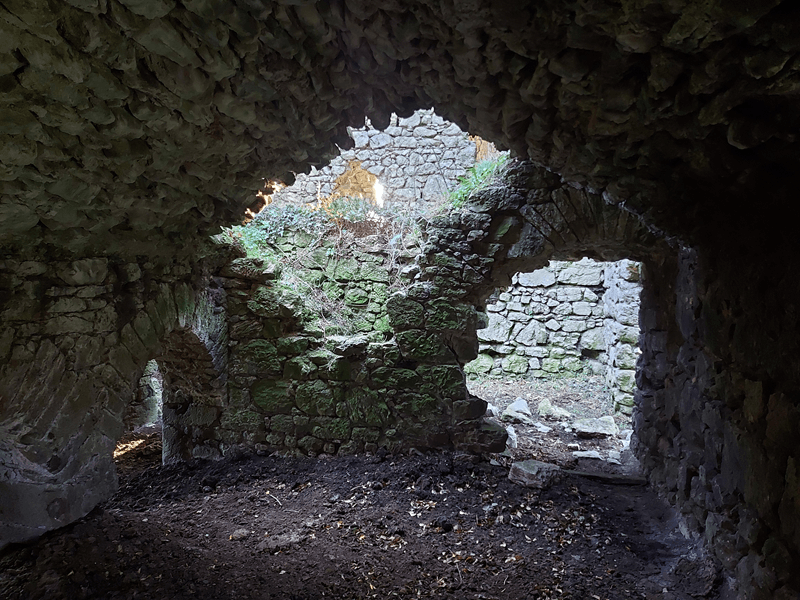
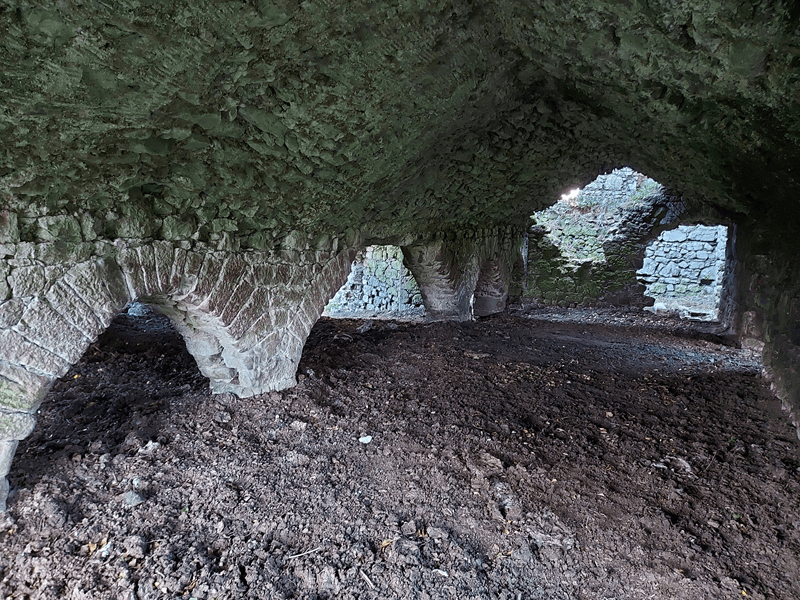
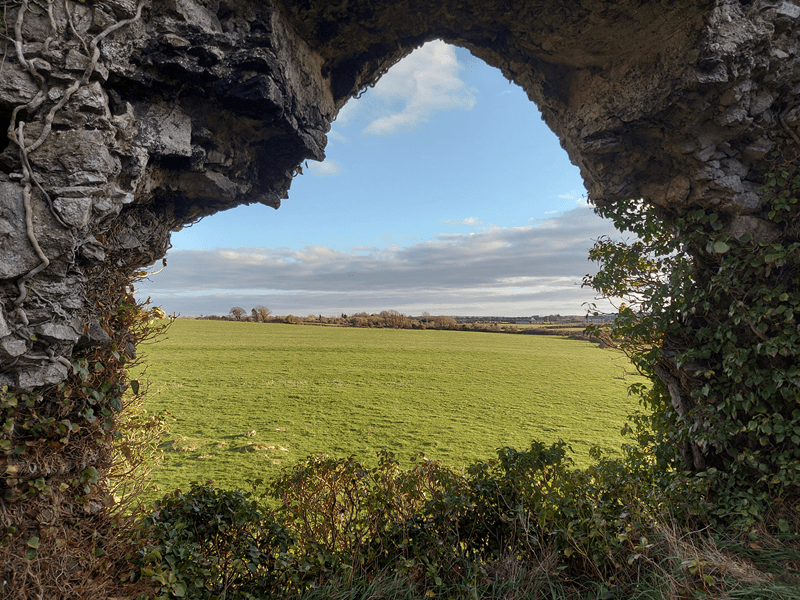
The interior reveals several phases of construction. Two parallel vaults cover much of the ground floor and are supported by a central arcade of six openings. The vaults, arcade and a cross-wall at the western end are considered later additions to the original building [2]. The western wall also contains a steep mural stairway leading towards an upper level, together with a small mural chamber containing a garderobe. Numerous original window embrasures and doorways survive in varying states of preservation, giving an impression of a substantial medieval residence that was adapted over time [3].
The Bishops of Limerick and the Desmonds
The medieval history of Toomdeely reflects the changing balance between ecclesiastical and secular power in County Limerick. The church and parish were granted in the early thirteenth century to Hubert de Burgo, Bishop of Limerick, and the lands remained associated with the bishopric for much of the medieval period. In 1253, an agreement concerning Drumdel was recorded between the bishop and Margery, widow of Tyrry de Kardyff. By 1289, Toomdeely was described as a manor, and in 1336 it was surveyed for Maurice de Rupefort, Bishop of Limerick [4].
The manor subsequently passed from ecclesiastical control into the sphere of the Desmonds. By 1580, Thomas fitzJames Fitzgerald held Toomdeely as part of the Lordship of Cleanlish, while members of the Fitzgerald family occupied the castle [4]. The sixteenth century brought considerable upheaval to the region. In 1590, Toomdeely was granted to Francis Berkeley, whose family was connected with the Crown's efforts against the Desmond rebellion. In 1601, the inhabitants of Toomdeely were pardoned for their support of James FitzThomas Fitzgerald, the so-called Súgan Earl of Desmond, who had attacked Askeaton Castle in the 1590s [4].
Decline and Ruins
By the early seventeenth century, Toomdeely was already in decline. In 1615 it was still described as an ancient manor of the Bishops of Limerick, but it had apparently been neglected for so long that the rent had become little more than a nominal payment. In 1655, the property was held by Roger Boyle, Lord Broghill, later Earl of Orrery [4].
The castle and church stood together within the same enclosure, and the surviving castle-like house was recorded in the nineteenth century as a rectangular building approximately 72 feet long and 40 feet wide [4]. Its substantial walls, battered base, internal vaulting and mural features nevertheless preserve evidence of a much more complex building than the surviving ruin might initially suggest [3].
There is also a layer of local tradition attached to the site. The Schools' Collection records that the castle was considered to be of very ancient origin and was traditionally associated with the period when the Danes raided Ireland, using the Shannon as a route into the country [1]. This should be understood as local tradition rather than evidence that the surviving building dates from the Viking period. The archaeological evidence instead points to a substantially later, probably thirteenth-century hall-house, which was subsequently altered during the later medieval and early modern periods [2].
Today, the ruins of Toomdeely Castle remain beside the former parish church in the quiet countryside north of Askeaton. Although much of the building has disappeared, the surviving stonework still reflects the importance of this once episcopal manor and its long history through the medieval, Desmond and early modern periods.
References
- [1] Dúchas - The Schools' Collection - Cuigliathan, Toomdeely, Askeaton
- [2] ARIADNE Infrastructure - Archaeological Survey of Ireland - Castle - hall-house, Tomdeely North, County Limerick
- [3] IrishHistory.com - Castle, Tomdeely North, Co. Limerick
- [4] Patrick Comerford - The church ruins and castle in Toomdeely and links with the Precentors of Limerick