History
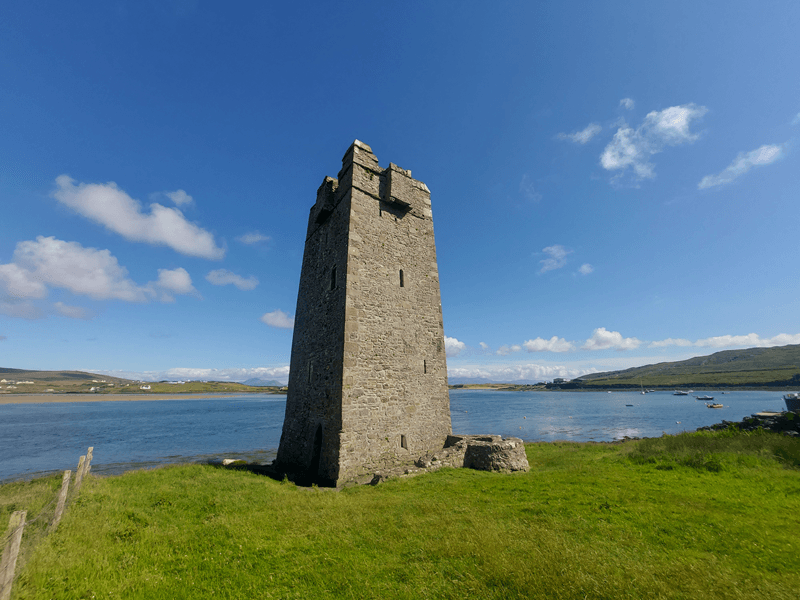
The O’Malley Stronghold
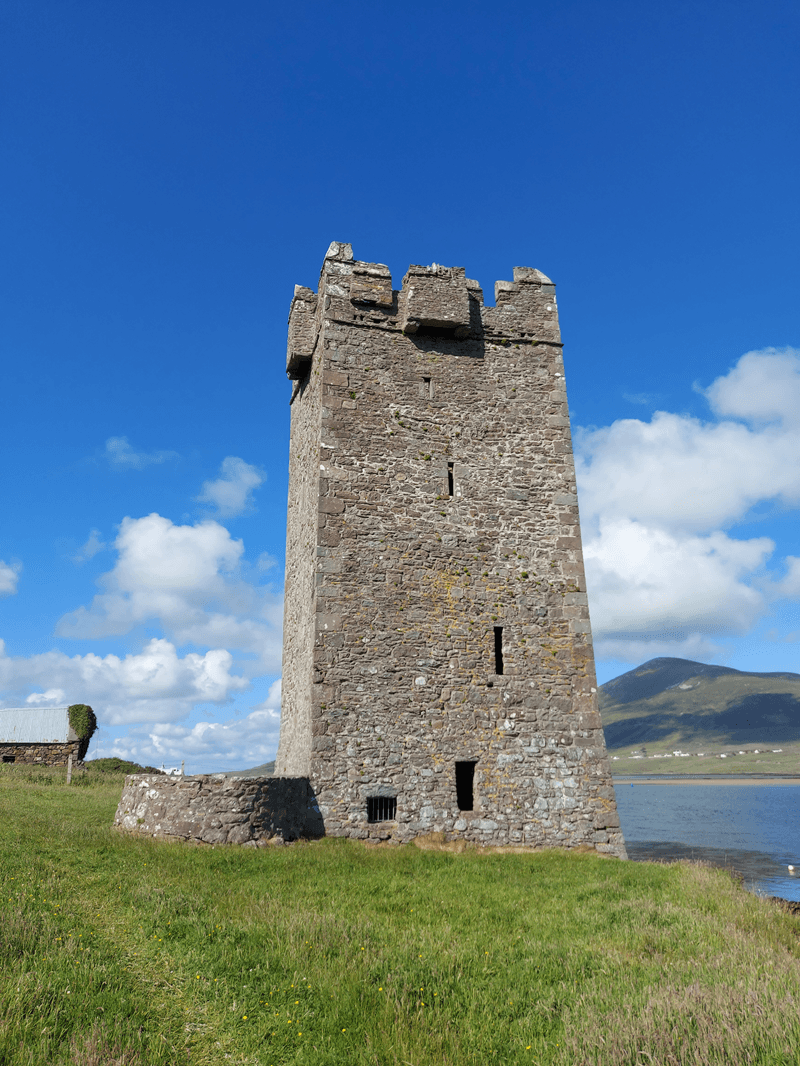
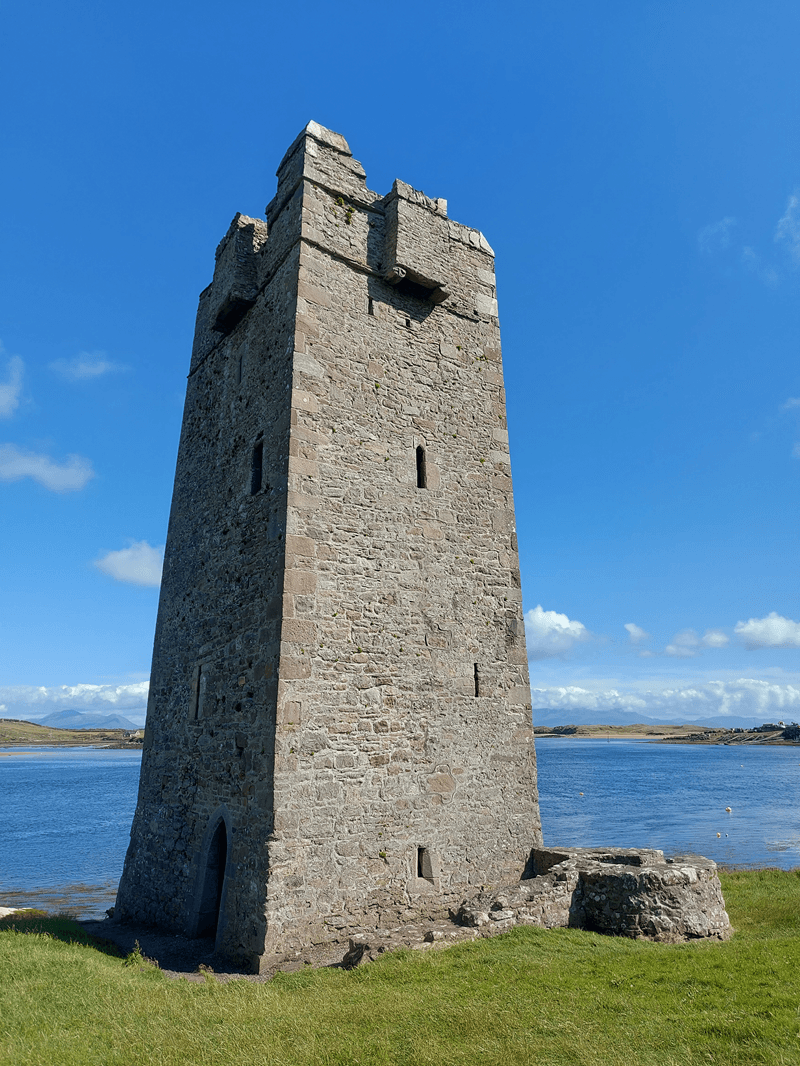
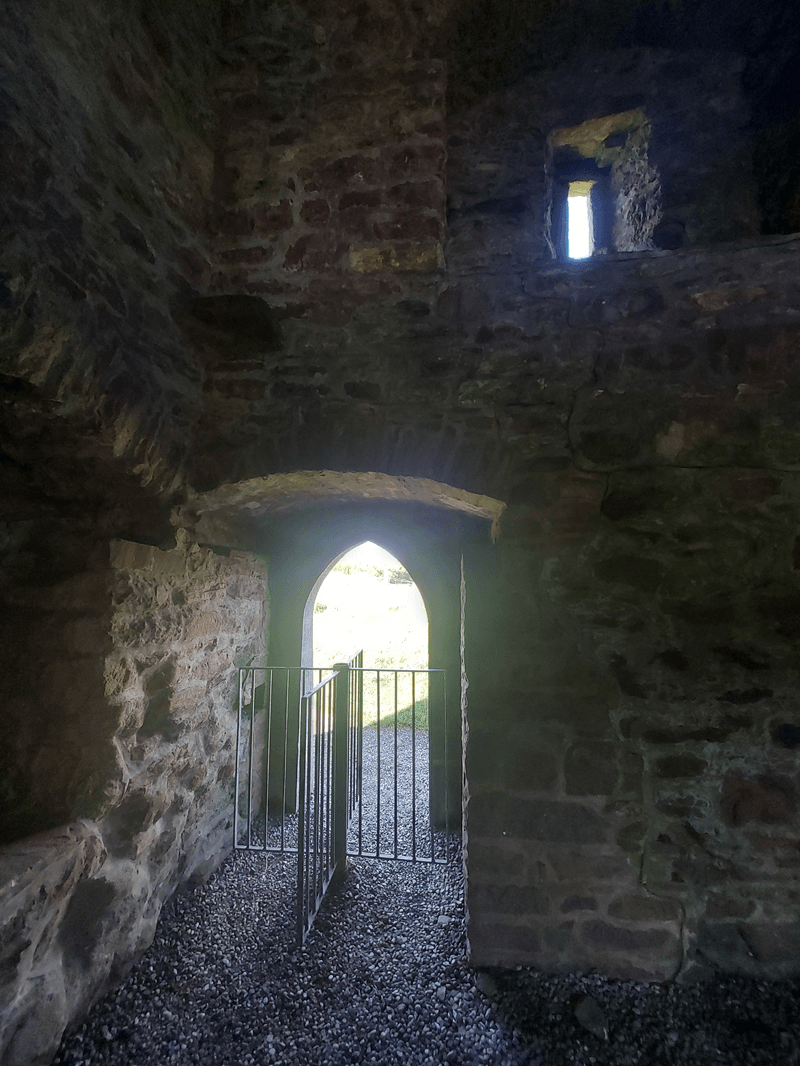
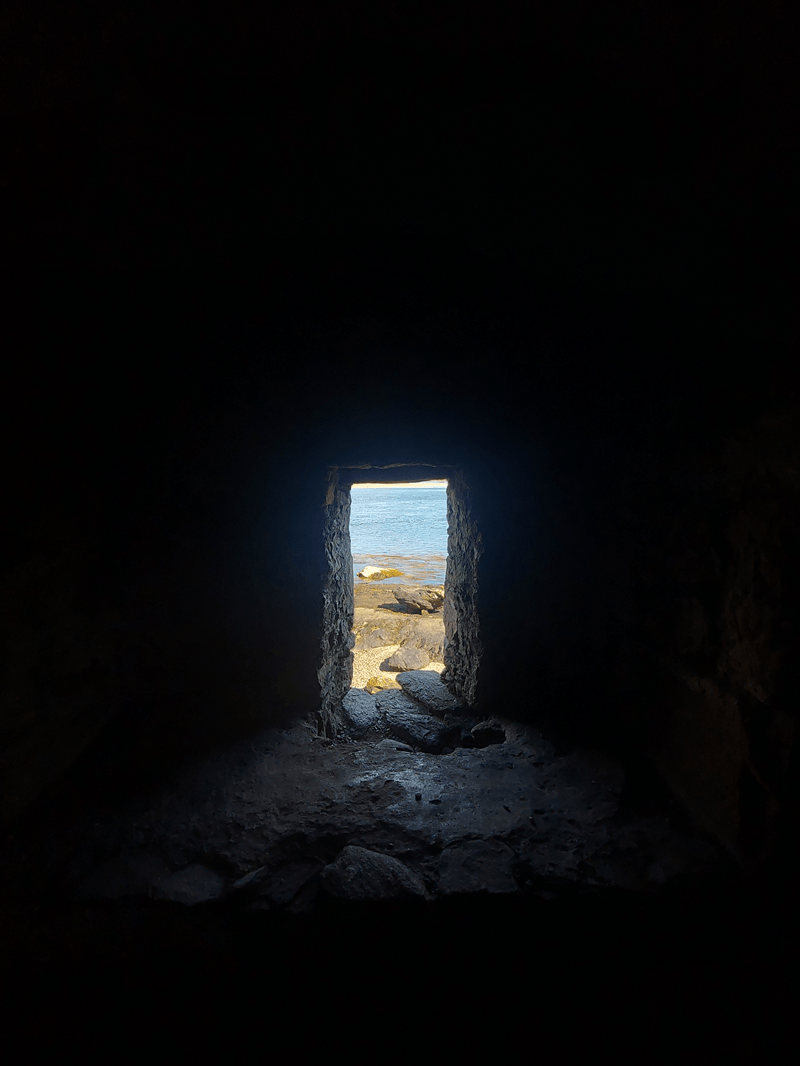
Kildavnet Castle stands on the south-eastern shore of Achill Island, overlooking Achill Sound and the Corraun Peninsula. Its position was strategically important, as the Sound forms a natural maritime passage between the waters of Clew Bay and those to the north. The tower house is generally dated to the fifteenth century and is thought to have been built by the Ó Máille (O’Malley) clan, the powerful Gaelic family whose territory and influence extended across western County Mayo. Mayo County Council gives a more precise date of approximately 1429 [1], [2].
The castle is officially recorded in Irish as Caisleán Ghráinne, “Gráinne’s Castle”. It stands in the townland of Cill Damhnait/Carrickkildavnet and is also known as Carrickkildavnet and, locally, as Granuaile’s Tower [3].
A Castle on the Water
The O’Malleys were one of the prominent seafaring Gaelic families of western Ireland. Their power was closely connected with the sea, and their territory included a number of strategically positioned strongholds along the Mayo coast and its islands. Kildavnet occupies a particularly commanding position at the southern end of Achill Sound, overlooking the waterway and the approaches to Achill Island. Its location placed the castle within the wider maritime landscape of the O’Malley territory [1], [2].
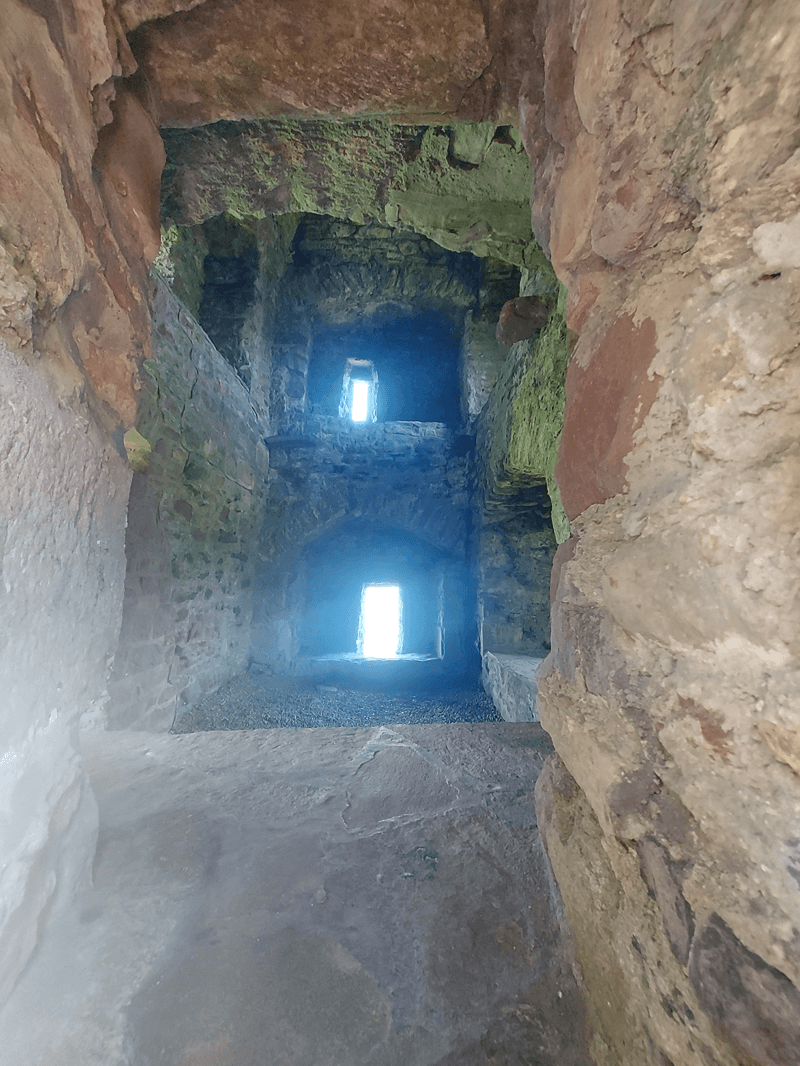
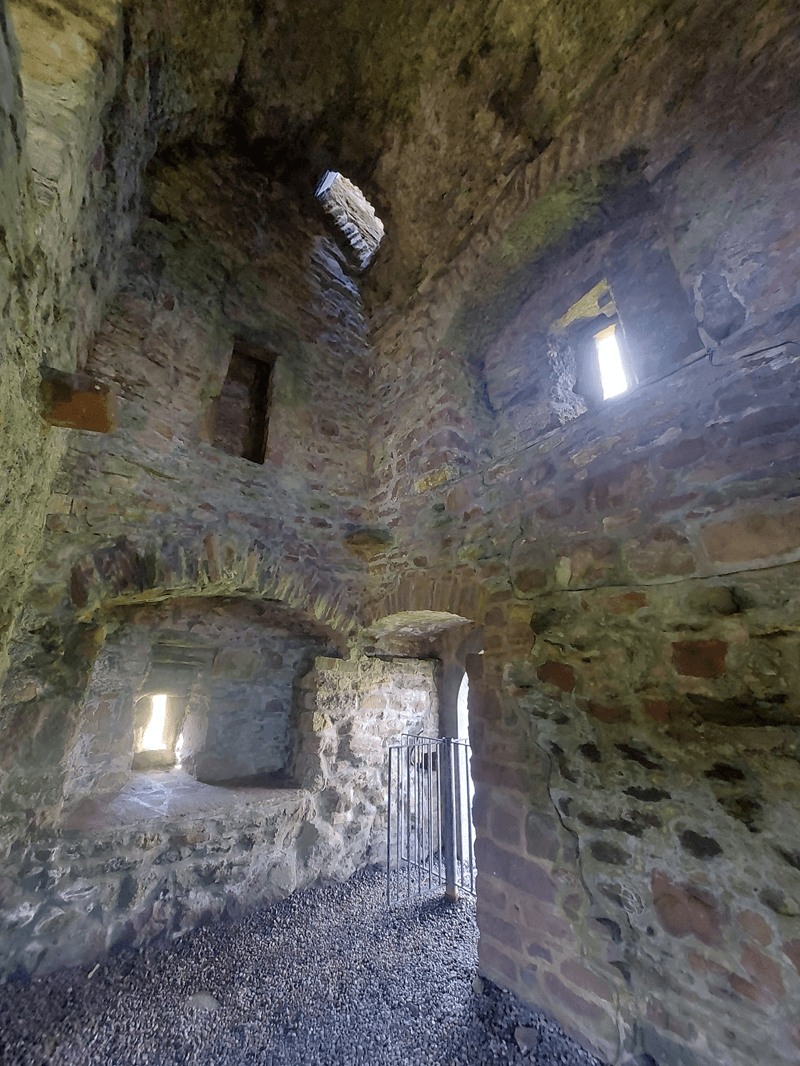
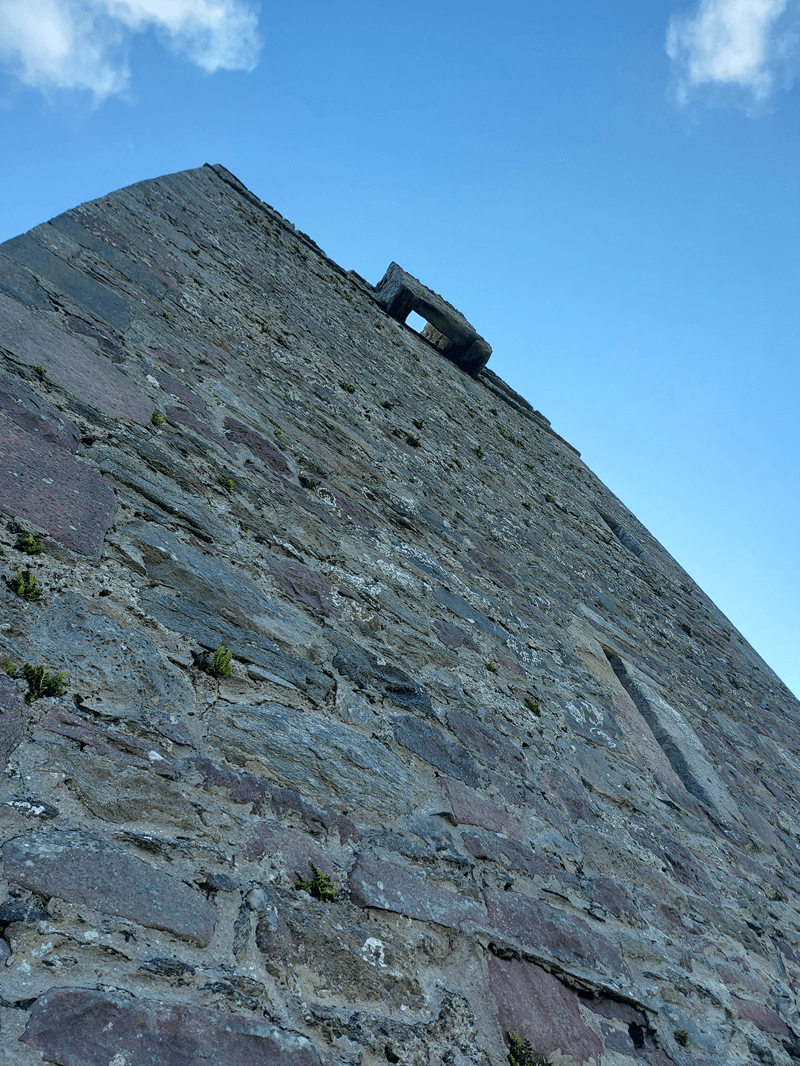
The surviving tower house is a substantial four-storey building. Its thick walls and defensive features reflect the characteristics of tower houses constructed by Gaelic landowners throughout Ireland during the later medieval period, combining domestic accommodation with a significant degree of defensive protection [1].
The choice of such a site was therefore closely connected with the castle’s maritime setting. Kildavnet was both a residence and a fortified presence overlooking an important waterway, while its position connected it to the network of coastal territories controlled by the O’Malley family.
The Bawn
Kildavnet was originally accompanied by more than the surviving tower. Archaeological investigation carried out in July and August 2013 by the Achill Archaeological Field School uncovered the foundation of a substantial wall immediately to the west of the tower house. The wall extended from the south-western corner of the tower and measured up to approximately 1.4 metres in width. The excavators interpreted it as the remains of a late-medieval bawn, a defended enclosure surrounding a tower house [4], [5].
The discovery was significant because it confirmed that the castle had once been protected by an enclosing wall, although much of the structure had subsequently been demolished. The surviving foundation was composed of large blocks and boulders, some measuring up to 70 by 50 centimetres. The archaeological investigation also found evidence that the wall had been largely demolished during the early modern period [4].
Very few finds from the medieval occupation were recovered. More than 99 per cent of the artefacts came from later deposits associated with intensive agricultural cultivation, although some of the lower deposits contained significant quantities of animal-bone fragments which may contribute to an understanding of activity at the site during the late medieval period. Little evidence was found for structures within the bawn itself, as only a narrow area between the wall foundation and the excavation trench could be investigated [4].
Gráinne Ní Mháille
Kildavnet is today closely associated with Gráinne Ní Mháille, or Grace O’Malley, popularly known as Granuaile. This association is genuine, but the chronology is important. Gráinne was born around 1530, approximately a century after the construction of the tower. Heritage Ireland explicitly notes that Kildavnet was built before her time and was likely constructed by her ancestors [1].
Gráinne nevertheless belonged to the same O’Malley dynasty that had established Kildavnet and other coastal strongholds in the region. She grew up within a powerful maritime Gaelic family and became closely associated with the castles and territories controlled by the O’Malleys [6].
This is why the name “Granuaile’s Tower” should be understood as an association with the O’Malley family and with Gráinne’s later career, rather than as evidence that she built the castle. Kildavnet was already an established family stronghold before she was born. Heritage Ireland identifies Kildavnet, Clare Island Castle and Rockfleet Castle among the Mayo monuments associated with her, although their individual histories are distinct [1], [6].
The Maritime World of the O’Malleys
The O’Malley family’s power rested heavily upon their relationship with the sea. They were a prominent seafaring clan, and their strongholds were positioned within a landscape of islands, sheltered harbours and narrow channels. Kildavnet and the other O’Malley castles were therefore closely connected to the maritime character of their territory [6].
Gráinne grew up in this maritime world and became an accomplished seafarer in her own right. Following the death of her first husband, Dónal O’Flaherty, in 1565, she returned to her family territory and established herself as a powerful leader. Heritage Ireland records that she commanded a fleet of ships and an army of around 200 men [6].
Her second marriage, to Richard an Iarainn Burke, gave her access to Rockfleet Castle on the shores of Clew Bay. Unlike Kildavnet, Rockfleet is particularly well documented as a place closely connected with Gráinne herself. Heritage Ireland records that she moved into Rockfleet after her marriage in 1566 and later returned there following her husband’s death in 1584 [7].
Gráinne and the English Crown
Gráinne’s career unfolded during a period of profound political change in Ireland, as the Tudor administration sought to extend English authority into territories that had previously been governed by Gaelic dynasties. The expansion of English power increasingly placed pressure upon the traditional political structures of Connacht and other parts of Ireland.
Gráinne resisted attempts to weaken her position and became involved in both armed conflict and political negotiation. Later tradition often portrays her simply as the “Pirate Queen”, but the historical figure was more complex: she was a member of a powerful Gaelic dynasty who used maritime power, family alliances and political negotiation to defend her position and that of her family [6], [7].
In 1593, after the appointment of Sir Richard Bingham as Governor of Connacht had led to the destruction of her fleet and the confiscation of her properties, Gráinne sought an audience with Queen Elizabeth I. The meeting was eventually granted, and an agreement allowed her to continue her former life [7].
She is believed to have died at Rockfleet in 1603, leaving behind a reputation that would become deeply embedded in the historical memory and folklore of Mayo [7].
From Gaelic Stronghold to National Monument
The subsequent history of Kildavnet Castle is less extensively documented than the life of Gráinne Ní Mháille. The tower eventually fell into ruin, while the surrounding enclosure was largely demolished or disappeared beneath later activity. The archaeological investigation of 2013 demonstrated, however, that significant remains of the medieval bawn survive below ground [4], [5].
Today Kildavnet Castle is a National Monument in State guardianship. Heritage Ireland describes it as a four-storey fifteenth-century tower house and notes the surviving remains of its bawn wall. Although its association with Gráinne O’Malley has made it one of the best-known historic sites on Achill Island, its importance extends beyond the story of one remarkable woman. Kildavnet is a surviving example of the fortified residences established by the O’Malley dynasty and a tangible reminder of the maritime Gaelic society that dominated this part of western Ireland before the expansion of English authority [1].
References
- [1] Heritage Ireland - Kildavnet Castle
- [2] Mayo County Council - Marine Heritage - Built
- [3] Placenames Database of Ireland (Logainm) - Caisleán Ghráinne/Kildavnet Castle
- [4] Achill Archaeological Field School - Kildavnet Castle (2013)
- [5] Excavations.ie - 2013:106 - Carrickkildavnet, Co. Mayo, Rory Sherlock
- [6] Heritage Ireland - The Pirate Queen of Mayo’s Monuments
- [7] Heritage Ireland - Rockfleet Castle