History
The Medieval Manor
Glenogra stands on the western bank of the Camoge River, close to Meanus in County Limerick. The name was recorded by John O'Donovan as Gleann Ogra, meaning “Ogra's glen” [1]. Its history, however, begins well before the surviving castle. Following the arrival of the Normans, Glenogra was granted to William de Burgh and later, in the thirteenth century, passed to the Geraldines of Desmond [1]. An extent made after the death of Thomas FitzMaurice in 1298 records the burgesses of Glenogra holding six carucates of land and paying an annual rent of 119 shillings and six pence. This shows that Glenogra was already an established medieval manor and settlement by the end of the thirteenth century [1].
The medieval settlement was closely associated with its parish church, dedicated to St Nicholas, whose surviving ruins lie roughly 250 metres from the castle. Together with the castle, the church appears to have formed one of the principal focal points of the medieval borough, although little of the settlement itself survives above ground [1]. A large Fair Green shown on the first-edition Ordnance Survey map of 1840 suggests that some functions of the medieval settlement may have survived after the borough had declined [1]. There is no secure evidence, however, establishing the date of the first castle on the site.
The Desmond Castle
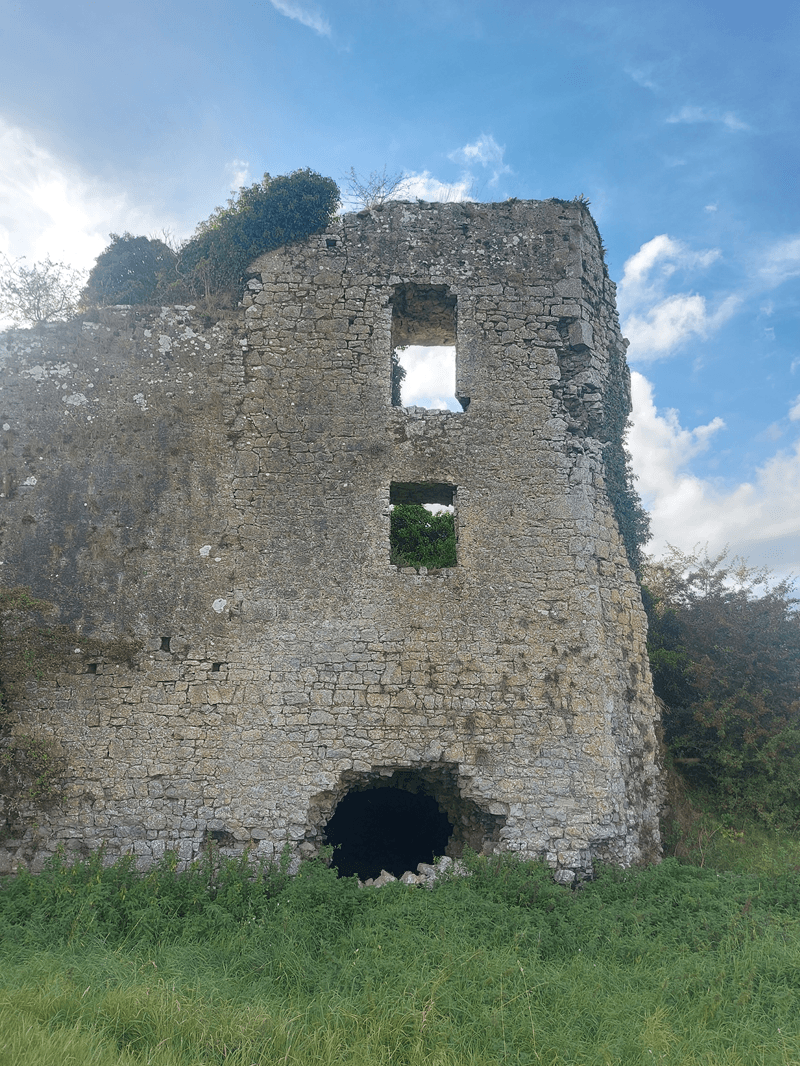
Nineteenth-century tradition attributed the castle's construction to either the Fitzharrises or the De Lacys in the thirteenth century [2]. Another tradition, recorded during the Ordnance Survey, attributed the fortress to the Earl of Desmond around 1400 [3]. O'Donovan was cautious about this attribution, however, and specifically considered that the remarkable octagonal tower was probably not as old as the rest of the fortress [3]. The surviving castle therefore appears to have developed through more than one phase of construction.
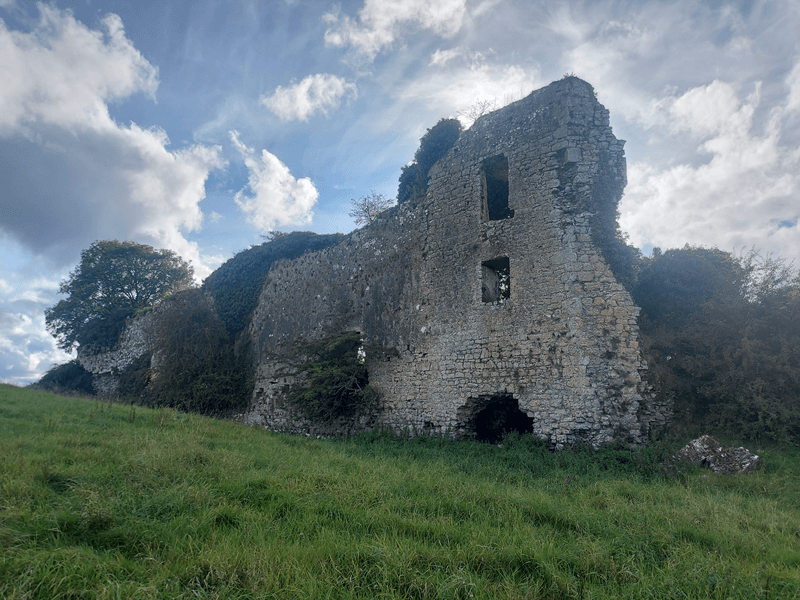
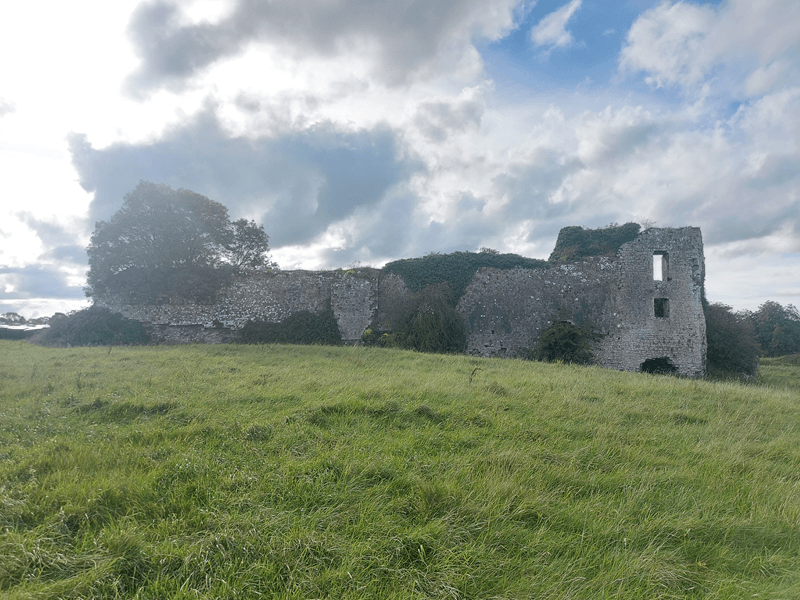
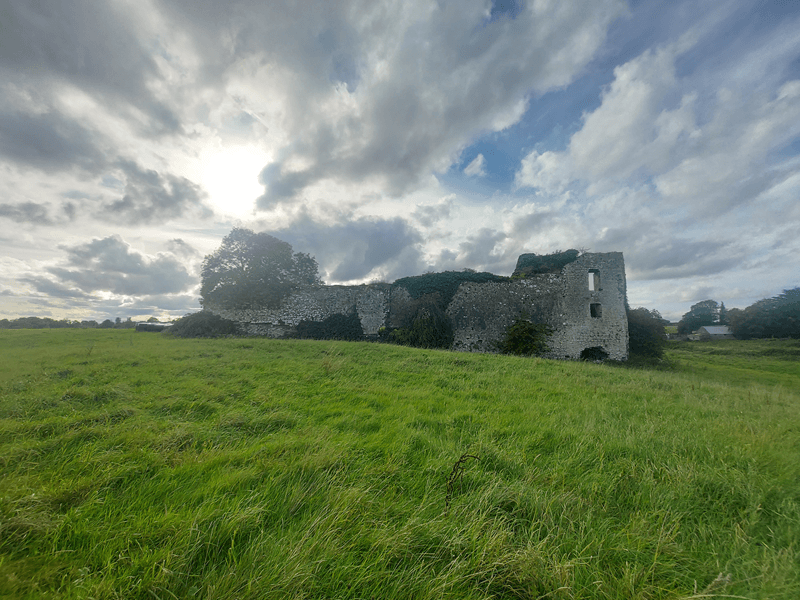
By the nineteenth century Glenogra was still an imposing fortified complex despite being in ruins. O'Donovan described a large rectangular bawn beside the Camoge, measuring approximately 150 feet along its eastern side and 180 feet along its southern side. Its walls reached about 25 feet in height in places and were around five feet thick [3]. At the north-eastern corner stood the most remarkable feature of the complex, an octagonal tower, approximately 19 feet 6 inches internally. It contained four storeys, with a vaulted second floor and substantial walls about 6 feet 9 inches thick [3].
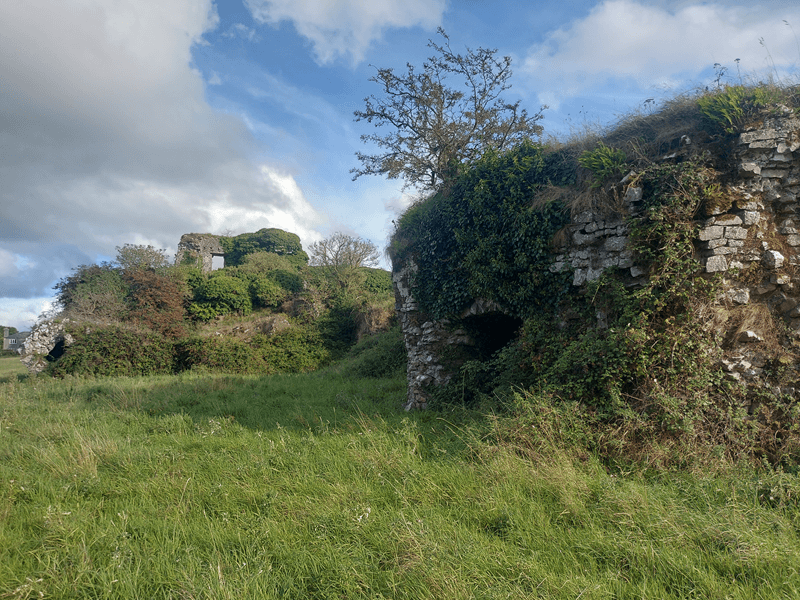
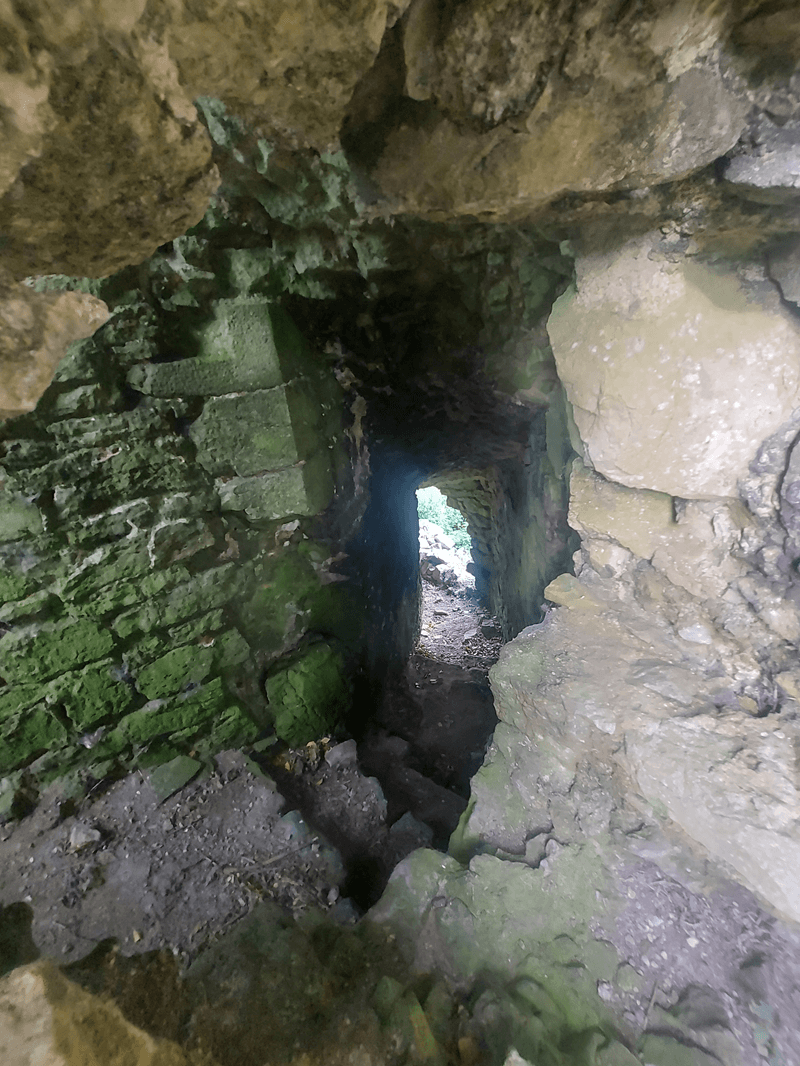
The defensive complex was more extensive than the surviving remains suggest. Towers once stood along the northern wall, which incorporated several vaulted structures, while the main entrance was through a pointed-arched gateway in the southern wall [3]. A small square tower adjoined the octagonal tower. The scale of the enclosure indicates that the tower house formed part of a much larger fortified complex.
Glenogra and the Desmond Wars
Glenogra became involved in the military conflicts of sixteenth-century Munster. According to Samuel Lewis, the castle was unsuccessfully besieged in 1536 by Lord Thurles while it was held by the Earl of Desmond. The attackers failed to capture Glenogra but subsequently took the Earl's stronghold at Lough Gur, which they repaired and garrisoned [2]. The episode took place during the increasingly troubled relationship between the Crown and the powerful Fitzgerald lords of Munster.
By the aftermath of the Desmond Rebellion, Glenogra had fallen into serious decay. The Desmond Survey of 1586 describes Glenogre Castle as “very ruinous”, with neither room nor roof remaining. The surrounding bawn was also badly decayed and the castle was no longer defensible [4]. A nearby house retained only one habitable storey. Nevertheless, the estate occupied exceptionally fertile land: four carucates of demesne belonged to the castle, while a water mill was still recorded, although already in very poor condition [4].
The survey also records the nearby vill of Creans, which had been part of the manor of Glenogra. Its buildings had been completely devastated during the rebellion, with only the walls of an old chapel remaining [4]. Another section of the survey records the site of the manor of Glannogree and its four carucates as being in the occupation of Sir George Bourchier [4]. This provides evidence of the transfer of Glenogra's lands following the forfeiture of the Desmond estates.
From Fortress to Ruin
By the nineteenth century it was already a substantial ruin, although enough survived for O'Donovan to record its dimensions and architectural features in detail [3]. His description provides an important record of the castle before further deterioration of the remains.
The history of Glenogra nevertheless extends beyond the castle itself. The surrounding medieval landscape included the settlement, church, agricultural lands and water mill, while the nearby ruins preserve evidence of the long transition from the Anglo-Norman manor to the Desmond lordship and, after the sixteenth-century wars, to a new landed order [1], [4].
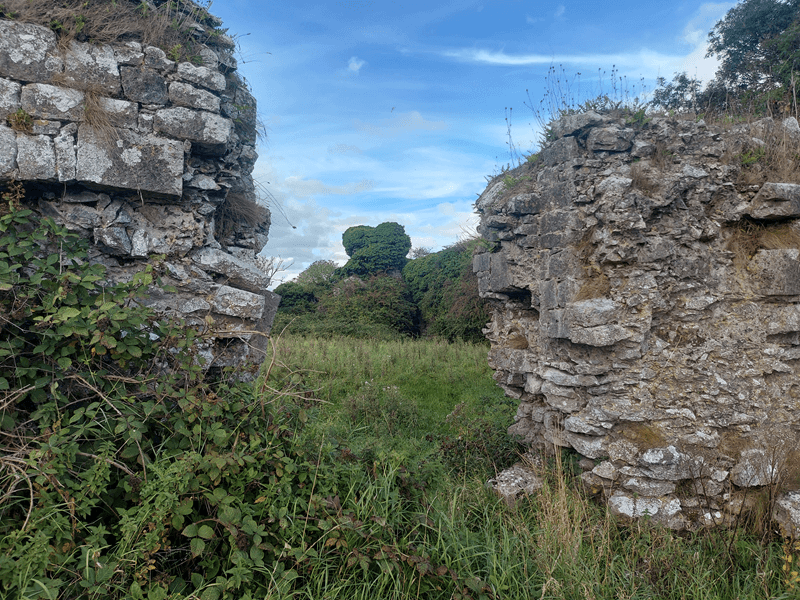
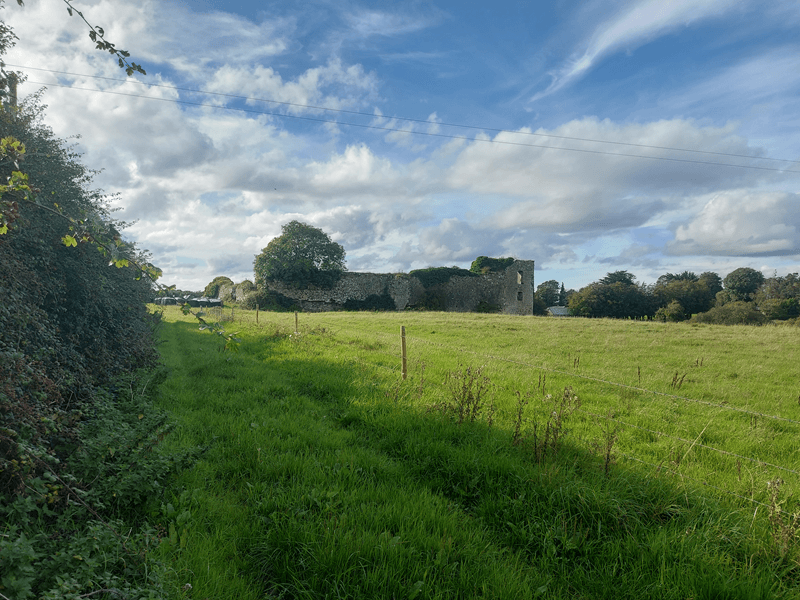
Today, substantial fragments of the bawn and the remains of its polygonal towers survive as reminders of a site whose history encompasses the Anglo-Norman settlement of Limerick, the rise of the Desmond Geraldines and the subsequent forfeiture of their estates during the sixteenth century. Glenogra Castle is listed by Limerick City and County Council as Reg. No. 415, a Medieval Site [5].
References
- [1] National Monuments Service - County Limerick and Limerick City Urban Archaeological Survey, Archaeological Survey of Ireland
- [2] Samuel Lewis - A Topographical Dictionary of Ireland (1837), Glenogra
- [3] John O'Donovan - Ordnance Survey Letters, Glenogra, County Limerick
- [4] University College Cork - CELT - The Desmond Survey, 1586
- [5] Limerick City and County Council - Record of Protected Structures, Reg. No. 415 - Glenogra Castle