History
The origins of Glanworth Castle
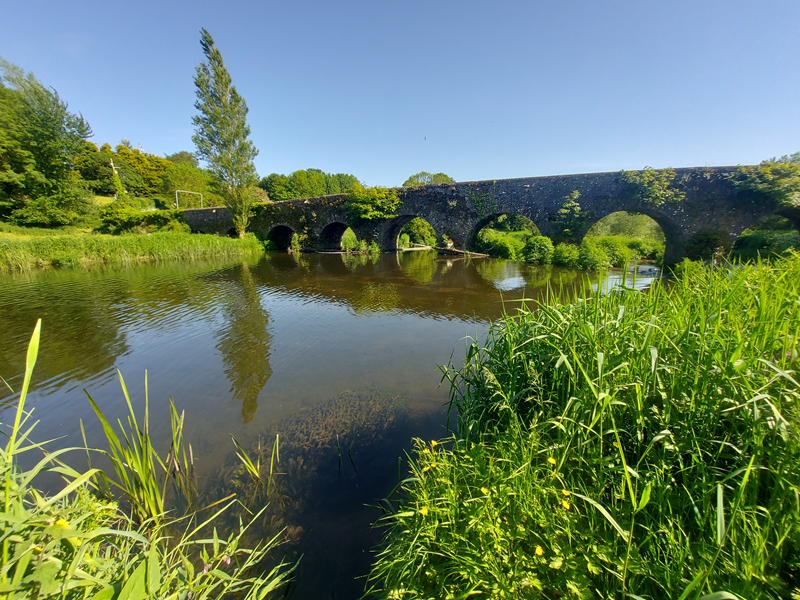
Glanworth Castle stands on a rocky promontory above the River Funshion, overlooking the historic settlement of Glanworth. The castle's origins are generally placed in the late twelfth century, when it was initially established as a Condon stronghold. Its position above the river provided a naturally defensible setting and allowed the castle to command an important point in the surrounding landscape [1].
The Condons and the Roches
The early castle became associated with the de Caunteton, or Condon, family, an Anglo-Norman family established in the region. During the thirteenth century Glanworth passed into the Roche inheritance through marriage. Gerald de la Roche arranged the marriage of his grandson David to Amice, daughter of William de Caunteton, bringing Glanworth into the Roche lordship that had developed from the old cantred of Fermoy. The acquisition was followed by a longstanding rivalry between the Roches and the Condons [2].
The Roches subsequently became an important Anglo-Norman family in Munster. Their position continued through the later medieval period, and in 1489 David Roche was recognised as Lord Roche by Henry VII. The Roche inheritance passed through successive generations of the family from the thirteenth into the sixteenth century, maintaining Glanworth's association with the Roche lordship for several centuries [2].
The medieval castle
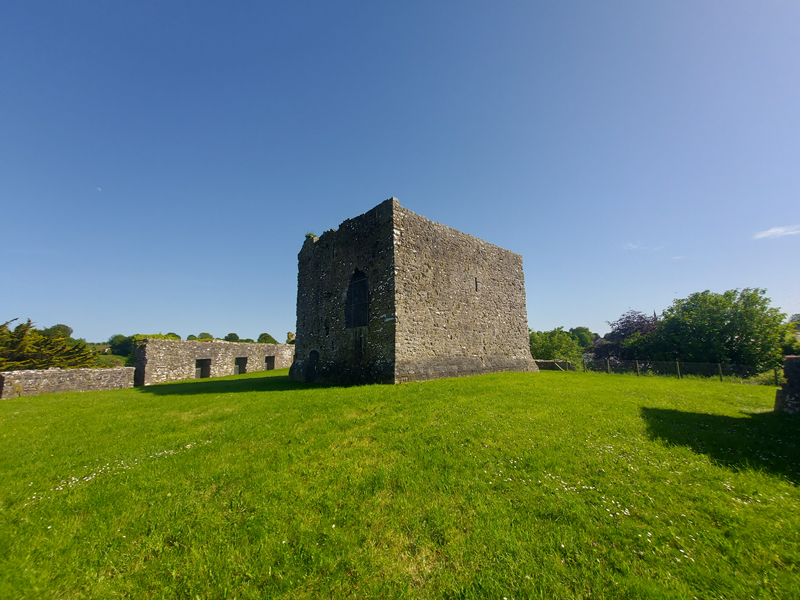
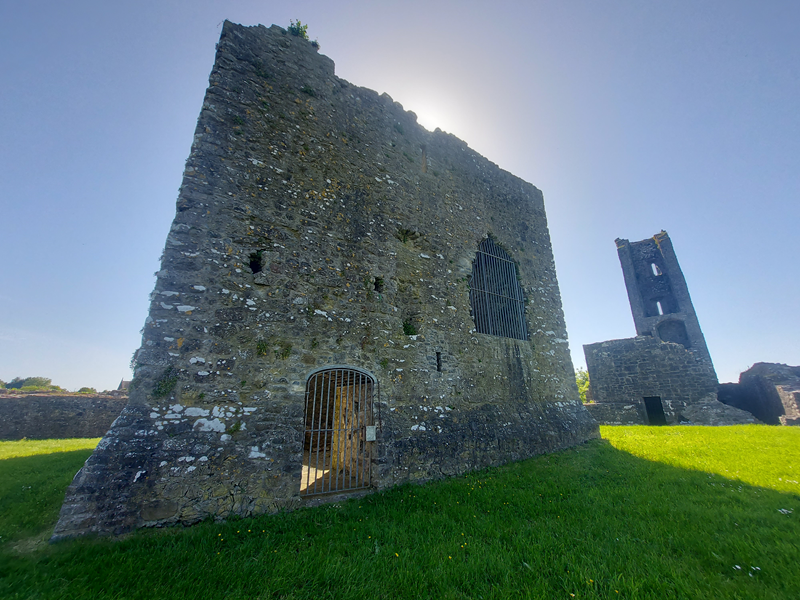
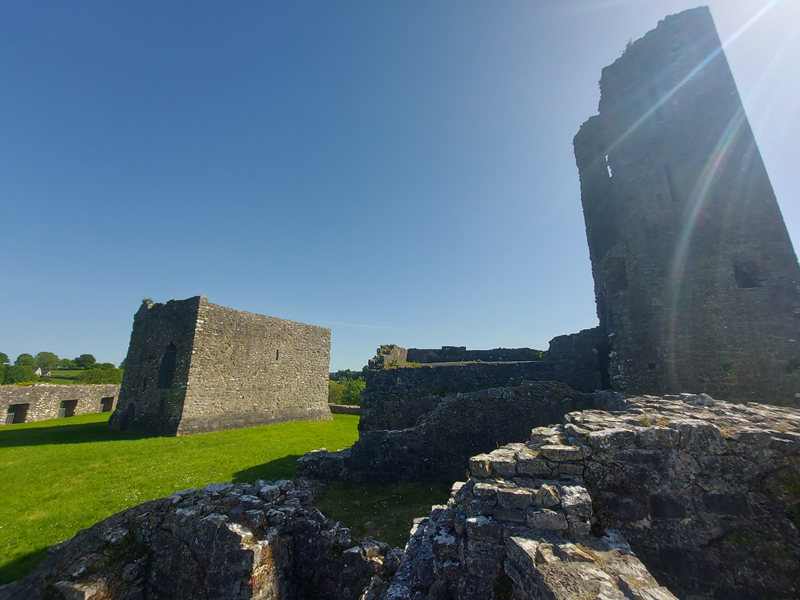
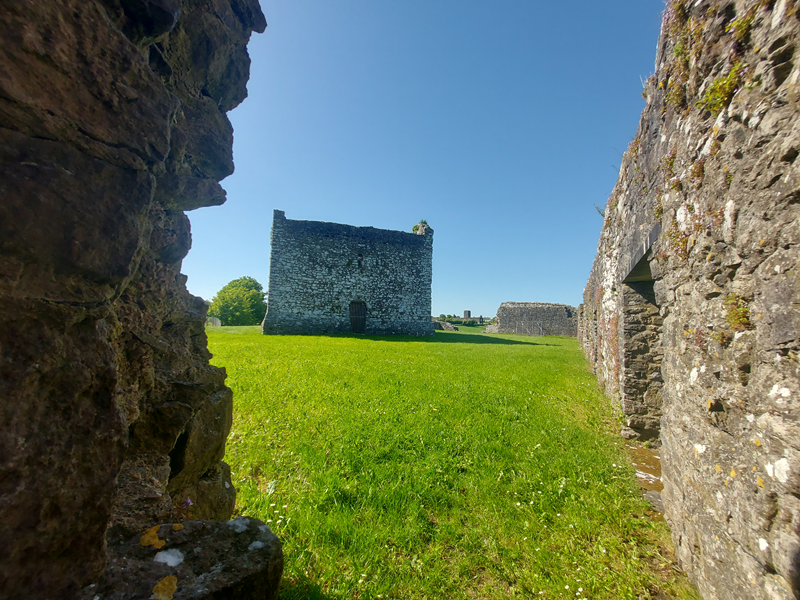
Glanworth Castle developed through several building phases rather than being constructed as a single building. Archaeological investigation identified a square, free-standing keep dating from the thirteenth century as one of the principal surviving elements of the early stone castle. The complex also included a rectangular gate tower of multi-period construction, which was subsequently converted into a large tower house [3].
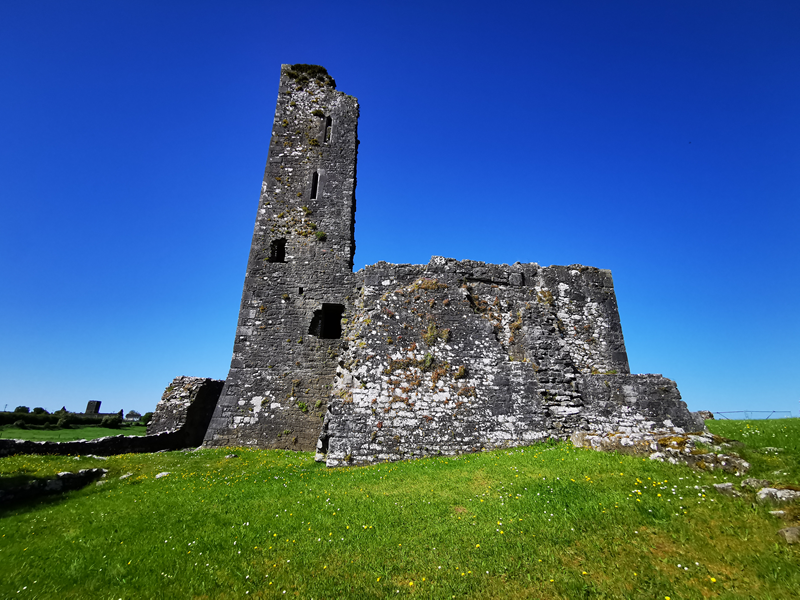
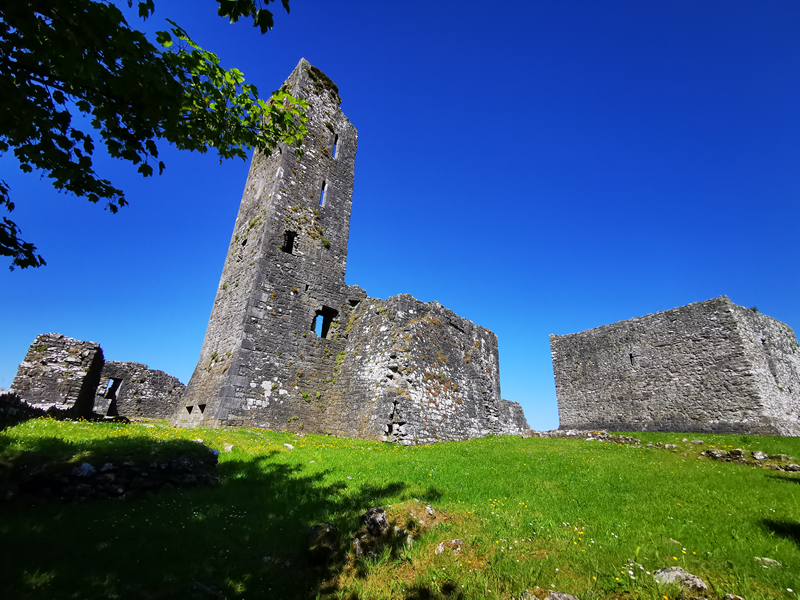
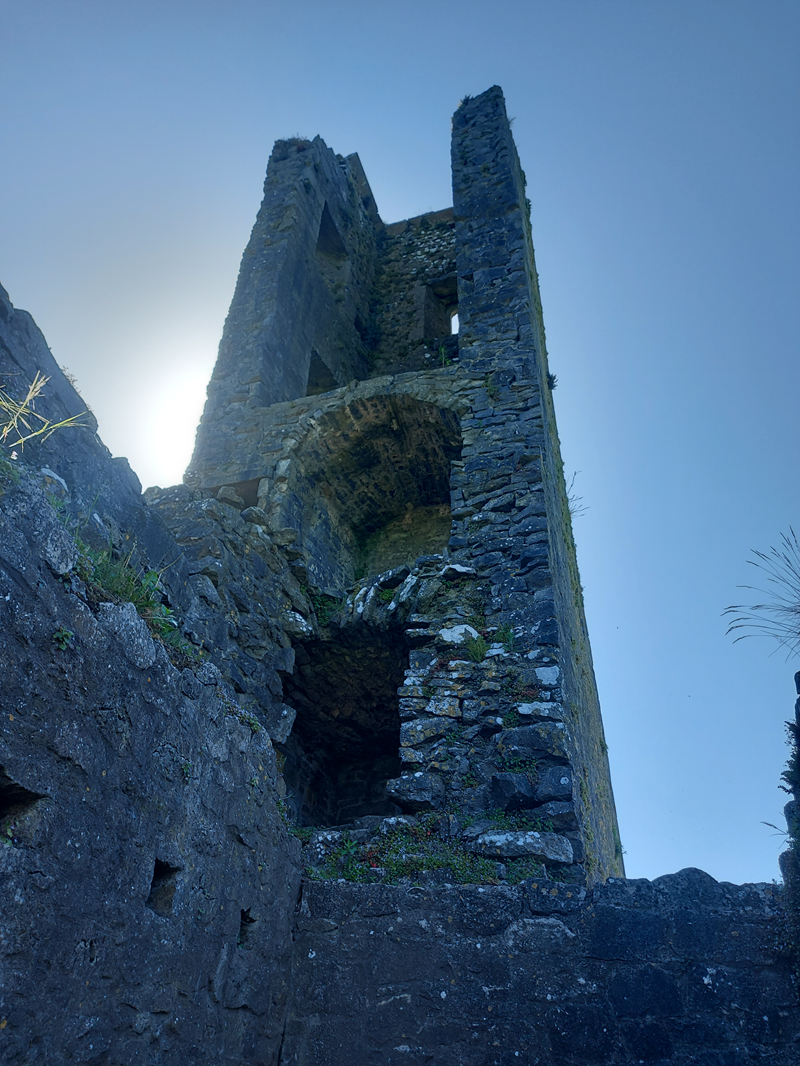
Excavation of the gate tower revealed a central entrance passage with evidence for a two-leaved gate secured by a draw-bar. The building underwent several alterations, including the blocking of the original entrance passage, an extension northwards and the creation of a new entrance through the curtain wall. In a later phase the building was converted into a substantial tower house, while its garderobe turret was extended to its full five-storey height [4].
The castle was enlarged during its later medieval development. The enclosure was extended westwards with a new curtain wall and corner turrets, while another entrance was created on the northern side. These successive alterations produced the complex and irregular arrangement of buildings and walls that survives today [3].
The castle also served residential as well as defensive purposes. Archaeological investigation identified domestic facilities within the complex, including a kitchen with a substantial fireplace and oven. A large bread oven against the western wall was in use during the early seventeenth century, providing evidence for continued domestic activity within the castle [3].
The Roche lordship and the early modern period
Glanworth was a seat of the Roche family and formed part of the lordship associated with the Roches of Fermoy. The castle remained an important residence within the Roche sphere of influence, while its successive building phases reflected changing requirements for both residence and defence [2].
In 1611, during the reign of James I, the manor, castle and town of Glanworth were granted to Viscount Fermoy. By this time the castle had already undergone several phases of medieval development and remained an important fortified residence [3].
Archaeological excavation produced evidence of seventeenth-century occupation, including pottery, coins, iron, bronze and bone objects, as well as fragments of cannon balls. The finds provide evidence of continued domestic activity at the castle during a period of political and military change [3].
The Confederate and Cromwellian wars
The political conflicts that followed the rebellion of 1641 eventually brought Glanworth into the wars of the mid-seventeenth century. The National Monuments Service records that the castle was among the southern garrisons that continued to hold out for the king and that it surrendered to Lieutenant-General Henry Ireton in 1649 [3].
The surrender marked the end of Glanworth's role as a royalist garrison during the conflict. The subsequent Cromwellian settlement brought major changes to landownership in Ireland, and the Roche family was eventually dispossessed of Glanworth in the 1650s [3].
Archaeological evidence indicates that occupation at Glanworth continued after the mid-seventeenth-century conflicts and into the early eighteenth century. By the early eighteenth century, however, the castle had fallen into ruin [3].
Archaeological investigation and conservation
Archaeological excavations were carried out in the 1980s in conjunction with conservation works, following the castle's acquisition as a National Monument. The investigation examined the western part of the castle and the thirteenth-century free-standing keep, revealing a complex sequence of building phases extending over several centuries [4].
The investigation clarified the development of the castle through successive alterations to the keep and gate tower, the enlargement of the enclosure and the conversion of the earlier gate building into a tower house. The archaeological evidence demonstrates that the castle was repeatedly adapted rather than constructed as a single unified complex [3].
Among the discoveries was a sheela-na-gig found in one of the vaulted chambers of the original gate tower. The excavations also produced pottery, coins and a range of metal, bone and other artefacts, together with fragments of cannon balls. These finds provide evidence for the occupation and changing use of the castle over its later phases [3].
Decline and ruin
Following the political and military upheavals of the seventeenth century, Glanworth Castle gradually lost its former importance. Archaeological evidence indicates that the complex remained occupied into the early eighteenth century, after which it fell into ruin [3].
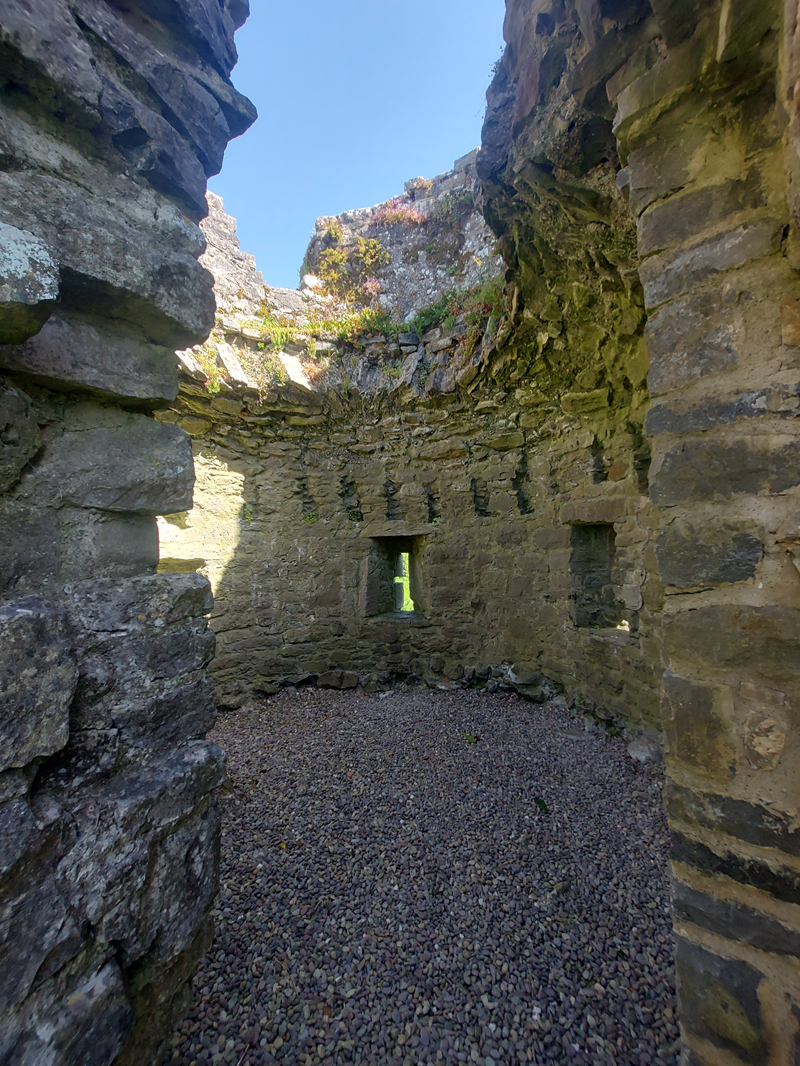
The surviving ruins preserve the remains of several distinct stages in the castle's development, including the medieval keep, the multi-period gate tower and its later tower-house form, the curtain walls and the corner towers. The appearance of the monument today is therefore the result of successive building campaigns and adaptations over several centuries [3].
Glanworth Castle today
Glanworth Castle is a state-owned National Monument in the care of the Office of Public Works. Public access is provided via the steps by the mill on the river bank [1].
Perched above the River Funshion, the castle remains closely connected with the historic landscape of Glanworth. Its surviving keep, gate tower, tower house, curtain walls and other structures preserve evidence of the site's long development from a late twelfth-century Condon castle into a substantial medieval and early modern fortified complex [1], [3].
References
- [1] Heritage Ireland – Glanworth Castle.
- [2] Dictionary of Irish Biography – Gerald de la Roche.
- [3] National Monuments Service – County Cork Urban Archaeological Survey.
- [4] Conleth Manning – The History and Archaeology of Glanworth Castle, Co. Cork: Excavations 1982–4.
Other useful links
- Glanworth Community Archive — The Castles of Glanworth
- Cork Local Studies Digital Archive — Glanworth Castle, Vol. 04, no. 04
- Cork Local Studies Digital Archive — Glanworth Castle, Vol. 06, no. 29
- Dictionary of Irish Biography — Henry Ireton
- Maynooth University — Why did Oliver Cromwell end up in Ireland in the first place?
- History Ireland — The Letters, Writings, and Speeches of Oliver Cromwell