History
Location
Downhill Demesne and Mussenden Temple are located in County Derry, Northern Ireland, and they are among the most iconic and picturesque landmarks in the region, known for the stunning views, rich history, and architectural grandeur.
Early history
The Downhill Demesne's story begins in the mid-18th century, during the time of the Anglo-Irish aristocracy, a period when the land was shaped by large estates and country houses. The estate was originally established by the 4th Earl of Bristol and Bishop of Derry, Frederick Hervey (1730–1803) [1], who was an ambitious and flamboyant figure. More interesting details on him can be found in [2]. Hervey was an Anglican bishop, a notable art collector, and a passionate patron of the arts. He wanted to create a magnificent home that would reflect his wealth and status and also serve as a retreat for the elite members of society. Frederick Hervey was also know for his eccentric character and a number of stories were told about him [3]. For example, it is told that once he organized a curates’ race on Downhill beach, the winner being awarded benefices in his diocese [3, 4]. Moreover, although married since the early age of 22 to Elizabeth Davers, with whom he had five children, it is told that throughout his life he had many extra-marital affairs [3].
A prove of his fine taste in Classical culture was provided by the Ulster Archaeological Society, that discovered a sculptured stone head, which appears to be a Roman portrait dating to AD 161-196, of either the Emperor Marcus Aurelius or his son Commodus, probably purchased by Hervey during one of his tours in Italy [2].
The Downhill Demesne was built on a beautiful, elevated site overlooking the Atlantic Ocean, with dramatic views of the surrounding countryside and coastline. The estate included a sprawling mansion, landscaped gardens, and a variety of outbuildings and structures.
Lion's Gate and Bishop's Gate
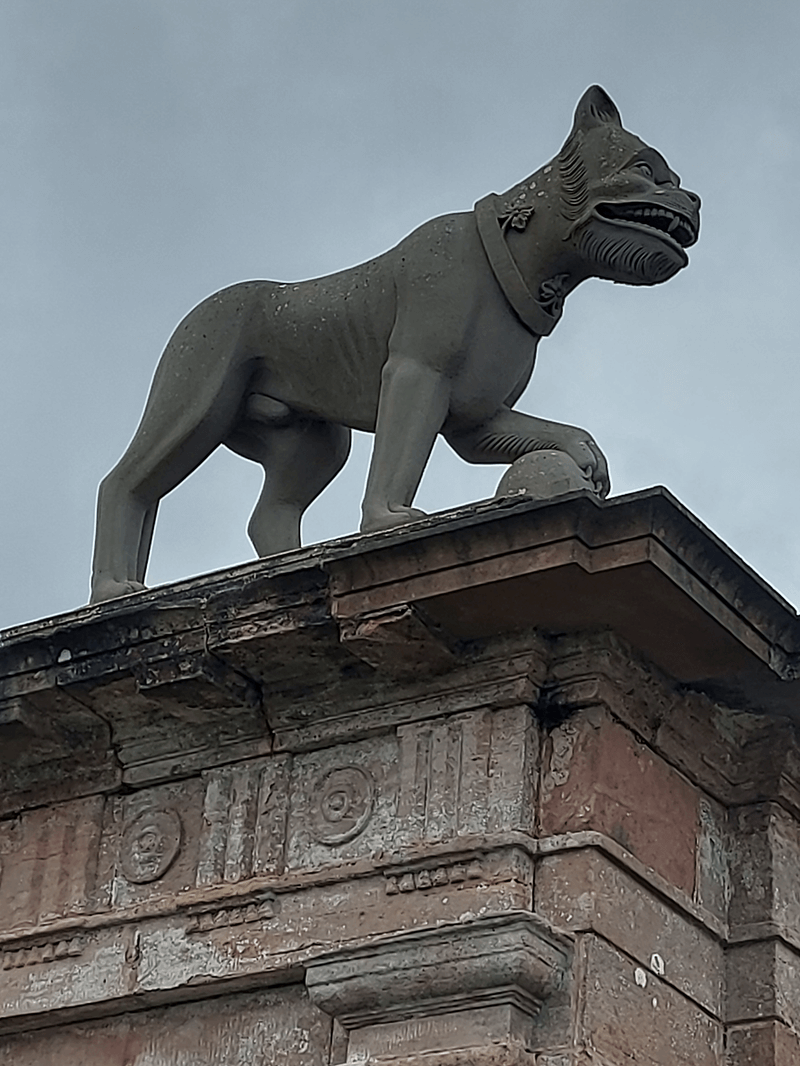
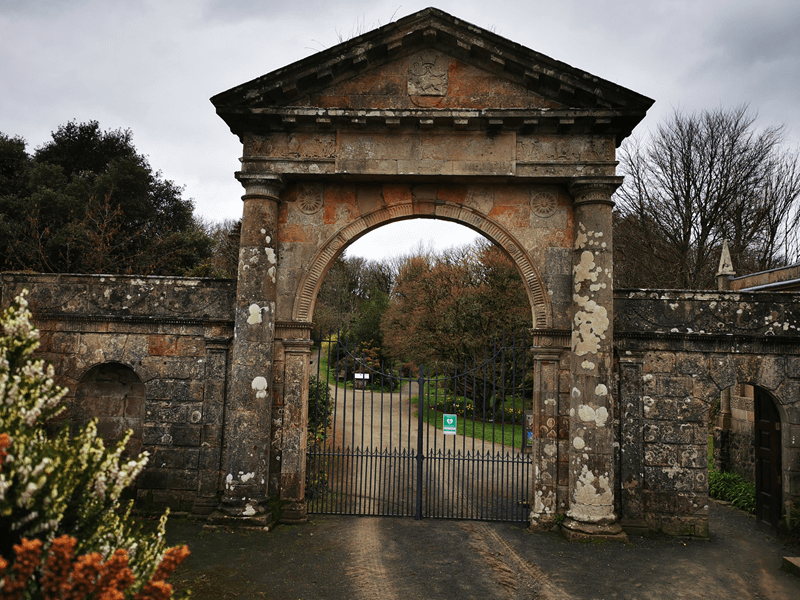
Downhill Demesne has two entrances: Lion's Gate and Bishop's Gate. Built in 1780 and topped by stone snow leopards, Lion's Gate is the original entrance to the demesne [5, 6]. Bishop's Gate was built in 1794 to replace the Lion's Gate as the main entrance [5]. It has an impressive Gothic gate lodge and it is the main entrance to the Walled Gardens and the Black Glen [6].
Downhill house
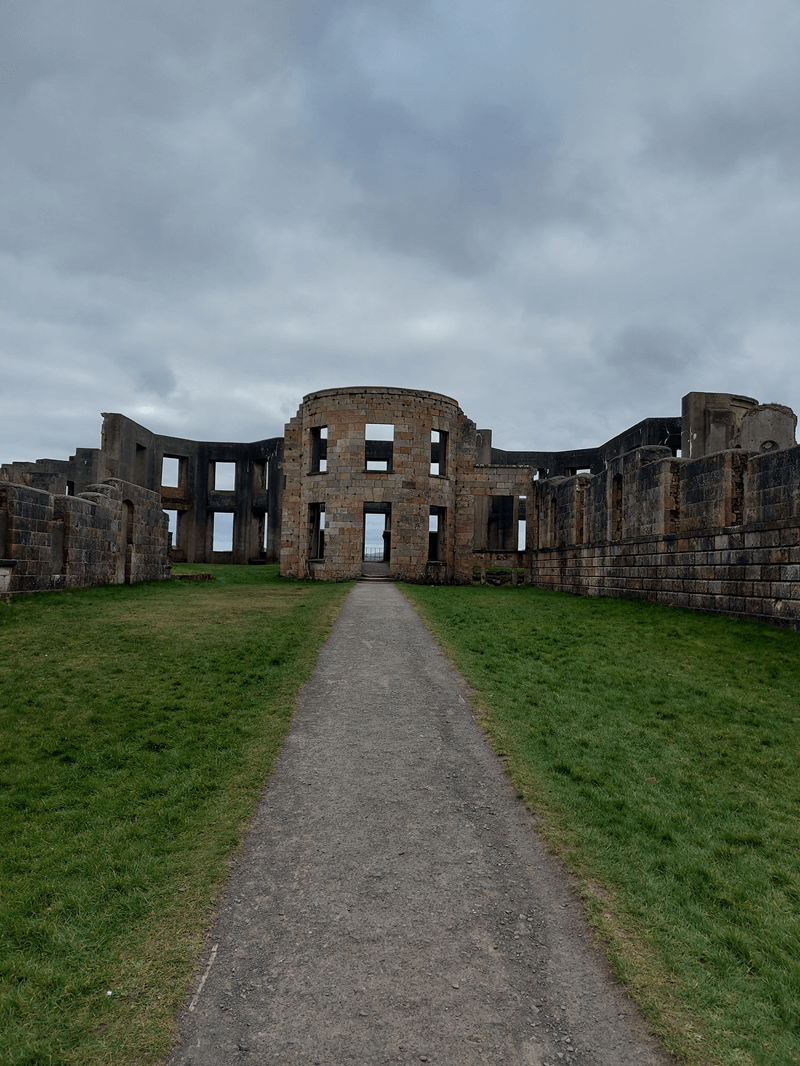
Frederick Hervey built Downhill House in the late 18th century. It was intended to be his home, as the land formed part of his Diocese as the Bishop of Derry [3]. Construction began around 1775 and continued for more than a decade. Hervey wanted a residence that reflected his wealth, taste, and cosmopolitan sensibilities. As a well-travelled man with a love of art and classical architecture, he brought continental influences back to Ireland, and Downhill House became one of the grandest country houses in Ulster.
 The house was designed by the English architect Michael Shanahan [3], with later contributions from James Wyatt, one of the leading architects of the Georgian era. It was built in the Neoclassical style, inspired by the symmetry and grandeur of ancient Roman and Greek architecture.
Downhill House was enormous: a seven-bay, two-storey mansion with an imposing facade that overlooked the Atlantic Ocean. Inside, it featured an elaborate entrance hall, a central domed rotunda, grand staircases, and richly decorated rooms filled with Hervey’s art collection, including paintings, sculptures, and rare books.
The mansion was positioned to make the most of its dramatic surroundings. From its windows, residents could see sweeping views of the coastline, cliffs, and the nearby Mussenden Temple.
In its heyday, Downhill House was both a home and a social hub. Hervey used it to entertain guests from across Ireland and Europe (artists, politicians, and scholars) reflecting his reputation as a patron of the arts and a man of culture. The estate was self-sufficient, with walled gardens, stables, and farmland surrounding the mansion.
However, the location also posed challenges. The house stood on a windswept cliff top exposed to the harsh Atlantic weather, which made maintenance difficult and expensive.
Mussenden Temple
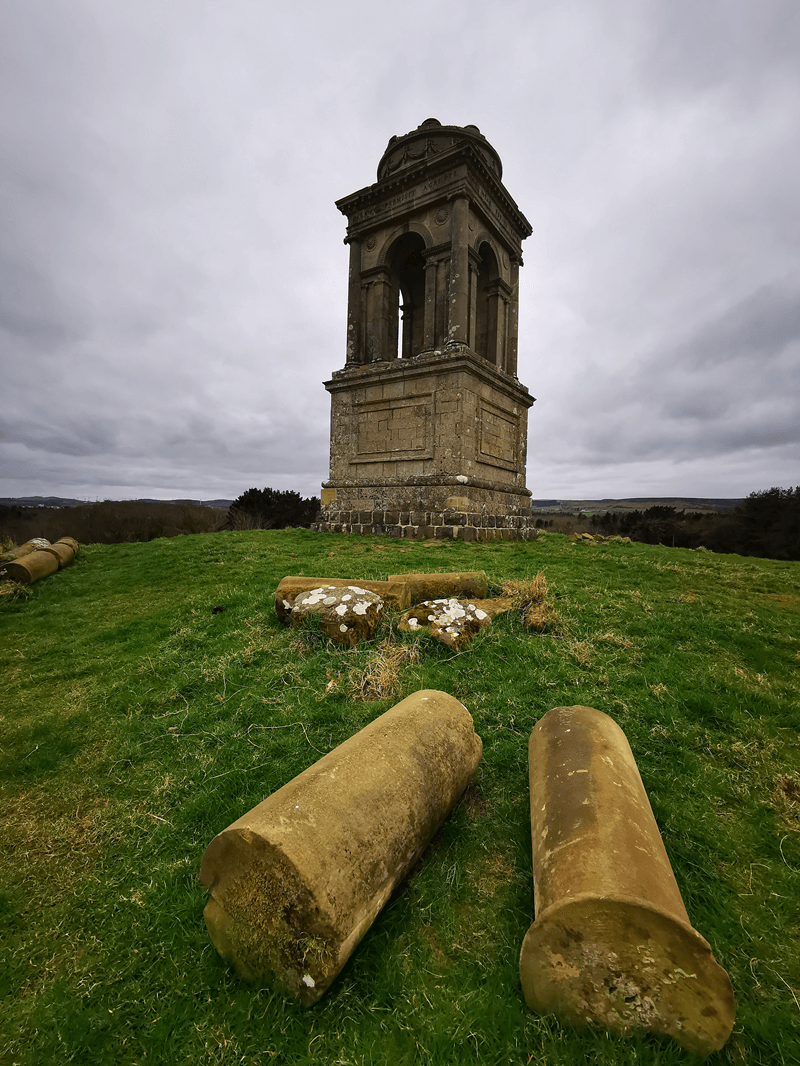
The most famous feature of the Downhill Demesne is Mussenden Temple, an eye-catching circular structure perched on the edge of a cliff, high above the sea. The temple was most likely completed in 1785 [7] (although someone says it was 1783 [3]) and was originally designed as a summer library and a place for relaxation. The Mussenden Temple was created as a wedding gift, but became a memorial for Frideswide Mussenden, the sister of Reverend Henry Bruce, the Earl Bishop’s cousin [2]. A legend wants that the Earl Bishop and Frideswide Mussenden were too close for being just cousins and perhaps they were secretly lovers [6].
The design of Mussenden Temple was inspired by the Bramante’s Tempietto on Rome’s Janiculum hill and the Temple of Vesta in Tivoli, Italy, which Hervey had visited during his travels in Europe [2, 3, 7]. It was built as a "temple" or folly, a structure created more for decoration and visual appeal than for any specific practical purpose. The temple’s striking design includes a domed roof and a circular interior with windows that frame dramatic views of the ocean and landscape below.
As reported in [2, 8], the inscription on the outside of the temple is taken from Lucretius, De Rerum Natura and says "Suave, mari magno turbantibus aequora ventis e tarra magnum alterius spectare laborem" which means "It is pleasant to watch from the land the great struggle of someone else in a sea rendered great by turbulent winds."
In addition to being a charming architectural feature, Mussenden Temple was also used by the Earl as a library and a place for contemplation, offering a quiet retreat from the pressures of high society. The structure's isolated position on a cliff above the sea added to its romantic and mystical aura, drawing visitors from across the country and beyond.
The Downhill demesne estate
The Demesne itself consisted of 2000 acres of farmland and landscaped gardens, making it a grand estate. The gardens were carefully designed, featuring terraces, water features, and woodland areas, while the mansion at the center of the estate served as a luxury residence. Hervey also established a number of buildings, including a Gothic-style church and a large farmyard with stables, to further enhance the estate.
In the late 18th century and early 19th century, the estate attracted many visitors, including members of the nobility and artists who admired the beauty and elegance of both the mansion and its grounds. The estate was also the setting for lavish parties and social gatherings, which were the hallmark of the Anglo-Irish elite during that period.
Decline and Ruin
Sadly, the grandeur of the Downhill Demesne began to fade after the death of the 4th Earl of Bristol in 1803. His heirs were not as enthusiastic about maintaining the estate, and over time, the property fell into disrepair. The mansion itself was abandoned.
In 1851, the house suffered a devastating fire, likely caused by a lightning strike, that destroyed much of the interior [2, 3, 8]. It is told that most of the paintings were rescued, but “The Boar Hunt” by Raphael got destroyed [3].
 Although parts of the house were later rebuilt by descendants of the Hervey family, it never fully regained its former splendour. The last family members left in the early 20th century, and by the time of World War II, the mansion was requisitioned by the Royal Air Force. Soldiers stationed there caused further damage, hastening the building’s decay.
Around 1950, the roof was removed to avoid tax, and the surrounding lands sold off [2]. After that, the once-grand interiors were stripped away by time and weather. The once-magnificent estate slowly crumbled, leaving only the temple and a few remnants of the surrounding structures.
Throughout the 19th and 20th centuries, the estate passed through various hands, and despite occasional restoration attempts, much of the original grandeur was lost. However, Mussenden Temple remained one of the most iconic features of the estate, standing as a symbol of both the lavishness and the eventual decline of the Anglo-Irish aristocracy.
Restoration and Preservation
In the 20th century, the Northern Ireland government took steps to preserve the remaining structures of Downhill Demesne. Mussenden Temple, in particular, was restored and reinforced to protect it from further erosion caused by the harsh coastal weather. In 1986, the property was formally handed over to the National Trust. The National Trust has since worked to maintain Mussenden Temple and the surrounding estate, allowing visitors to experience the stunning beauty of the location while also learning about its fascinating history.
Today, Mussenden Temple remains one of Northern Ireland's most visited landmarks, attracting tourists from around the world. The temple continues to offer breathtaking views of the Atlantic Ocean and the surrounding countryside, and the estate is used for public events, picnics, and photography, making it a popular spot for both history lovers and nature enthusiasts.
In more detail, as the temple was under danger of being lost to the sea due to the erosion of the cliff, in 1997 the National Trust carried out cliff stabilisation work to prevent its loss [7].
Conclusions
The history of Downhill Demesne and Mussenden Temple is a tale of grandeur, ambition, decline, and preservation. From the vision of the 4th Earl of Bristol to the current efforts by the National Trust, the estate remains a testament to the power and fragility of the Anglo-Irish aristocracy, as well as the enduring beauty of Northern Ireland’s coastal landscape. Today, it stands as a reminder of the past, offering visitors a unique glimpse into the lives of the elite during the 18th century, while also providing a stunning natural setting for generations to come.
References
- [1] Wikipedia, Frederick Hervey, 4th Earl of Bristol
- [2] Tuatha, Mussenden Temple and Downhill Demesne
- [3] nationaltrust.org.uk, History of Mussenden Temple and Downhill Demesne
- [4] Robert O’Byrne, "The Irish Easthete Ruins of Ireland", CICO BOOKS, 2019.
- [5] LAIDBACK TRIP, How to Visit Downhill Demesne and Mussenden Temple
- [6] VISIT PORTRUSH, Mussenden Temple & Downhill Demesne
- [7] Northern Ireland - Embrace a Giant Spirit, Mussenden Temple and Downhill Demesne
- [8] CausewayCoast.holiday, Downhill Demesne
Other useful links
- HISTORYHIT, Mussenden Temple and Downhill Demesne
- BINEVENAGH AREA OF OUTSTANDING NATURAL BEAUTY, Downhill Palace, The Lion Gates and Mussenden Temple
- Lord Belmont in Northern Ireland, Downhill House
- Rob Tomlinson, Downhill Demesne and Mussenden Temple
- linkadventure.blogspot.com, Downhill Demesne and Mussenden Temple
- Wikipedia, Mussenden Temple
- Wikipedia, Downhill House
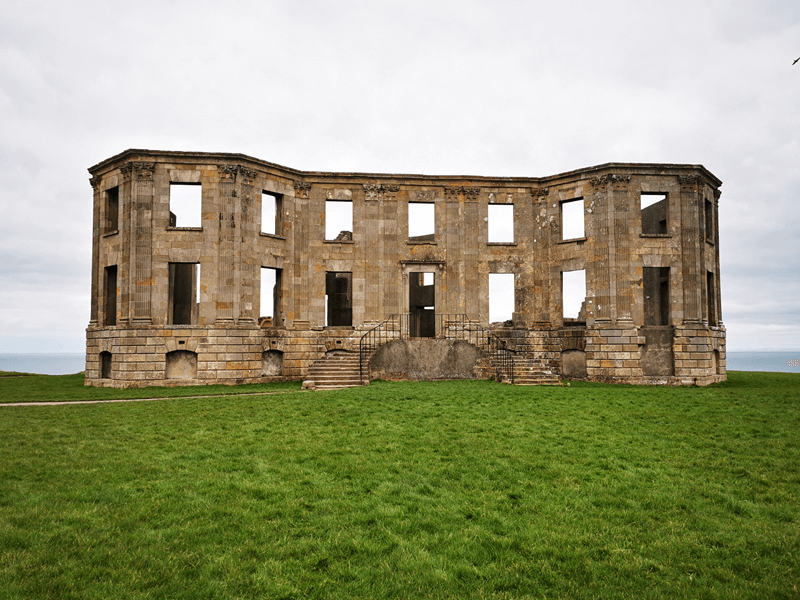
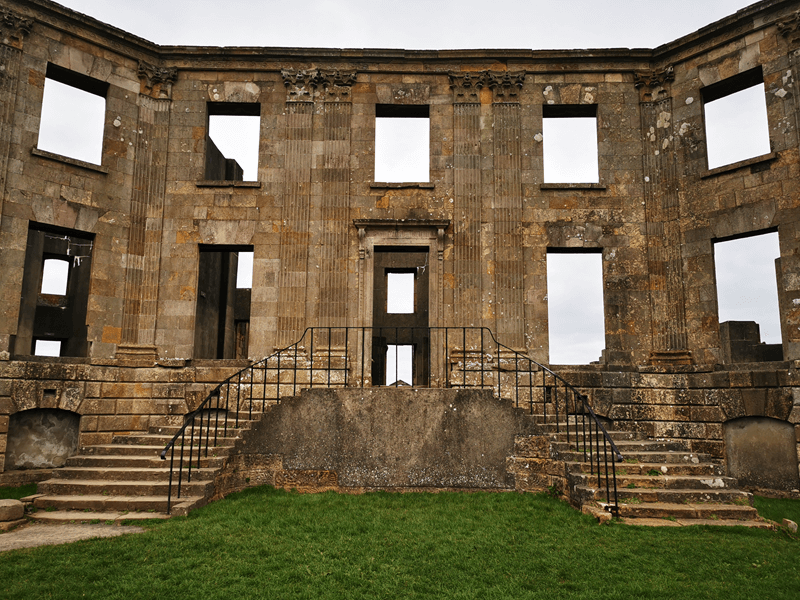
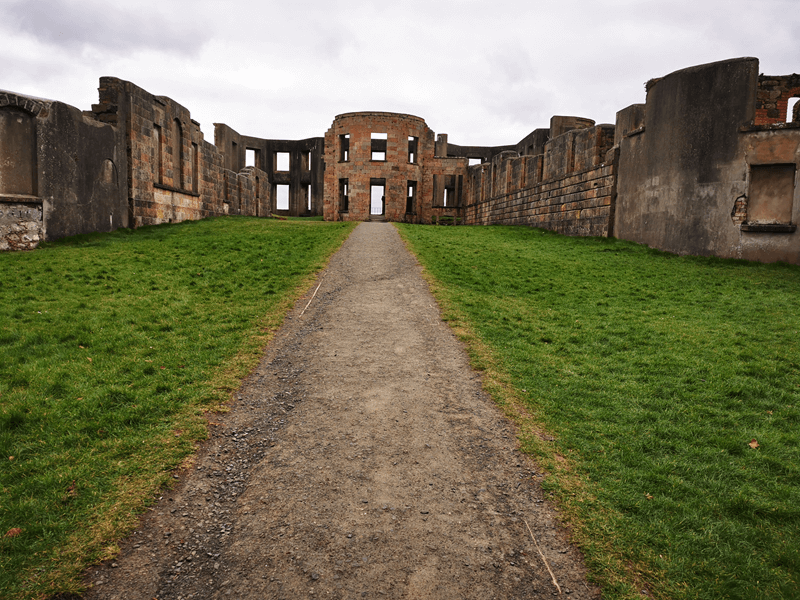
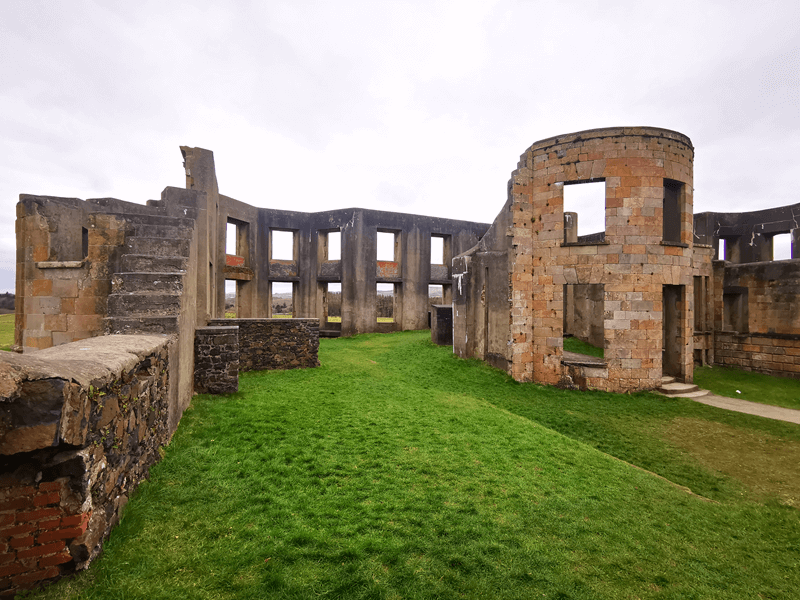
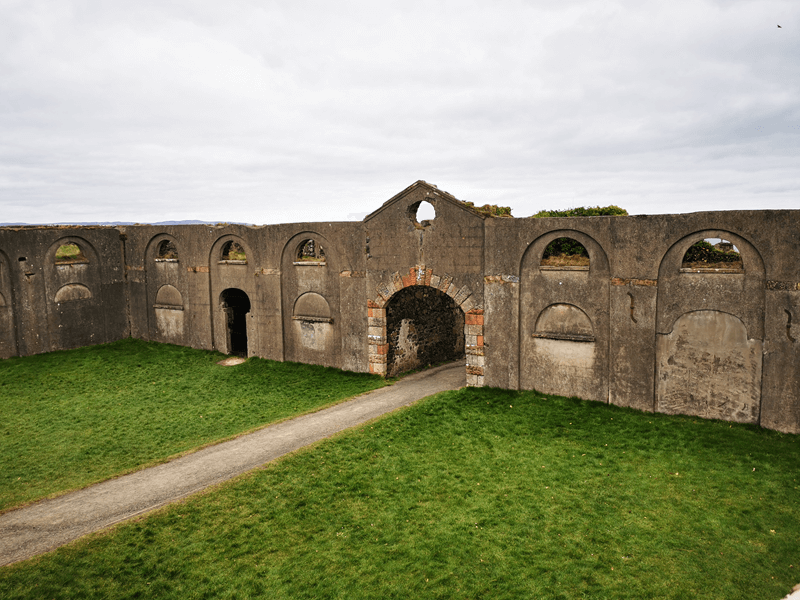
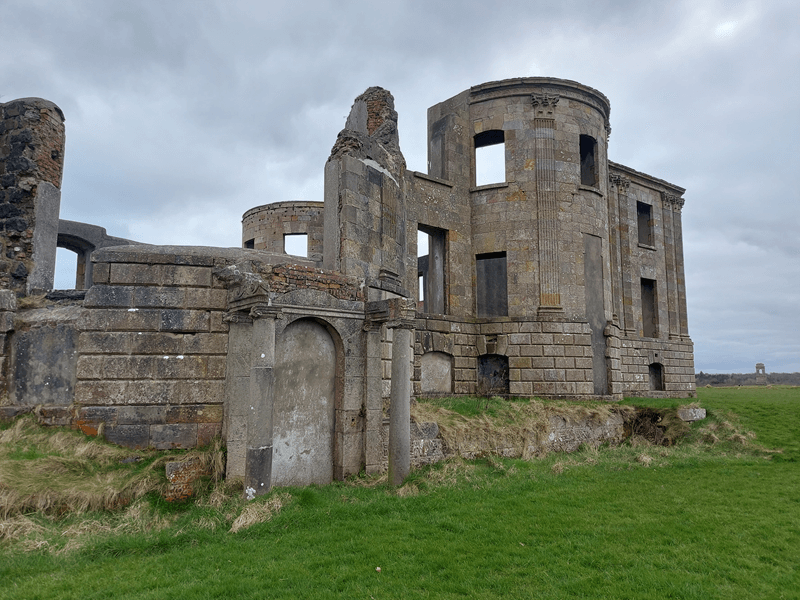
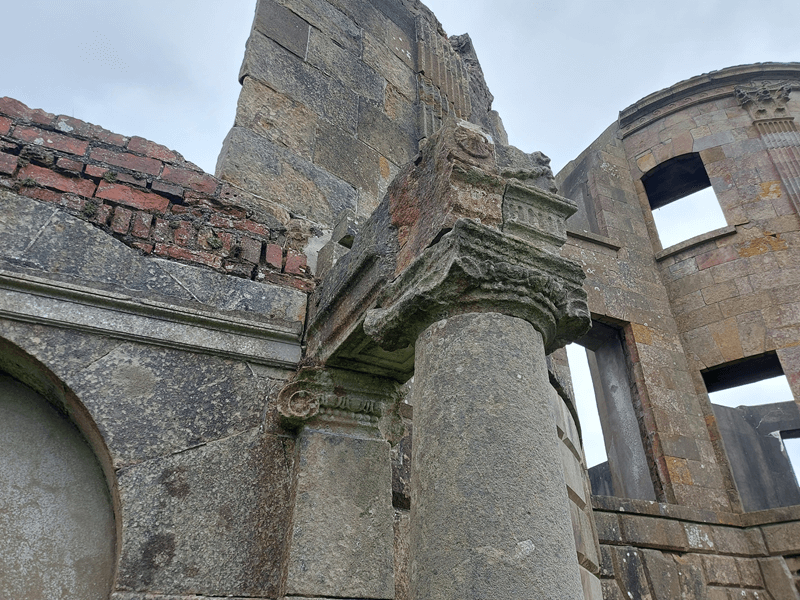
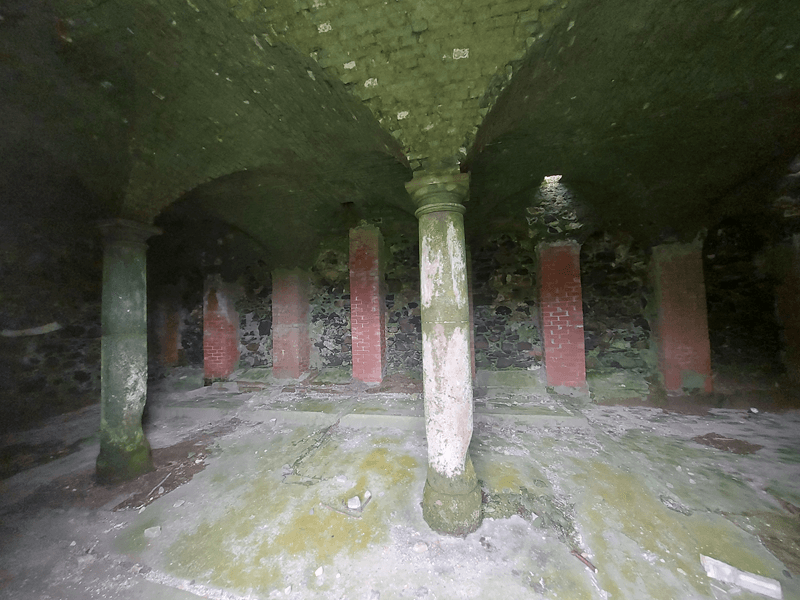
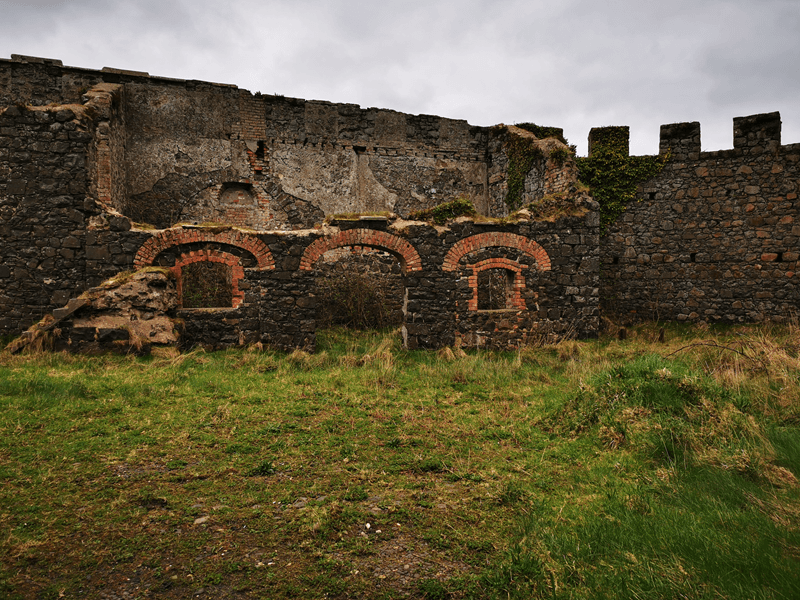
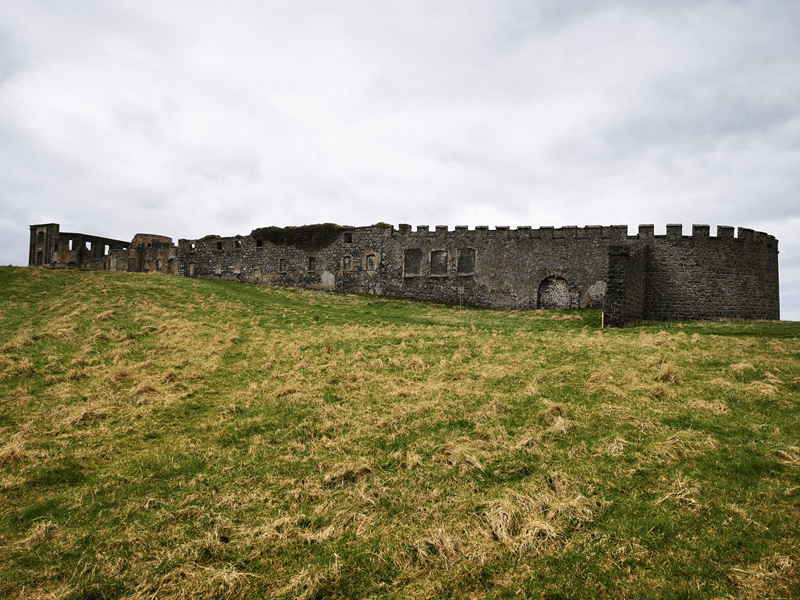
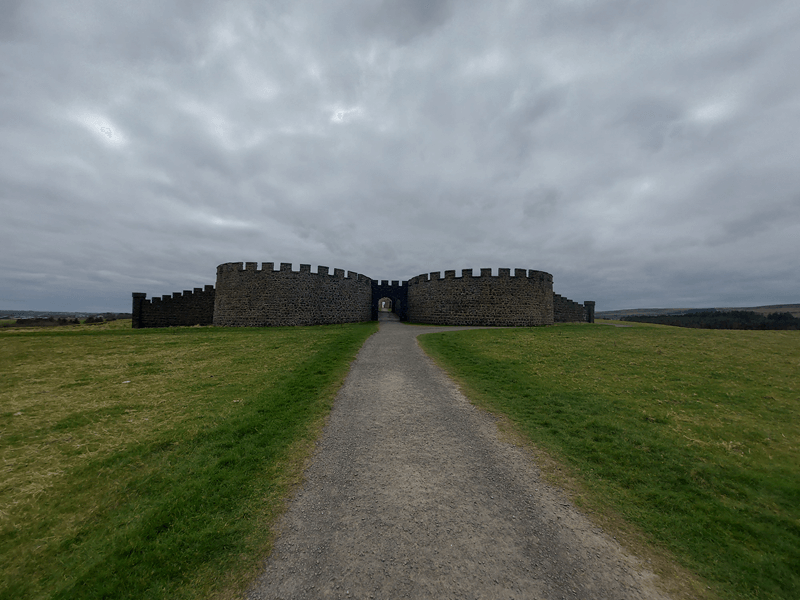
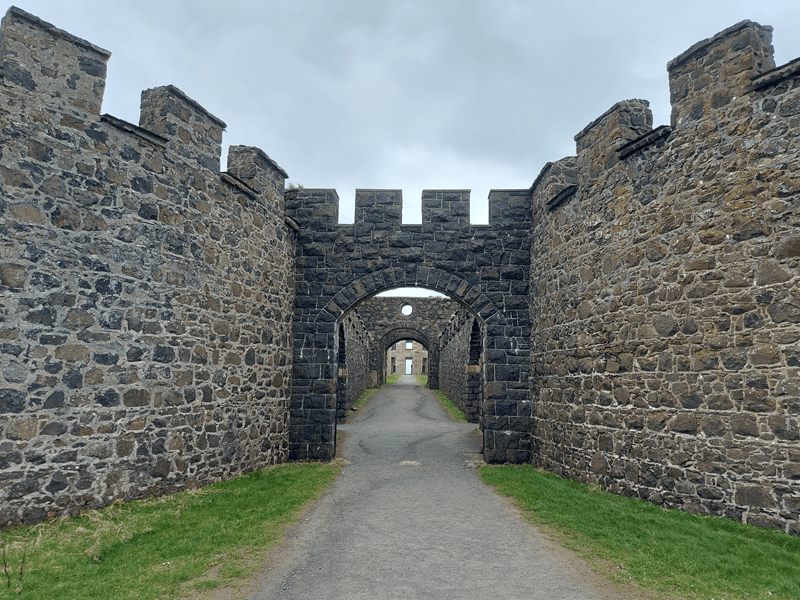
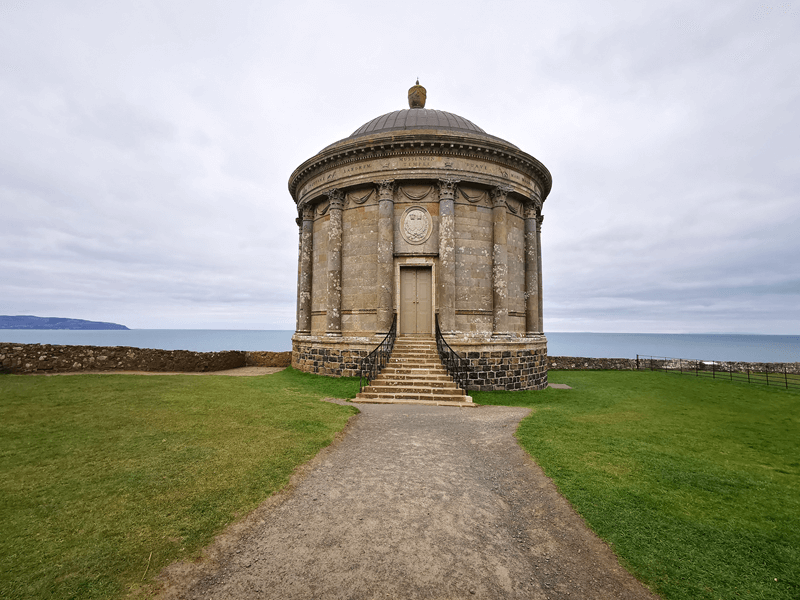
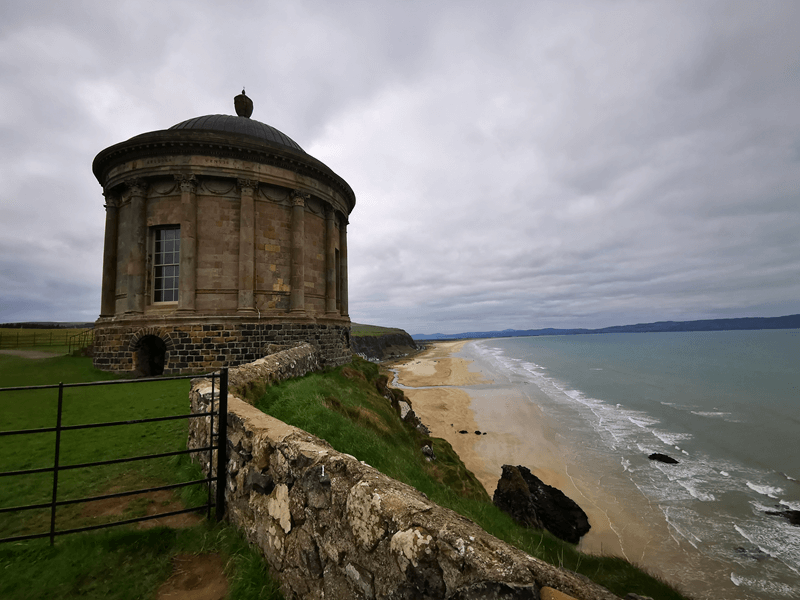
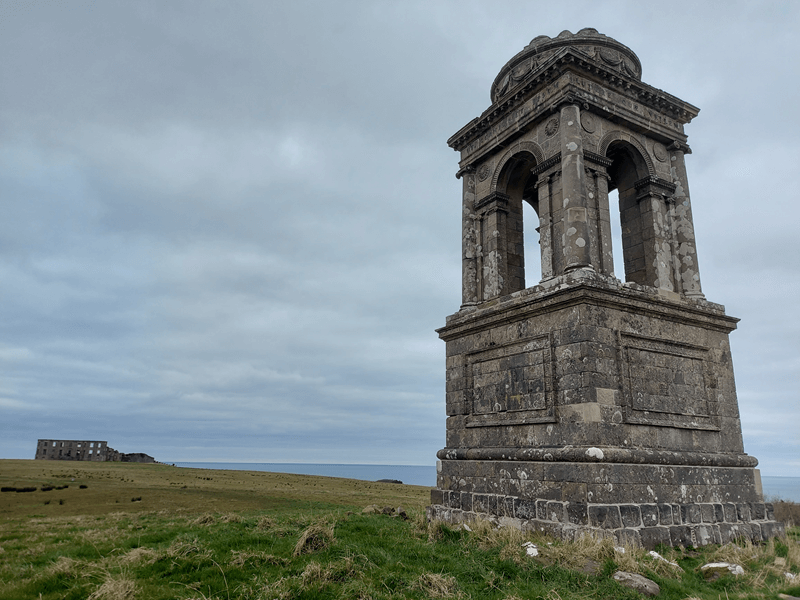
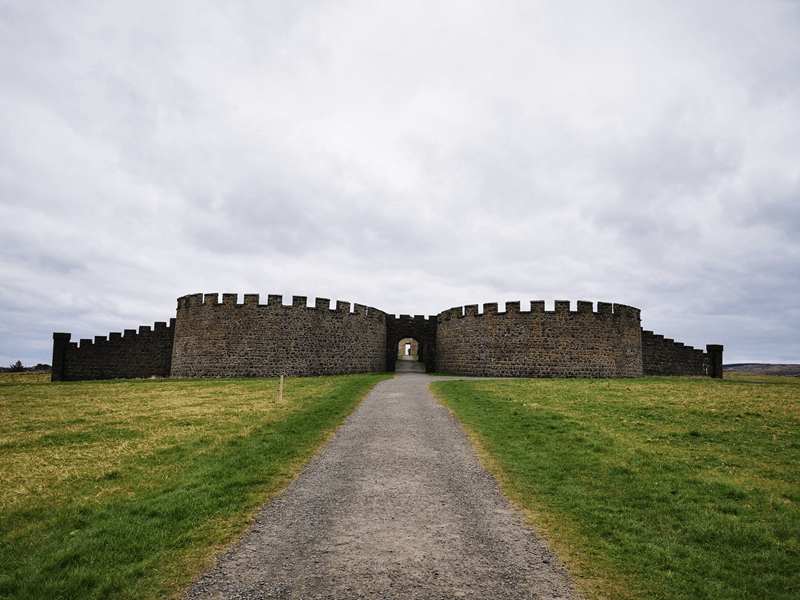
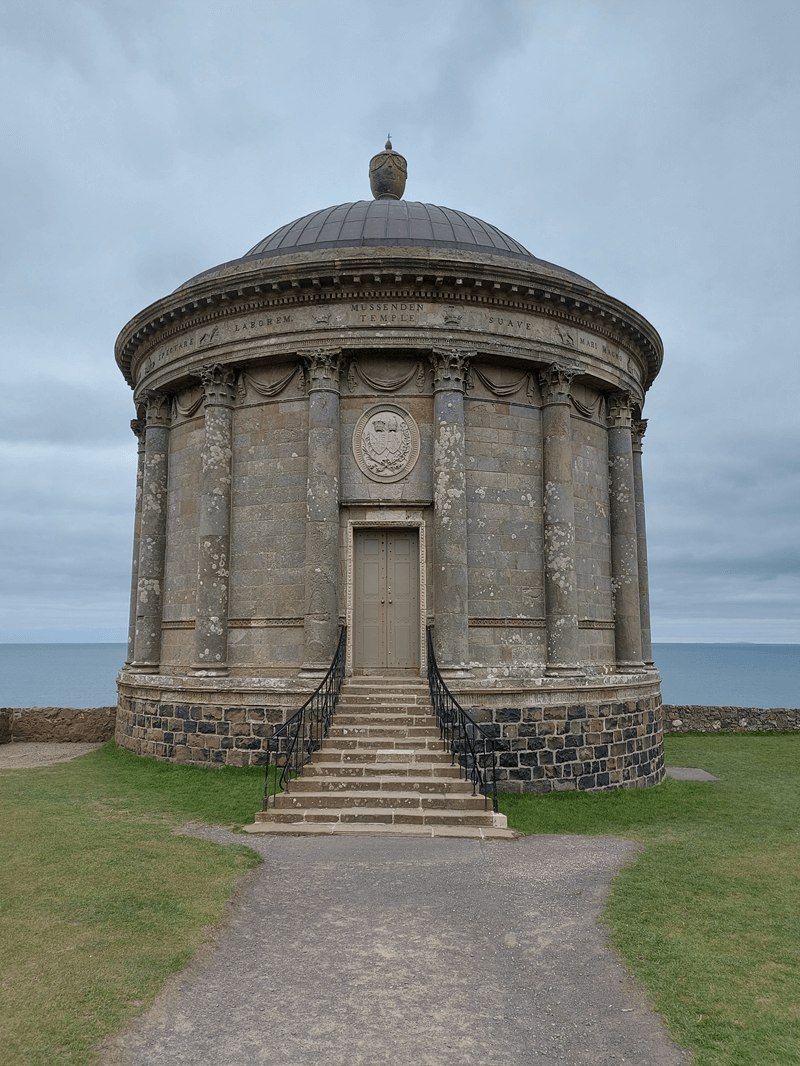 The mansion ruins are hauntingly beautiful, and you can almost imagine the grandeur that once filled the halls. Within the Downhill Demesne, sits an iconic clifftop folly: Mussenden Temple, one of Northern Ireland’s most photographed landmarks, perched dramatically on the cliffs overlooking the ocean. The combination of sea views, architecture, and history makes it a must-see spot on the Causeway Coast.