History
Introduction
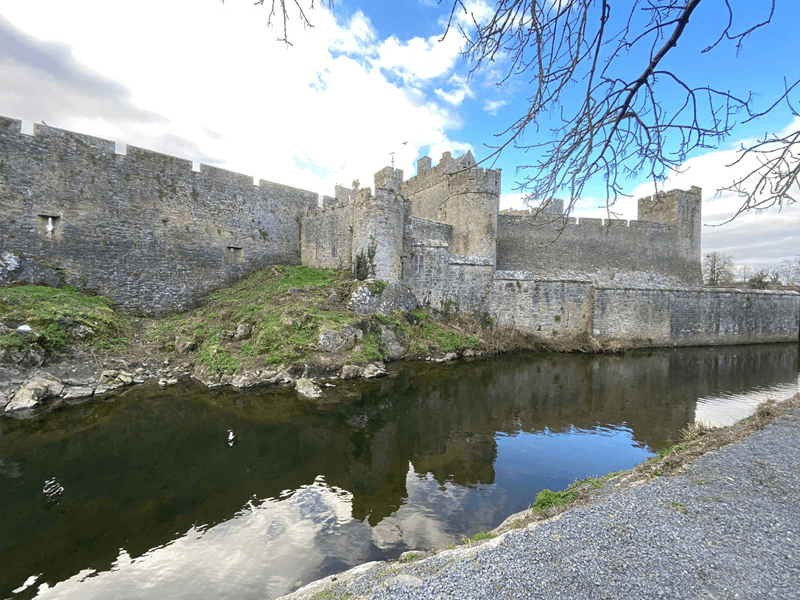
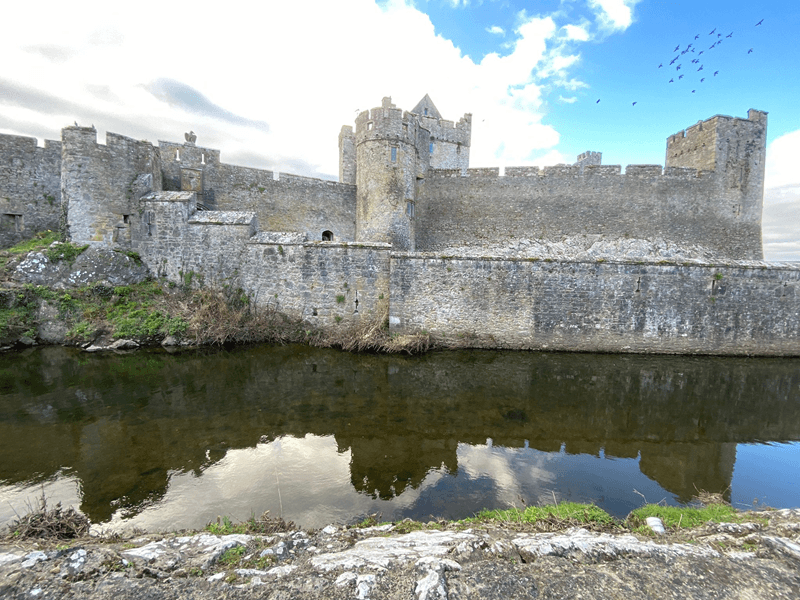
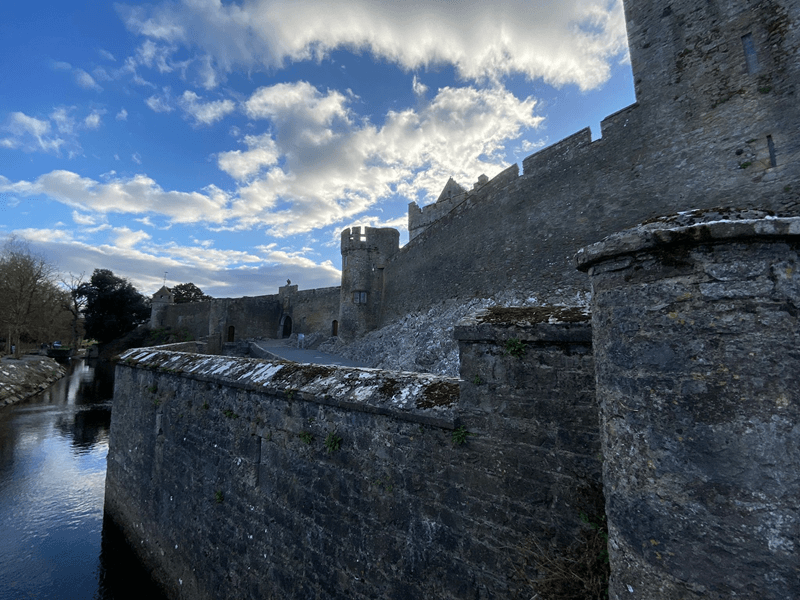
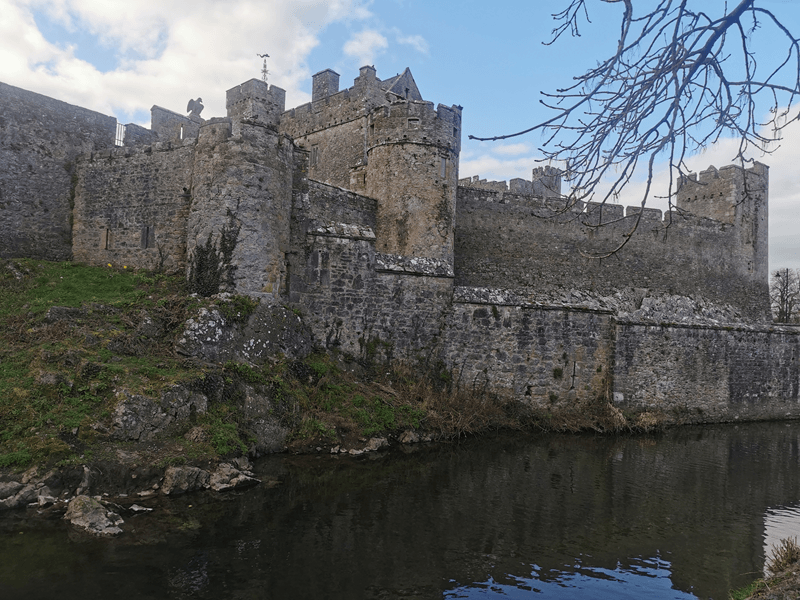
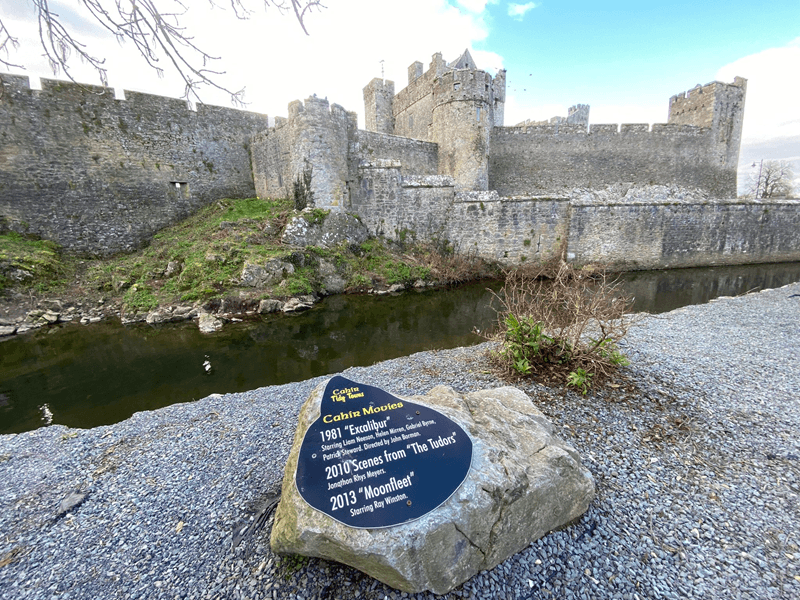
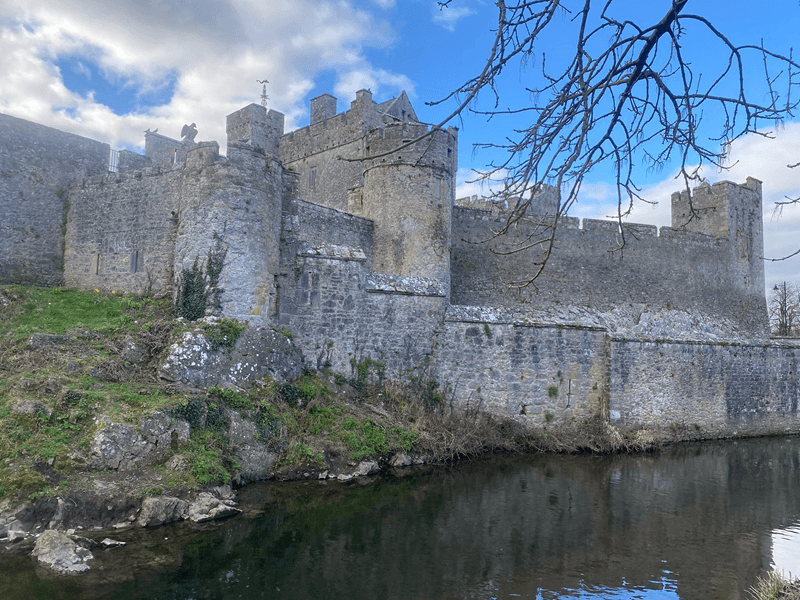
Cahir Castle stands on a rocky limestone island in the River Suir, in the heart of Cahir, County Tipperary. Its position gave the stronghold considerable natural advantages: the river restricted access to the site, while the exposed rock provided a firm foundation for its defensive structures. The place-name derives from the Irish word cathair, meaning a stone fort, suggesting a much older association with fortified settlement [1], [2].
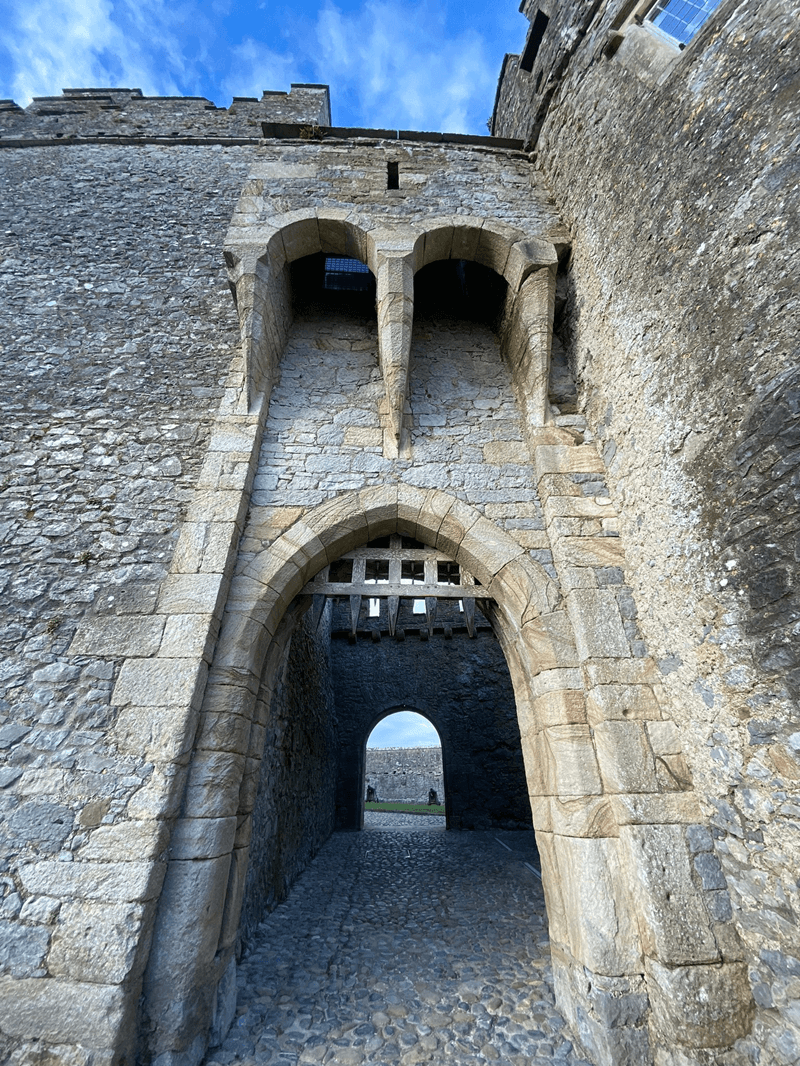
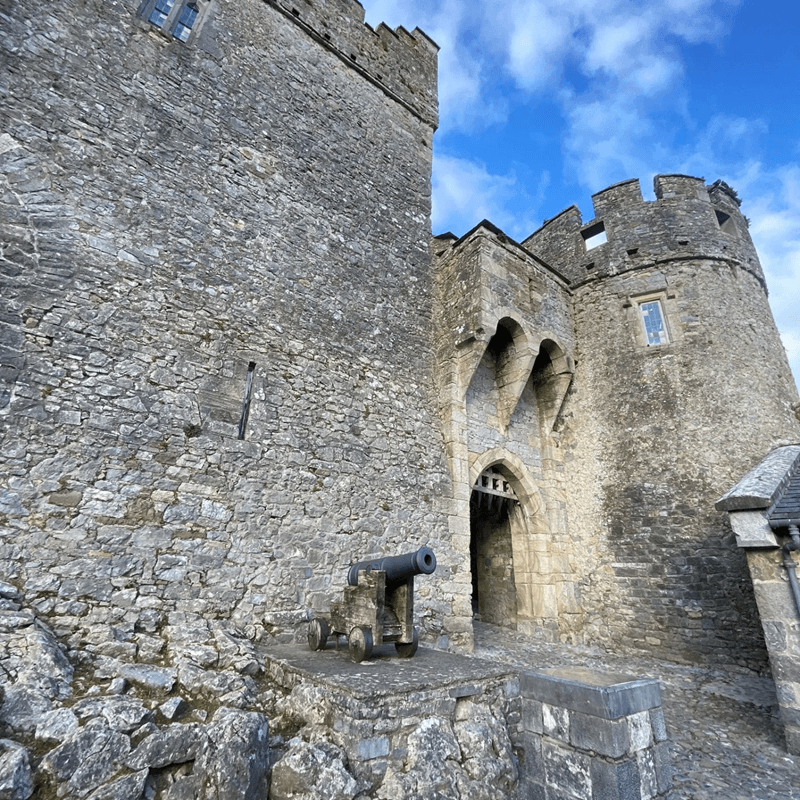
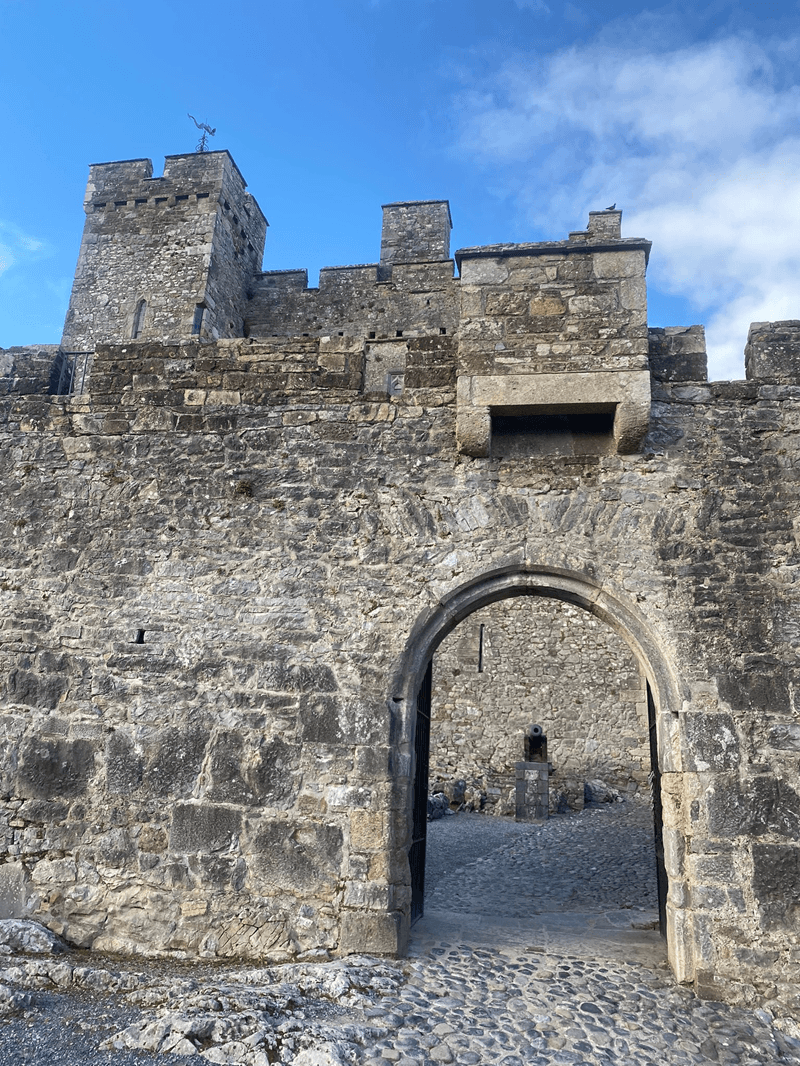
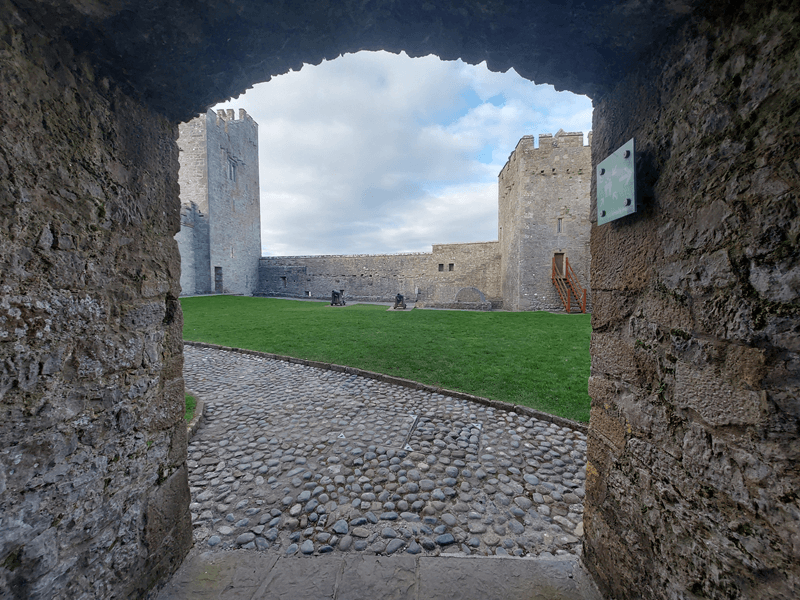
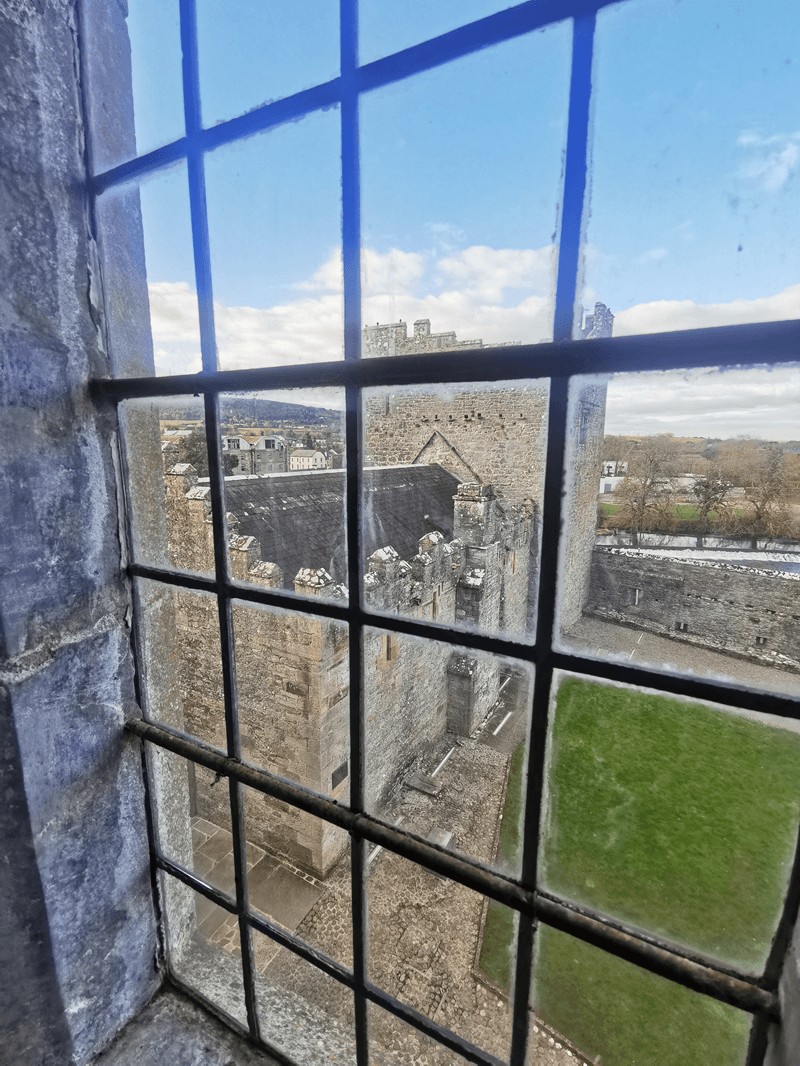
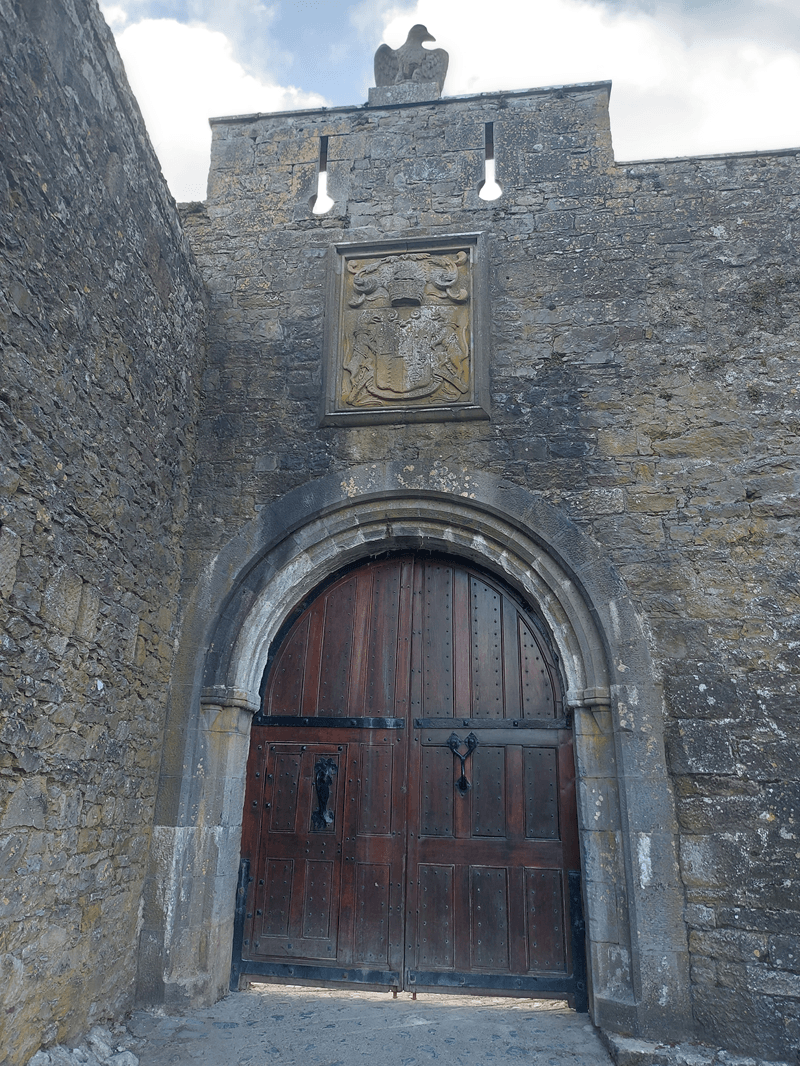
The substantial masonry castle visible today developed over several centuries. Its principal features include a central keep, curtain walls, towers, successive courtyards and an entrance protected by a portcullis. Rather than being the product of a single building campaign, Cahir represents the cumulative work of generations of owners who adapted the stronghold to changing military and domestic requirements [3], [4].
The castle is particularly associated with the Butler family, one of the most influential dynasties in Irish history. Over the centuries, it witnessed periods of political rivalry, the Elizabethan wars, the Confederate Wars and the Cromwellian conquest of Ireland. Its survival makes it one of the most remarkable examples of a medieval Irish castle whose defences and later alterations can still be appreciated today [5], [6].
Origins and early fortifications
The origins of Cahir Castle are not entirely straightforward. Traditions concerning the site extend far beyond the surviving medieval buildings, and the Irish name An Chathair reflects the longstanding association of the locality with a stone fortification. However, the antiquity of the place-name should not be confused with the date of the castle that survives today [1], [2].
Some accounts associate an early fortification at Cahir with Conor O'Brien, a ruler of Thomond, and traditionally date it to 1142. Such accounts form part of the site's historical narrative, but the evidence does not establish that the substantial masonry castle visible today was built at that time. Its principal medieval structures belong to a later period, and the early history of the island remains partly uncertain [4], [7].
Archaeological investigations have provided some evidence for an earlier fortification on the site. Excavations undertaken in 2014, during works associated with electrical ducting, examined areas around the castle and recorded features relating to the underlying limestone and earlier phases of construction. A natural cleft in the rock may have contributed to the site's defensive arrangements, while a rubble bank beneath a later burnt building could relate either to an earlier fortification or to an early curtain wall. The precise interpretation of these remains is uncertain, but they suggest that the medieval castle developed on a site with an earlier history [3].
These findings illustrate the difficulty of reconstructing the earliest occupation of Cahir. The island's defensible position would have made it an attractive location for a stronghold, but the available archaeological evidence does not allow every traditional account to be confirmed. The origins of the surviving castle must therefore be considered separately from the more uncertain history of earlier occupation [3].
The medieval castle and the Butler family
A decisive change occurred in 1375, when Cahir Castle and its lands passed to James Butler, 3rd Earl of Ormond, during the reign of Edward III. The Butlers were one of the most powerful Anglo-Norman families in Ireland, with extensive estates and considerable influence over the political affairs of the country. Their acquisition of Cahir established a family association that would endure for almost six centuries [1], [5].
Under Butler ownership, the castle was developed into a substantial fortified residence. Its position on an island in the River Suir offered a natural defensive advantage, while its walls and towers created successive obstacles for anyone attempting to enter the stronghold. The keep formed the central defensive element, protected by curtain walls and other buildings arranged around enclosed courtyards [4], [6].
The development of the castle continued across the fifteenth and sixteenth centuries. Towers, walls and internal buildings were constructed or modified as military technology and the needs of the household changed. The result was a complex in which defensive architecture was combined with the accommodation and facilities required by a powerful aristocratic family. The surviving fabric reflects several phases of building rather than a single, unified design [4], [6].
The Butlers of Cahir eventually formed a distinct branch of the wider Butler dynasty. Their local influence was reinforced by their control of the surrounding lands, while the castle served as both a defensive stronghold and a visible expression of their status. Its history was consequently tied to the fortunes of the family as well as to the wider political struggles that affected Ireland during the late medieval and early modern periods [5].
The Elizabethan period and the Nine Years' War
During the sixteenth century, the expansion of royal authority in Ireland increasingly brought powerful local dynasties into conflict with the English Crown. The Butler family had to navigate a changing political landscape in which allegiance, rivalry and local interests could have serious consequences for the security of their estates. Cahir's strategic position in Munster made it particularly important during periods of unrest [2], [6].
The crisis intensified during the Nine Years' War, fought between 1594 and 1603. The conflict involved several Gaelic Irish leaders resisting the expansion of English government, most notably Hugh O'Neill, Earl of Tyrone. The Crown responded with major military campaigns intended to re-establish control over rebellious territories. In this context, the capture of important strongholds became a central objective of English commanders operating in Ireland [8].
Cahir Castle was drawn directly into this struggle in 1599, when Robert Devereux, 2nd Earl of Essex, arrived in Ireland as lord lieutenant. Essex commanded a substantial army and sought to suppress the rebellion and strengthen royal control over Munster. Thomas Butler, 4th Baron Cahir, had become associated with the rebel cause, while his brother James Galdie Butler commanded the castle's defenders [1], [9].
When Essex's forces reached Cahir, the garrison refused to surrender. The castle's natural position and defensive works made it a difficult target, and the attackers resorted to heavy artillery. The bombardment eventually breached the eastern defences, allowing the English troops to force their way into the stronghold. After approximately three days of fighting, the castle fell. Accounts of the siege report substantial casualties among the defenders, although the precise figures should be treated with caution [1], [4].
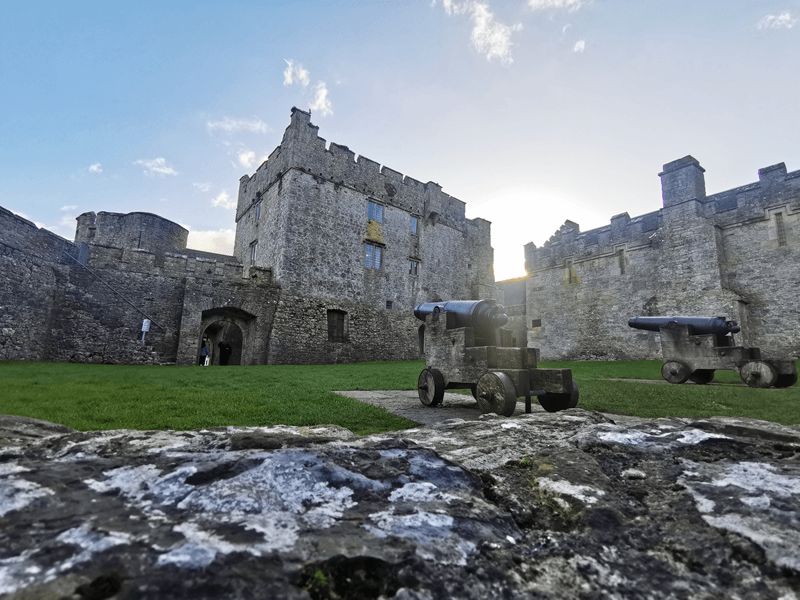
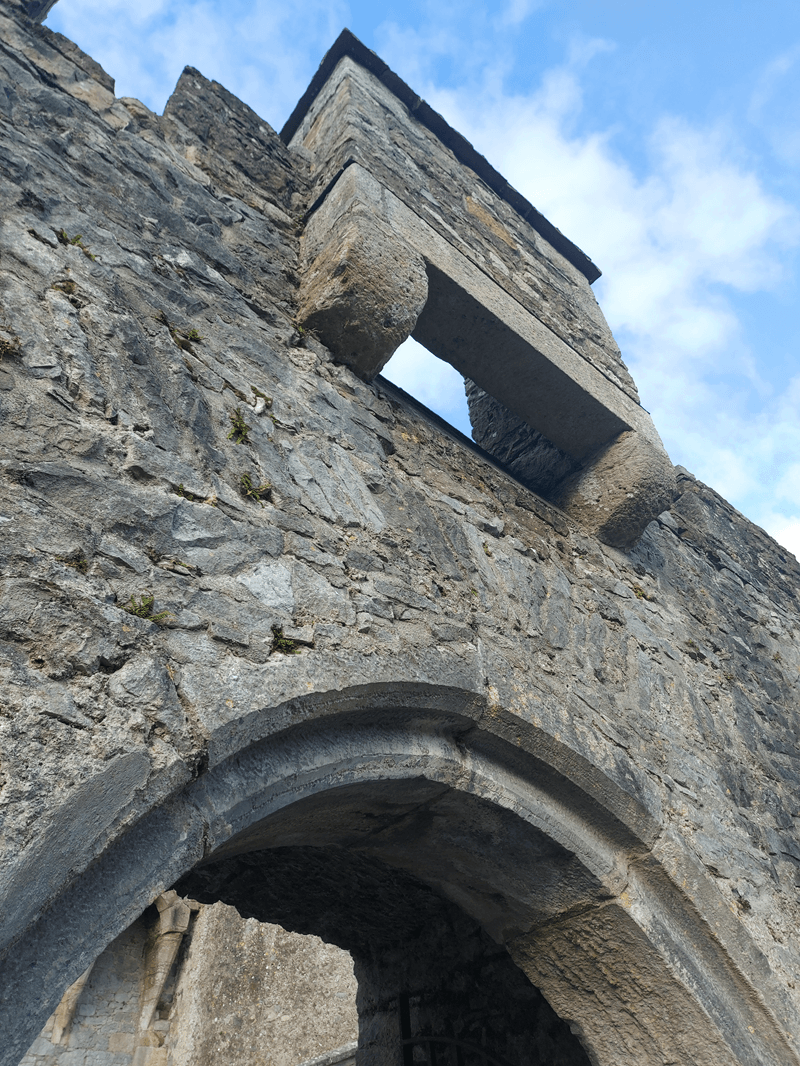
The siege demonstrated that even a formidable medieval fortress could be overcome by an army equipped with heavy artillery. The damage inflicted on the walls became one of the defining episodes in Cahir Castle's history. Cannonballs embedded in the masonry remain among the most striking reminders of the attack and help visitors understand the destructive force brought against the stronghold [6], [10].
The capture of Cahir was a notable success for Essex, although his wider campaign did not bring the decisive victory the Crown had hoped for. The castle was held for the English government after the siege, and its strategic position continued to matter during the unsettled years that followed. The episode also left a lasting mark on the building, whose defences had been tested by one of the most significant military operations of the Elizabethan period in Munster [1], [6].
The castle in the seventeenth century
The seventeenth century brought further upheaval to Ireland, as disputes over religion, political authority and land ownership escalated into a series of connected conflicts. The Irish Confederate Wars began in 1641, and Munster became a theatre of military operations involving Confederate forces, royalists and other competing factions. Cahir Castle's strong defences made it an important objective for the armies operating in the region [4], [6].
In 1647, the castle surrendered to Murrough O'Brien, Lord Inchiquin, during the shifting military fortunes of the Confederate Wars. This episode demonstrated that the possession of a stronghold depended not only on its physical defences but also on the wider balance of power, the availability of supplies and the decisions of its commanders [4].
A further turning point came during the Cromwellian conquest of Ireland. In 1650, Oliver Cromwell's forces approached Cahir, which was defended by George Mathews on behalf of the young Lord Cahir. Cromwell offered terms under which the garrison could leave with its arms and belongings, while warning that a refusal would result in an artillery assault. Mathews accepted the terms, and the castle surrendered without the bombardment that might otherwise have caused further damage [1], [4].
The negotiated surrender helped spare Cahir the destruction suffered by some strongholds that resisted Cromwell's army. It also marked the end of another chapter in the castle's military history. Although the fortress retained its imposing appearance, the political and military circumstances of the mid-seventeenth century had fundamentally changed the position of the Butler family and the role of its ancestral stronghold [6].
The Cromwellian conquest transformed landownership throughout Ireland. The redistribution of estates and the political settlement that followed affected Catholic landowners and established a new balance of power. Cahir's history during this period therefore reflects not only the fate of an individual castle but also the wider transformation of Irish society during the seventeenth century [11].
Family disputes and the case of Lord Dunboyne
Not every significant episode in the history of Cahir Castle involved an army or a siege. In 1627, a dispute over inheritance between Edmund Butler, Lord Dunboyne, and James Prendergast ended in Prendergast's death at the castle. Dunboyne was arrested and tried before his peers but was acquitted [1].
The incident illustrates the importance of land, inheritance and family relationships among Ireland's aristocratic families. In a society where estates carried political influence and financial security, disputes over succession could have consequences extending far beyond the individuals involved. The castle was therefore not merely a defensive structure but also a setting for the personal and legal conflicts of the people connected with it [5].
Decline and changes of use
Following the seventeenth-century wars, the importance of castles as principal military strongholds gradually declined. Improvements in artillery and changes in military organisation had already challenged the effectiveness of traditional medieval fortifications, while more settled political conditions reduced the need for some aristocratic residences to maintain extensive defensive works [6].
The Butler family continued to be associated with Cahir for centuries, but the castle gradually lost its original role as a fortified residence. As domestic expectations changed, the family made use of more comfortable accommodation, while the medieval buildings were no longer maintained in the same way as an active stronghold. Nevertheless, the survival of much of the castle's defensive circuit has preserved a remarkably complete impression of its original layout [4], [5].
The castle's long association with the Butler family is an important part of its identity. Its story reflects the family's rise to regional power, its involvement in the political and military upheavals of early modern Ireland, and the gradual transition from a defensive stronghold to a historic monument [2], [5].
Restoration and preservation
In the nineteenth century, interest in Ireland's medieval buildings grew, and restoration work was undertaken at several historic castles. Cahir was among the monuments that benefited from efforts to repair and preserve parts of its structure. Some of the work involved rebuilding or restoring sections of the complex, meaning that not every feature visible today survives entirely in its original medieval form [4], [9].
Following the death of the last Lord Cahir in 1961, the castle passed into State care. The Office of Public Works subsequently undertook conservation work, helping to stabilise the structure and make the monument accessible to visitors. Cahir Castle opened to the public in 1971, beginning a new phase in which its principal purpose became historical preservation and interpretation rather than residence or defence [1].
Archaeological investigations have continued to improve our understanding of the castle's development and the earlier history of the site. The 2014 excavation, in particular, recorded evidence relevant to the underlying rock, earlier defensive features and the relationship between different phases of construction. Such investigations are important because conservation must take account of the complex archaeological deposits and building history that survive beneath and around the standing walls [3].
Cahir Castle today
Today, Cahir Castle is one of Ireland's best-preserved medieval fortresses and a major historic attraction in County Tipperary. Its keep, towers, curtain walls, portcullis and successive courtyards allow visitors to appreciate the complexity of medieval defensive architecture. The position on the River Suir remains central to the character of the monument, just as it was when the island was first selected as a defensible location [6], [10].
The castle's significance lies not only in its architecture but also in the events associated with it. The Butler family's long tenure, the dramatic siege of 1599 and the negotiated surrender to Cromwell in 1650 connect Cahir to some of the most consequential political and military developments in Irish history [1], [4].
The surviving walls also tell a story of adaptation and continuity. Although the castle no longer serves as a fortress or aristocratic residence, its successive building phases preserve evidence of changing architectural needs, military technology and family fortunes. Archaeological work continues to add detail to this history, helping distinguish documented events from traditions about the site's earliest origins [3].
From the uncertain traces of an earlier fortification to the medieval stronghold of the Butlers, the bombardment of 1599 and the events of the Cromwellian conquest, Cahir Castle reflects many centuries of Ireland's changing history. Its survival provides a rare opportunity to explore the relationship between landscape, architecture, aristocratic power and warfare in one of the country's most impressive medieval castles.
References
- [1] Heritage Ireland — Cahir Castle: 50 Years Open to the Public
- [2] Visit Cahir — The History of Cahir, Co. Tipperary
- [3] Excavations.ie — Cahir Castle, Tipperary (2014:230)
- [4] Great Castles — Cahir Castle
- [5] Visit Cahir — The Butler Family of Cahir
- [6] Discover Ireland — Cahir Castle
- [7] Visit Cahir — Cahir Castle: Visiting Ireland's Most Complete Castle
- [8] Dictionary of Irish Biography — Hugh O'Neill, Earl of Tyrone
- [9] Dictionary of Irish Biography — Robert Devereux, 2nd Earl of Essex
- [10] Megalithic Ireland — Cahir Castle, Tipperary
- [11] Dictionary of Irish Biography — Oliver Cromwell