History
Origins and Early History
Standing on the southern bank of the River Shannon, close to the point where the Mulkear joins it, Black Castle, also known as Castle Troy, occupies a strategically important position east of Limerick. Its origins remain uncertain. Local tradition has attributed its construction to the O’Brien family, sometimes specifically to Dermot O’Brien during the reign of Henry III (1216–1272). However, in his 1840 Ordnance Survey Letters, John O’Donovan observed that no reliable local tradition identified either the builder or the date of construction, and questioned the association between the castle and the Troy family. The surviving tower is generally considered to date from the fifteenth century, considerably later than the traditional foundation story [1-3].
The Troy family is recorded in the medieval history of Limerick: H. Troy served as provost of the city in 1197, while a T. Troy appears in a document of 1361 as a bailiff. These references demonstrate the family's presence in the area, although they do not establish ownership of the castle at those dates. By 1583, Castle Troy was recorded as being held by W. Bourke. In 1610, ownership was attributed to MacKeough of Clonkeen, while by 1640 the property was associated with Theobald, Lord Baron of Brittas [2]. These records point to a changing pattern of ownership rather than a clearly documented, uninterrupted succession between the families traditionally associated with the site.
The MacKeoghs and the Seventeenth Century
The MacKeoghs were a local family with a reputation for military strength and involvement in regional rivalries. By the mid-seventeenth century, however, Castle Troy was already in a state of ruin. The Civil Survey, compiled between 1654 and 1656 and describing conditions around 1640, records the property as ruined, together with an orchard and an eel weir on the river [2].
Local accounts associate further damage to the castle with the Cromwellian campaign. During the siege of Limerick in 1651, the Parliamentary forces were commanded by Henry Ireton, and tradition maintains that artillery positioned on Harty’s Hill was used to bombard Black Castle. The Limerick poet Michael Hogan later helped preserve this episode in local memory [4]. Nevertheless, as the Civil Survey already described the castle as ruined before the siege, the extent and precise chronology of any damage caused by the bombardment remain uncertain.
The property subsequently passed through further changes of ownership. In 1666, it was included in a grant to James, Duke of York, and in 1703 it was sold to the Hollow Blades Company. A map dating from 1688 still depicts the castle beside the Shannon, although this does not necessarily indicate that it remained habitable [2].
Architecture and Local Legend
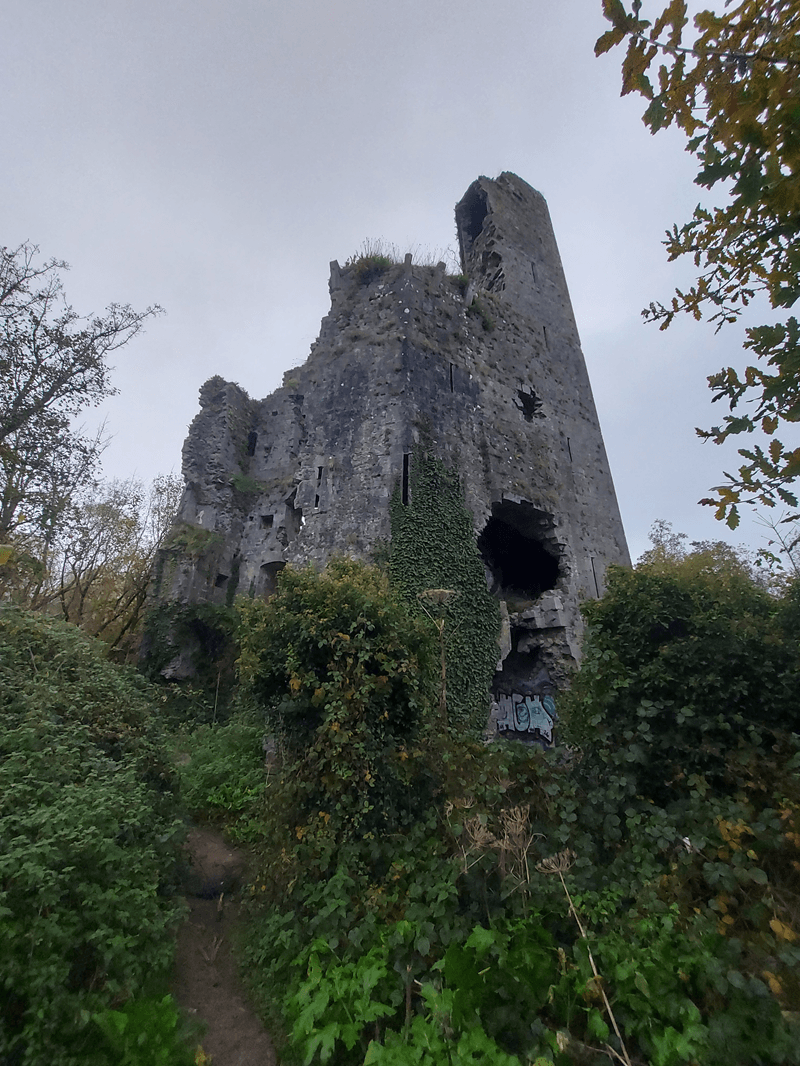
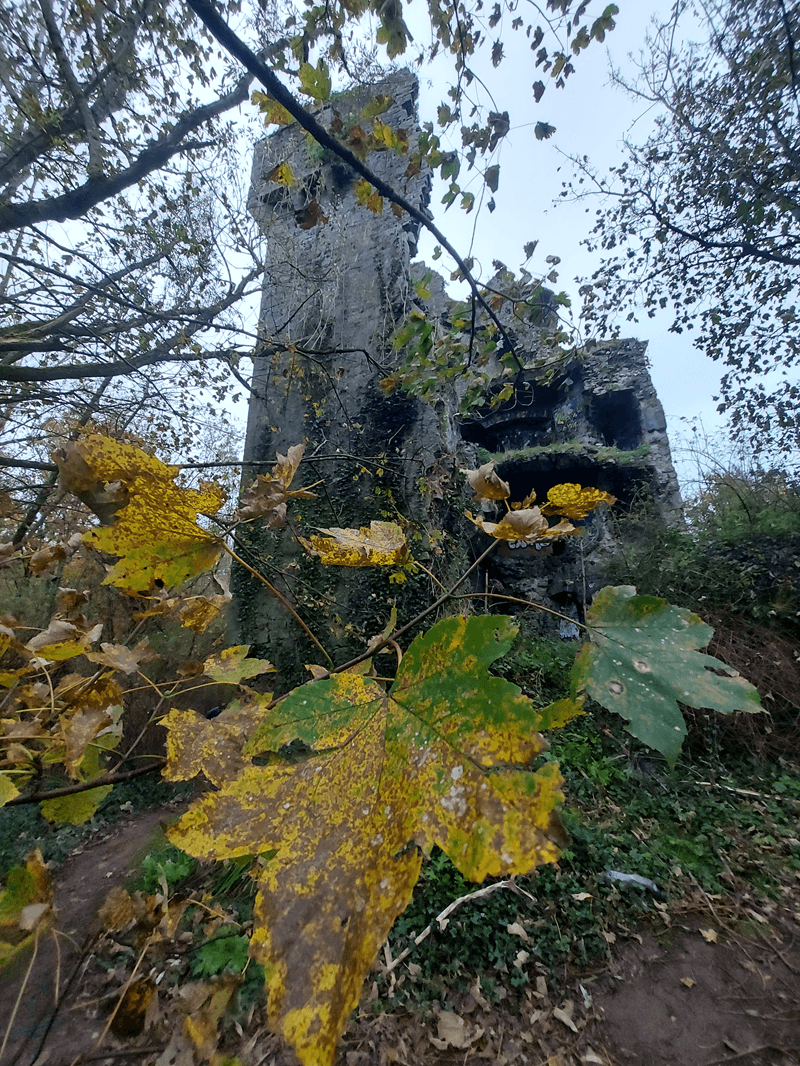
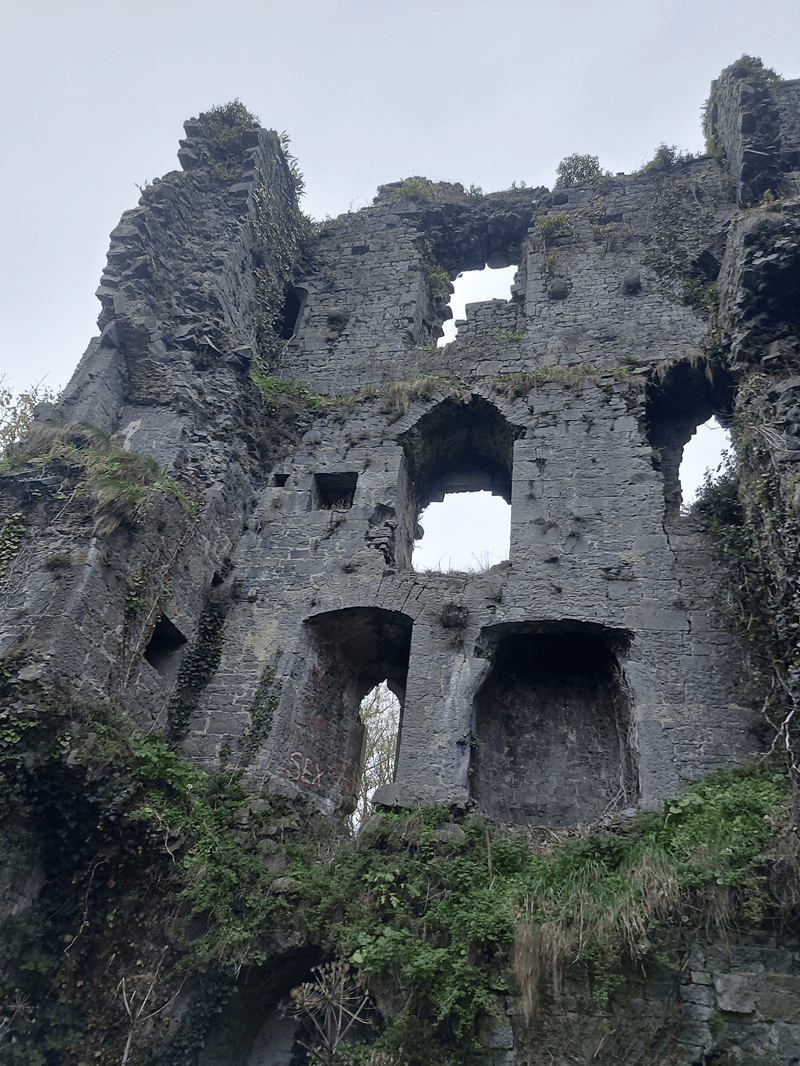
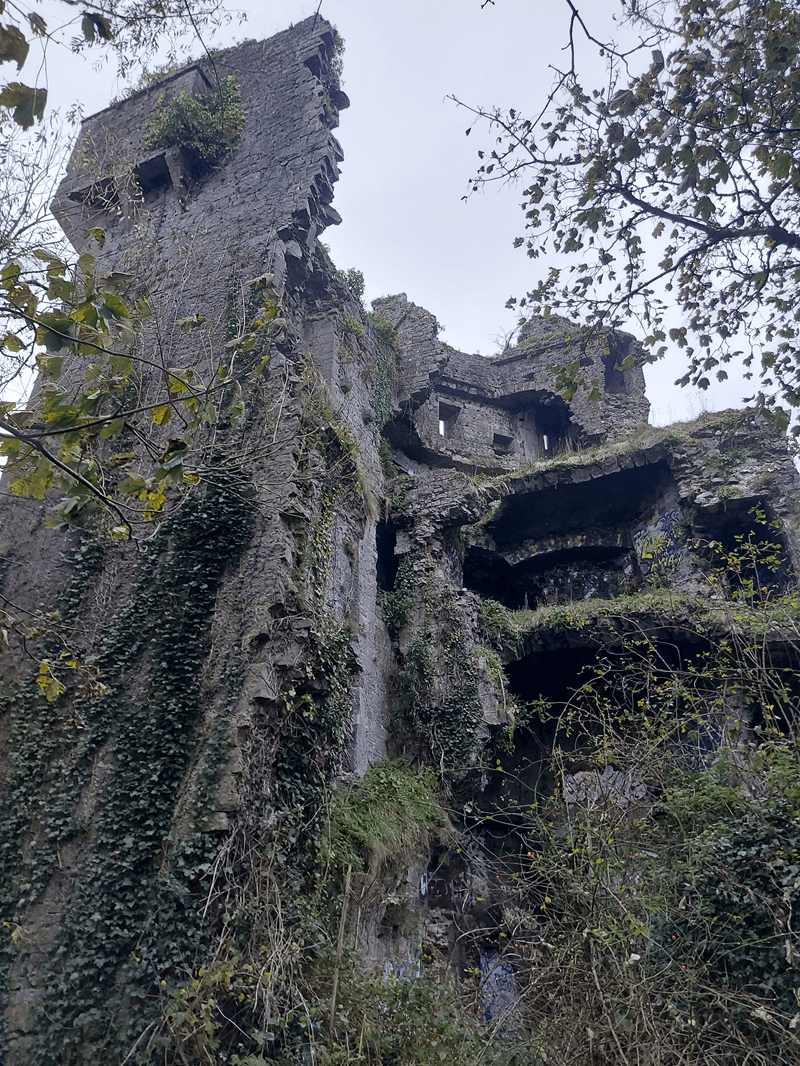
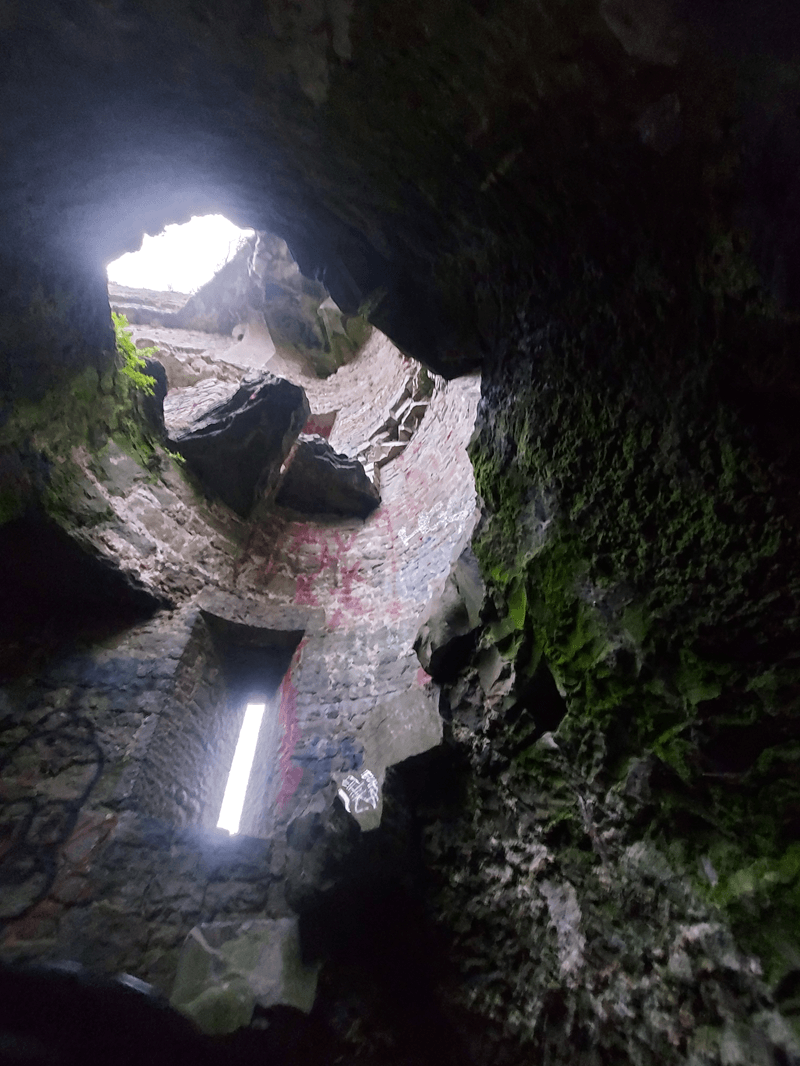
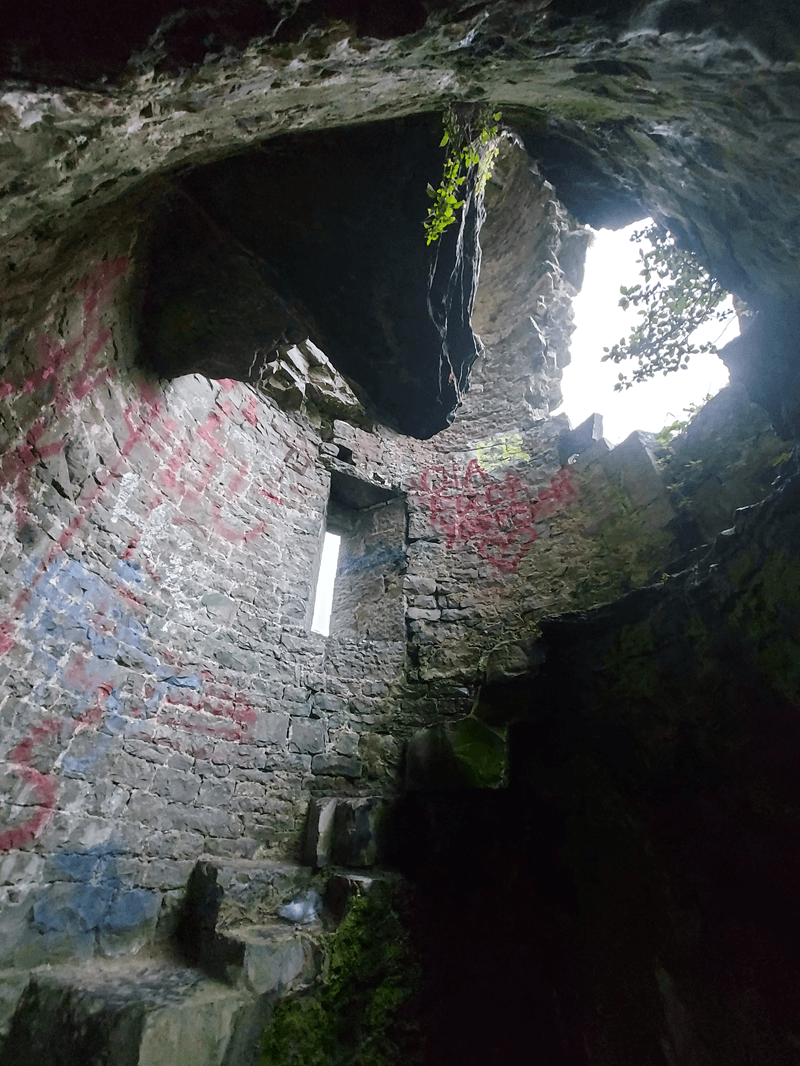
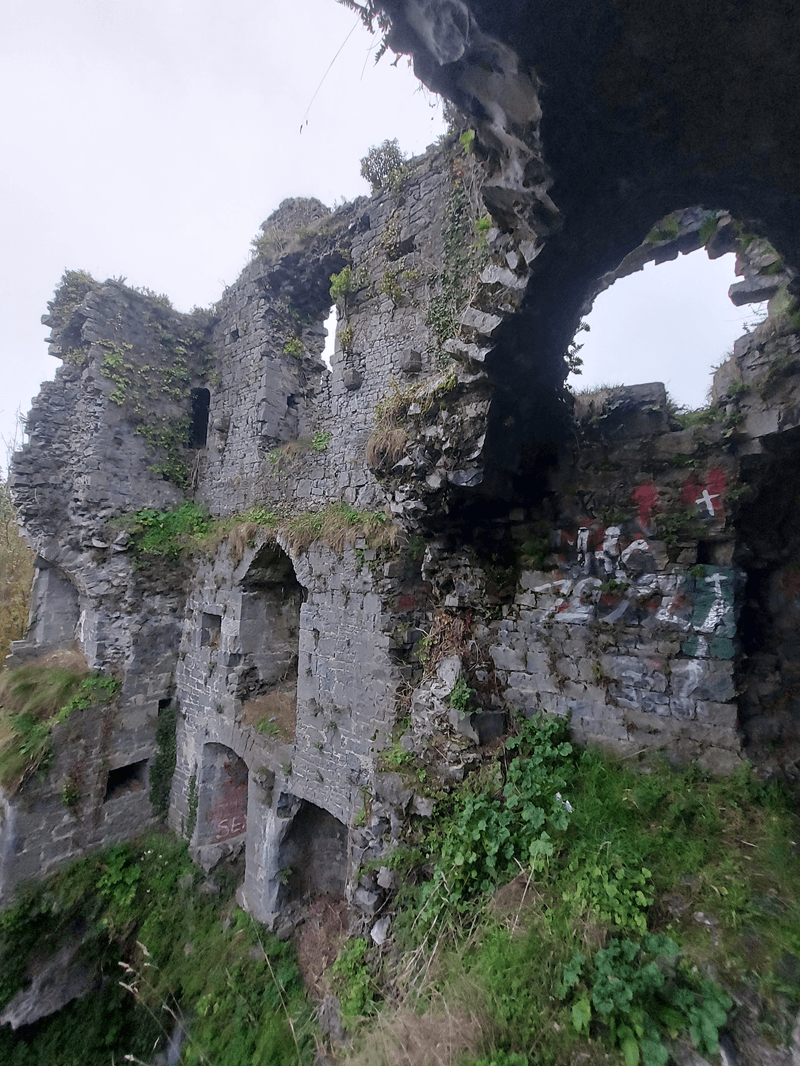
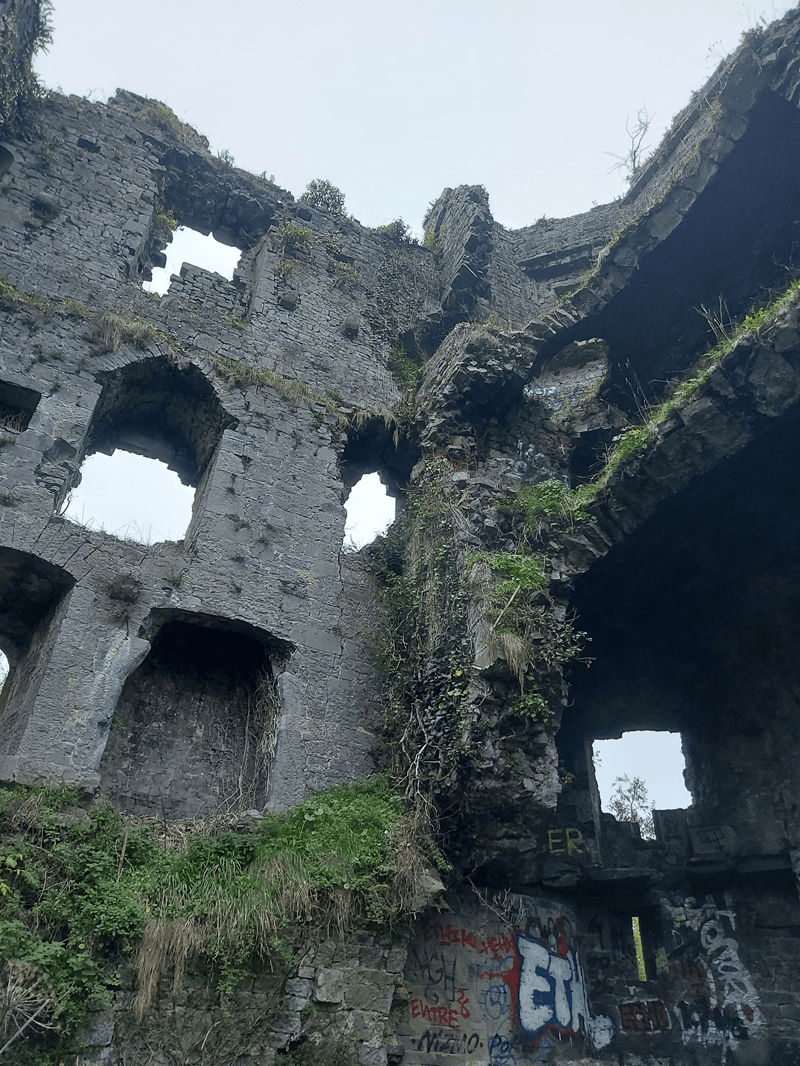
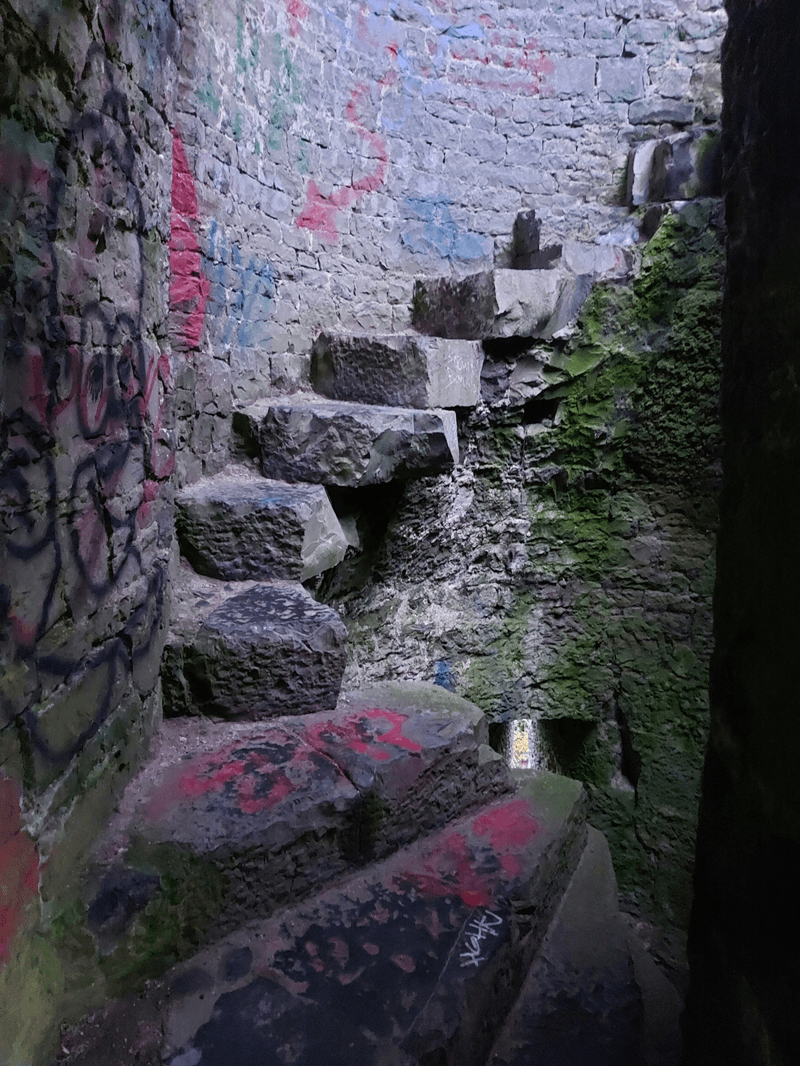
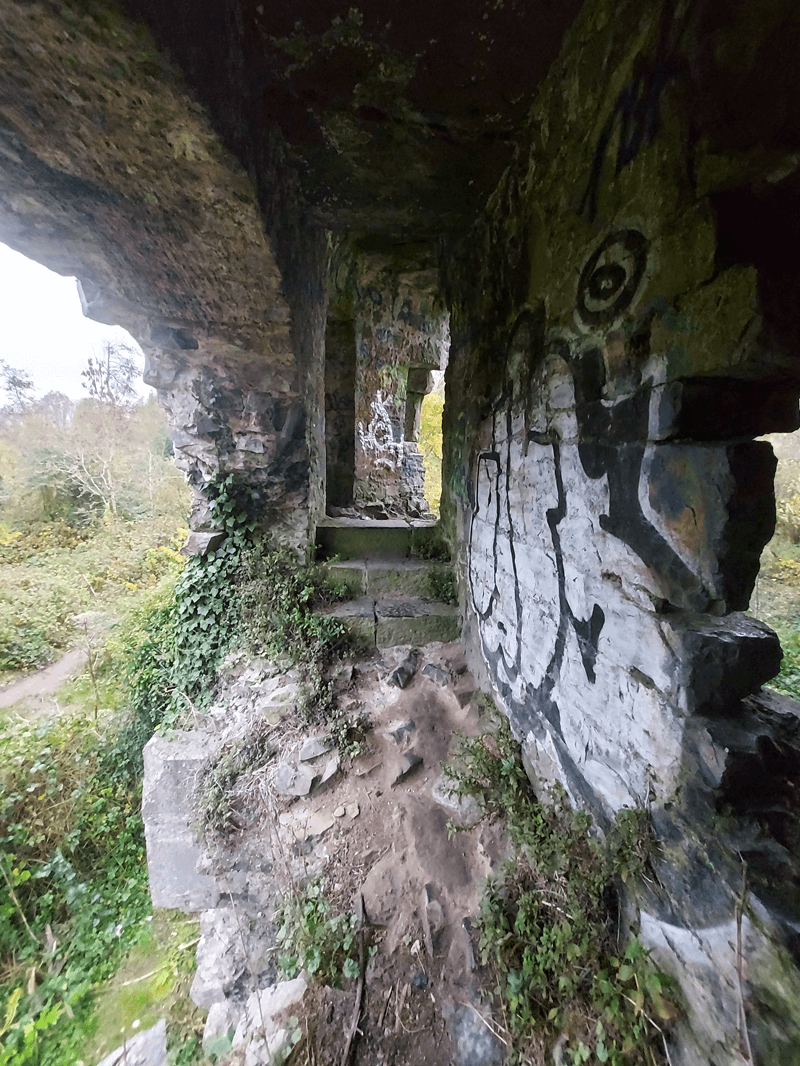
Black Castle is architecturally unusual among Irish tower houses because of its distinctive pentagonal plan. The surviving eastern section rises to approximately 18 metres and includes a projecting feature, often described as resembling the prow of a ship, within which a spiral staircase is incorporated. The structure retains evidence of several floors, vaulted chambers, thick defensive walls and narrow openings. Other features include an angle-loop and projecting corbels, which may have supported bartizans. The remains of a surrounding bawn and gateway have also been suggested [1-2].
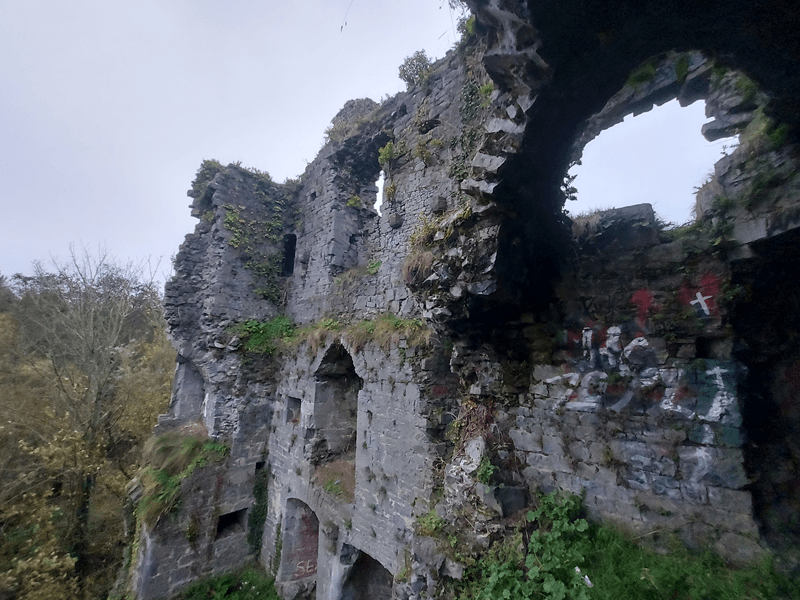
O’Donovan’s description from 1840 provides a valuable account of the castle's condition in the nineteenth century. He noted that the eastern and northern walls remained relatively well preserved, while the western and southern sides had almost entirely collapsed. The surviving walls stood approximately 70 feet (21 metres) high, with openings indicating five storeys, and were around 7.5 feet thick [3].
The ruins are also associated with a local legend concerning the daughter of a MacKeogh chieftain. According to the story, she rejected the advances of a man who later returned under cover of darkness with a group of armed followers, intending to abduct her. Her father and his warriors intervened, killing the attacker, but the young woman was fatally wounded by a spear during the struggle. Local tradition claims that her cries can still be heard around the ruins. The tale was recorded in the Schools' Collection and also found its way into the poetry of Michael Hogan [4-6]. Whether or not there is any historical basis to the story, it remains part of the folklore surrounding Castle Troy.
Today, the surviving section of Black Castle stands as a reminder of the strategic importance of this stretch of the Shannon and of the turbulent history of the lands east of Limerick. Its unusual architecture, uncertain beginnings and rich local traditions make it one of the more intriguing medieval remains in the county.
References
- [1] IrishHistory.com - Castle Troy, Castletroy, Co. Limerick
- [2] Limerick City Greenway - Environmental Impact Assessment, Cultural Heritage
- [3] Ordnance Survey Letters - Parish of Kilmurry (1840), John O'Donovan
- [4] Daily Scribbling - The Secret Life of Irish Castles: Castle Troy, by War, Tide and Time Batter'd
- [5] Dúchas - The Schools' Collection: Local Ruins, Monaleen, Co. Limerick
- [6] Spirited Isle - Black Castle