History
Introduction and Location
Ballylahan Castle, also known as Ballylaghan Castle, stands on the southern bank of the River Moy, approximately 2.3 kilometres north-east of Straide, in County Mayo. Its position placed it close to an important river crossing and within the historic territory of Gallen. The name Athleathan, associated with the castle and the surrounding area, is generally understood to mean “Broad Ford”. The Irish name of the castle is Caisleán Átha Leathain [1-3].
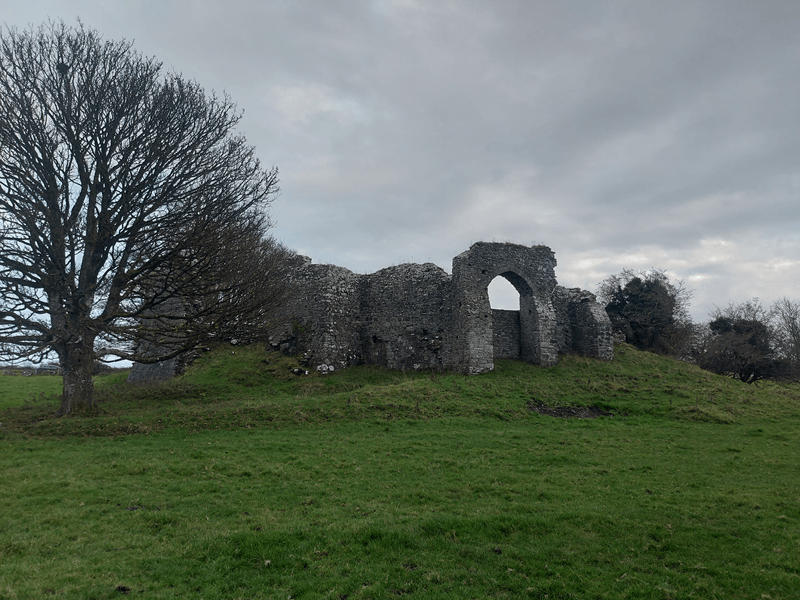
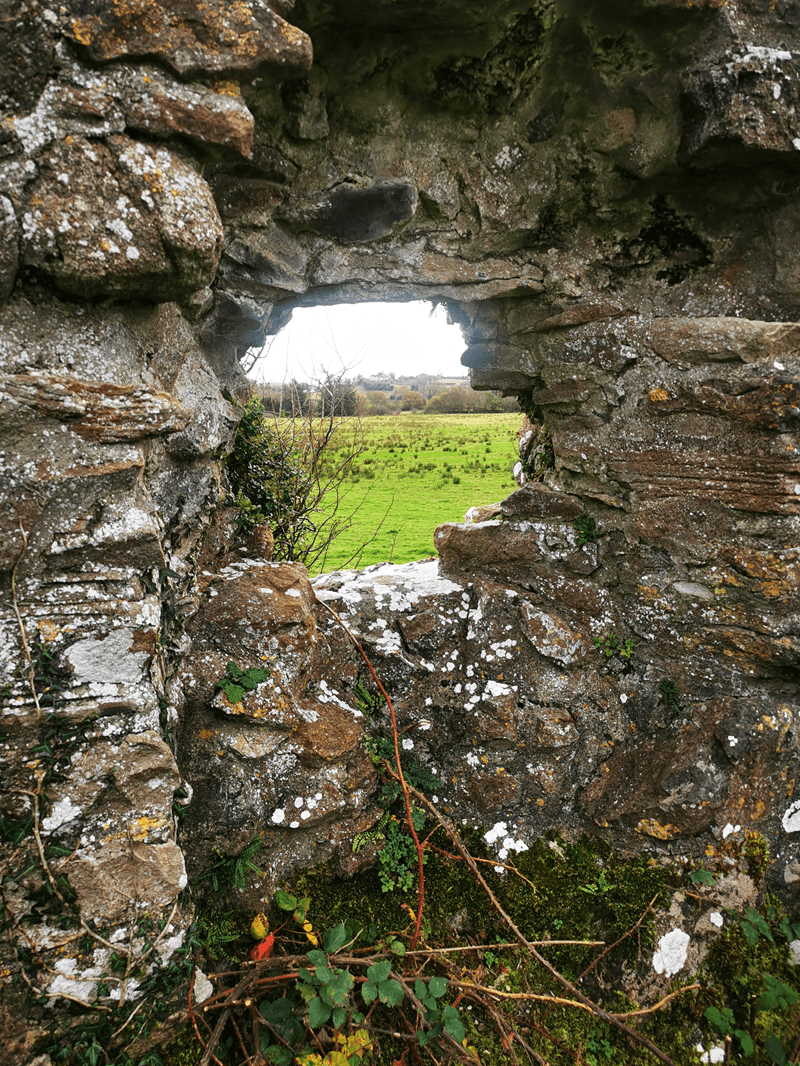
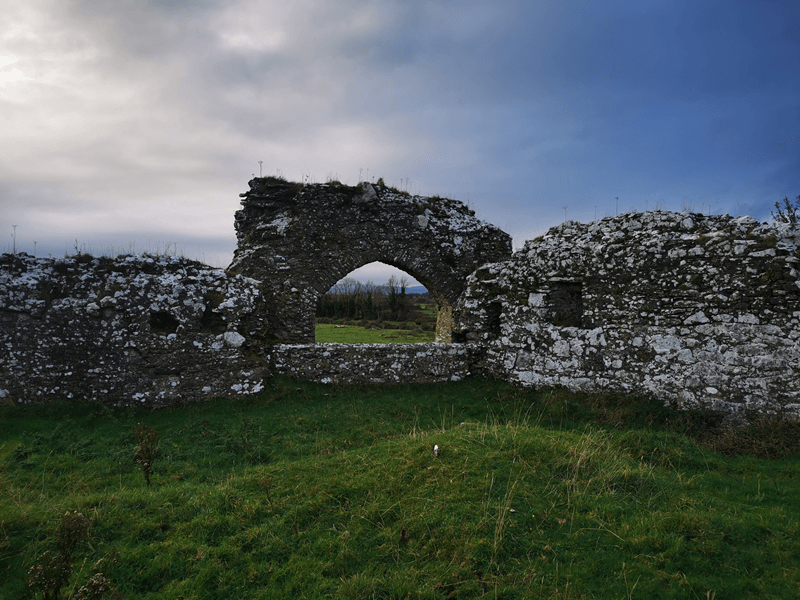
The castle is a medieval fortified site whose surviving remains include sections of its enclosure and two substantial towers flanking the entrance. Although much of the original structure has disappeared, its layout still gives an indication of the importance and defensive character of the stronghold.
Jordan de Exeter and the Foundation of the Castle
Ballylahan Castle is traditionally associated with Jordan de Exeter, an Anglo-Norman lord from Devon who became Sheriff of Connacht. The castle is generally said to have been built in 1239, during the period when Anglo-Norman power was expanding across the province. Jordan established himself in the area and became the ancestor of the family later known as the MacJordans or Mac Siúrtáin, whose influence was particularly strong in Gallen [1], [2].
The precise date of the castle's construction is not entirely clear. While local historical accounts associate its foundation with Jordan de Exeter in 1239, other sources give approximately 1260 as its date. The difference may partly reflect the distinction between the initial establishment of the stronghold and later building work, although this interpretation cannot be confirmed with certainty [2], [4].
Jordan de Exeter was also associated with the foundation of a religious house at Straide. According to the local parish history, the institution was initially established for the Franciscans and was transferred to the Dominicans in 1253, reportedly at the request of Jordan's wife. This religious foundation formed part of the wider presence of the de Exeter family in the area [1].
The MacJordan Family and the Castle's Development
The descendants of Jordan de Exeter became known as the MacJordans or Mac Siúrtáin. Over time, the family established itself as one of the important Anglo-Norman lineages in this part of Connacht, becoming closely associated with the lordship of Gallen. Ballylahan Castle was therefore not simply a defensive structure, but also a symbol of the family's authority and position in the surrounding territory [2], [3].
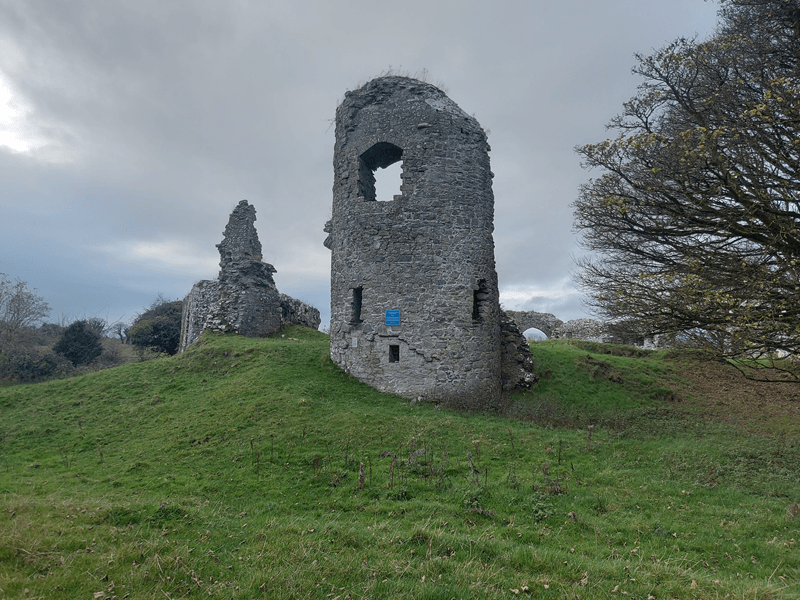
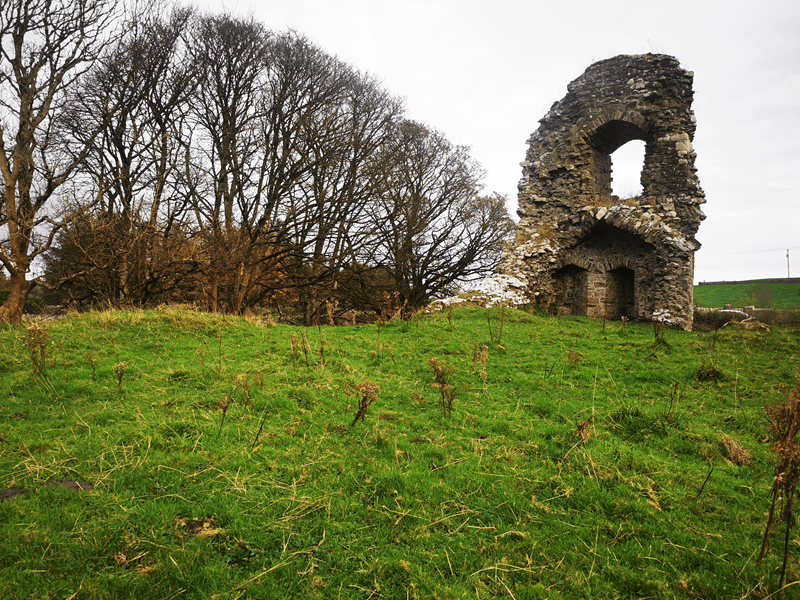
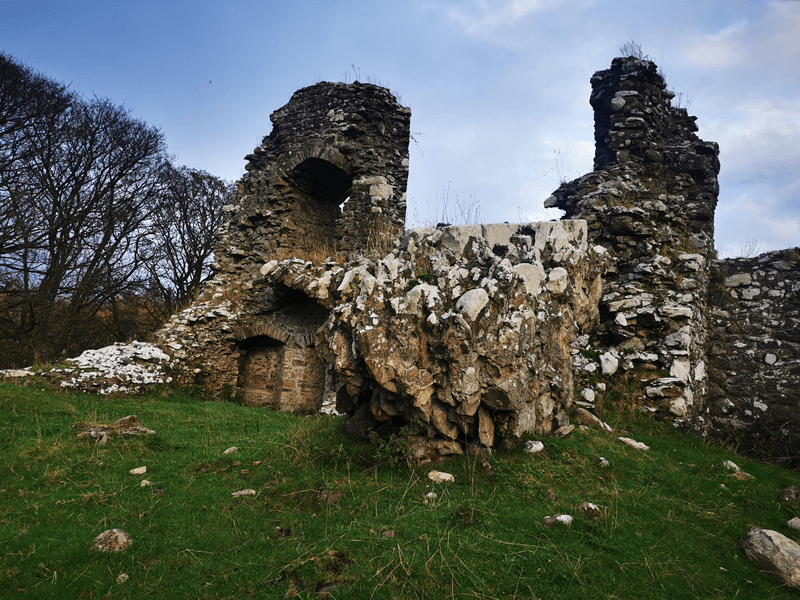
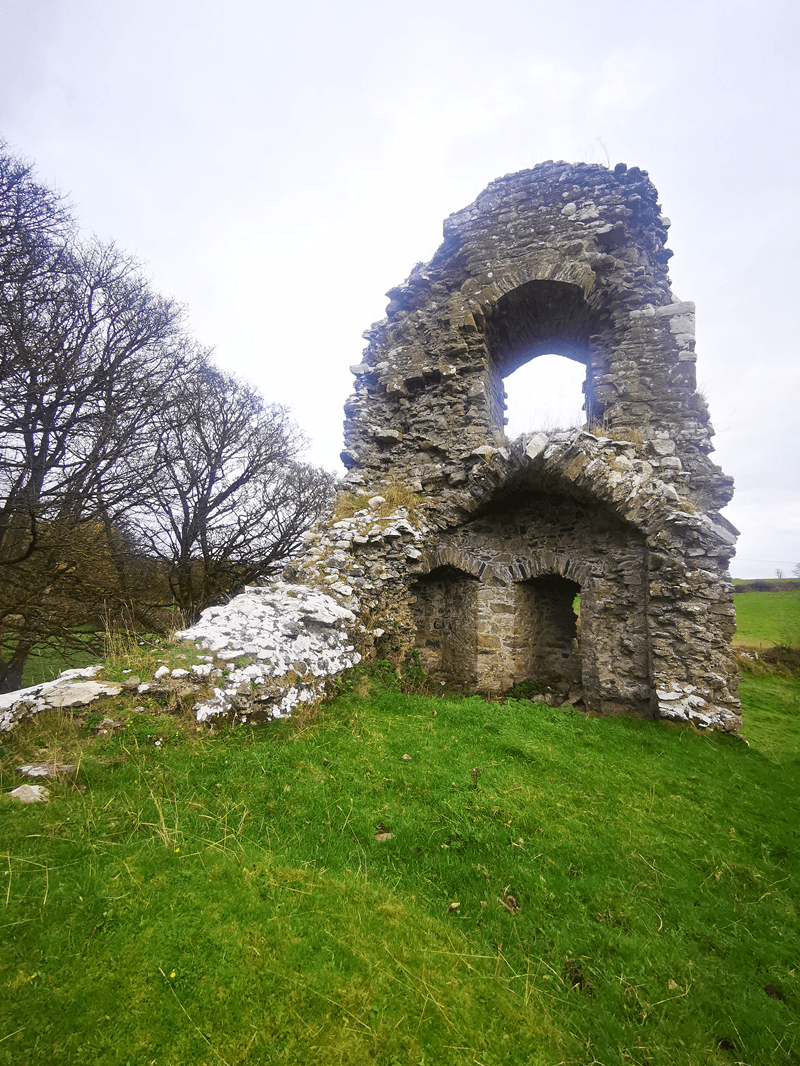
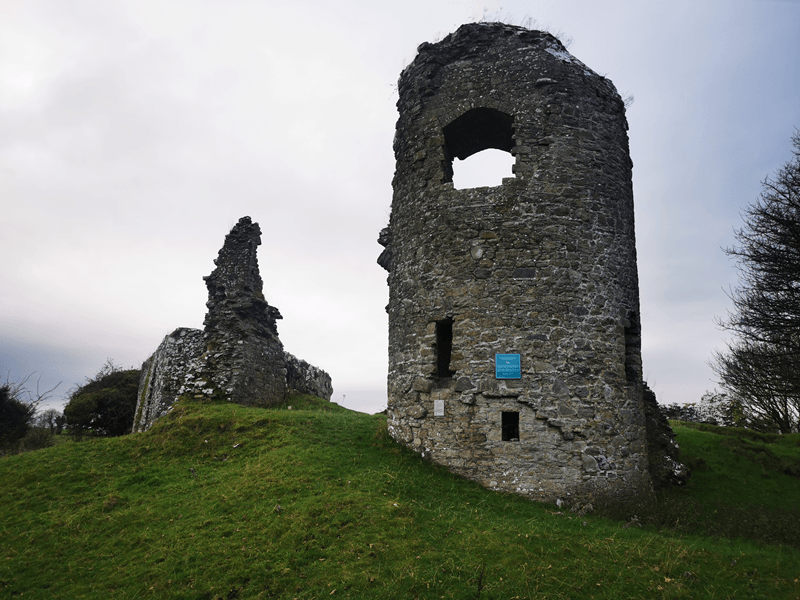
The surviving remains suggest that the castle developed into a substantial fortified enclosure. Its plan is generally described as polygonal or roughly hexagonal, with two massive towers positioned on either side of the south-eastern entrance. These towers are thought to have been added after the original construction, possibly around 1260. The eastern tower remains in considerably better condition, while the southern one has largely been reduced to a fragment [3], [4].
Traces of the enclosing walls and other internal structures can still be identified. The remains of a rectangular building within the enclosure have sometimes been interpreted as a possible keep, although its original function cannot be established with certainty. The combination of the enclosure, entrance towers and internal buildings suggests a complex fortified residence rather than an isolated tower house [3].
The Attacks of 1316 and 1317
Ballylahan and the surrounding territory became caught up in the conflicts between the Anglo-Norman settlers and the Gaelic Irish during the early fourteenth century. In 1316, Felim O'Conor, King of Connacht, marched against Athleathan. The Annals of the Four Masters record that he burned the town and killed Slevin de Exeter, described as its lord, together with Goganagh de Cogan and many other Englishmen [5].
It is important to distinguish what the medieval account actually records: the annals explicitly mention the burning of the town and the killing of its leading figures, but do not state that the castle itself was destroyed during this attack. The event nevertheless demonstrates the vulnerability of the de Exeter lordship during the turbulent years of the Connacht conflicts.
The following year, in 1317, the annals record the death of Meyler de Exeter, Lord of Athleathan Ballylahan. He was killed by Cathal, son of Donnell O'Conor, near the River Methenagh at Drumcliff. His death indicates that the lordship was still associated with a member of the de Exeter family at this time [5].
The Destruction of 1381
A later and more explicit reference to the fate of Ballylahan Castle appears in the Annals of the Four Masters under the year 1381. According to this account, the castle of Athleathan, identified as Ballylahan, was demolished by the Clann-Donough. The annals add that its gateway was taken away to Ballymote [6].
This account provides the clearest historical evidence for the destruction of the castle. Unlike the events recorded in 1316, the entry of 1381 specifically refers to the demolition of the fortress itself and the removal of its entrance. The fate of the gateway is particularly striking, as it suggests that elements of the castle were deliberately removed and reused elsewhere.
Ballylahan Castle Today
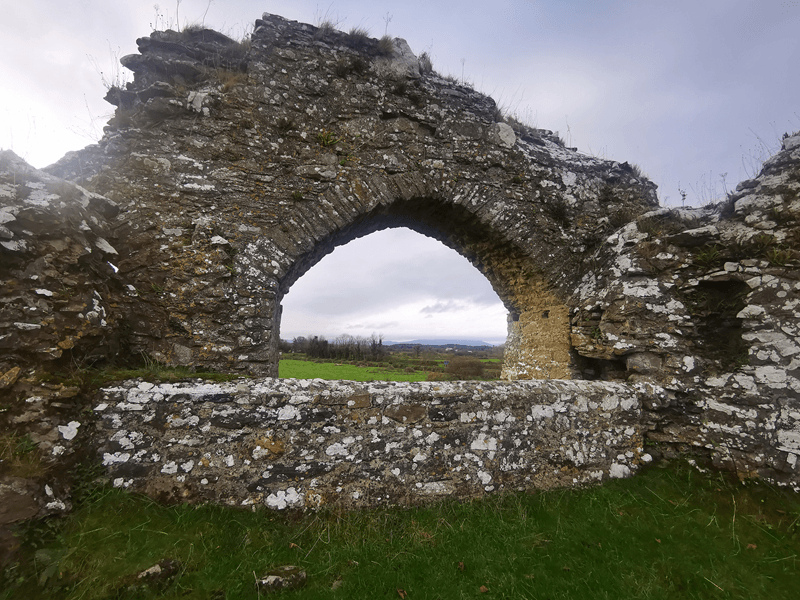
Today, Ballylahan Castle survives as a ruin beside the River Moy. Although the enclosure has suffered considerable damage, sections of its walls and the remains of the two entrance towers are still visible. The eastern tower is the best-preserved element, while the southern tower survives only in a much-reduced state. The outline of the polygonal enclosure and traces of structures within it help visitors understand the original arrangement of the stronghold [3], [7].
Despite its ruined condition, Ballylahan remains an important reminder of the Anglo-Norman presence in medieval Mayo and of the history of the MacJordan family. Its story, recorded in medieval annals and reflected in the surviving masonry, links the expansion of Anglo-Norman power in Connacht with the conflicts that shaped the region during the fourteenth century.
References
- [1] Straide Parish - Places of Interest
- [2] Our Irish Heritage - Ballylahan Castle
- [3] Irish Stones - Ballylahan Castle
- [4] Wikipedia - Ballylahan Castle
- [5] Annals of the Four Masters - Entries for 1316 and 1317
- [6] Annals of the Four Masters - Entry for 1381
- [7] Straide Pride of Place - Ballylahan Castle